
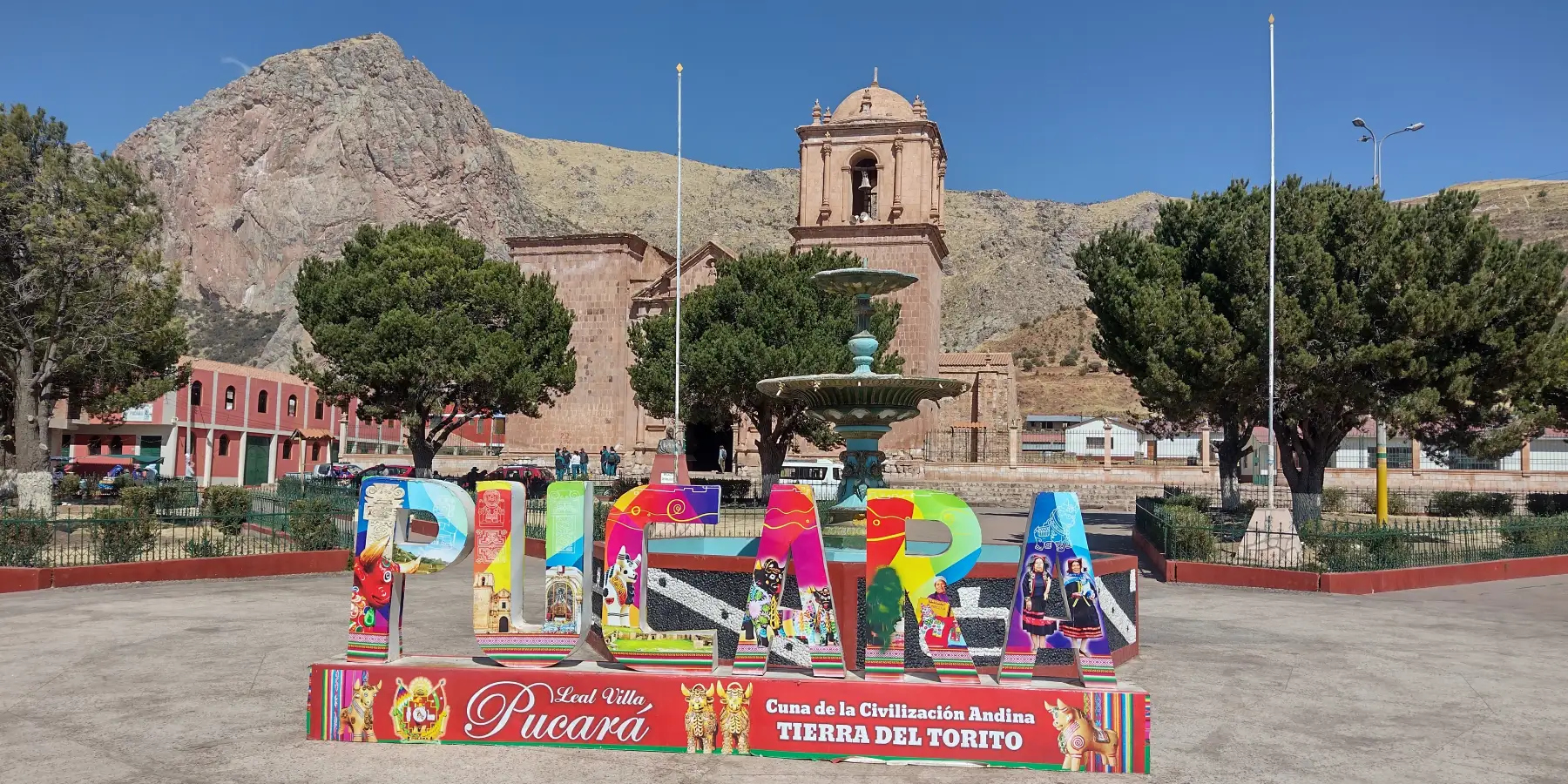
¡Hola, explorador de lugares antiguos!
Soy parte del equipo de Top Inka Travel, y cada vez que llevo a un viajero a Pucara Lampa, sucede lo mismo: llegan esperando “otro sitio arqueológico” y terminan maravillados por esas torres que parecen guardianes de un mundo que se niega a desaparecer. Imagina un valle alto, el viento frío del Altiplano, y estructuras que han resistido siglos, cargadas de historia y ritualidad.
No es un lugar masivo ni turístico; es íntimo, profundo, casi secreto de esos que se quedan contigo.
Aquí descubrirás qué ver en Pucara Lampa, cómo llegar y qué hace especial a este sitio arqueológico del altiplano, una parada poco conocida pero llena de historia.

¿Dónde Queda Pucara Lampa y Cómo es el Paisaje?
¿Dónde queda Pucara Lampa?
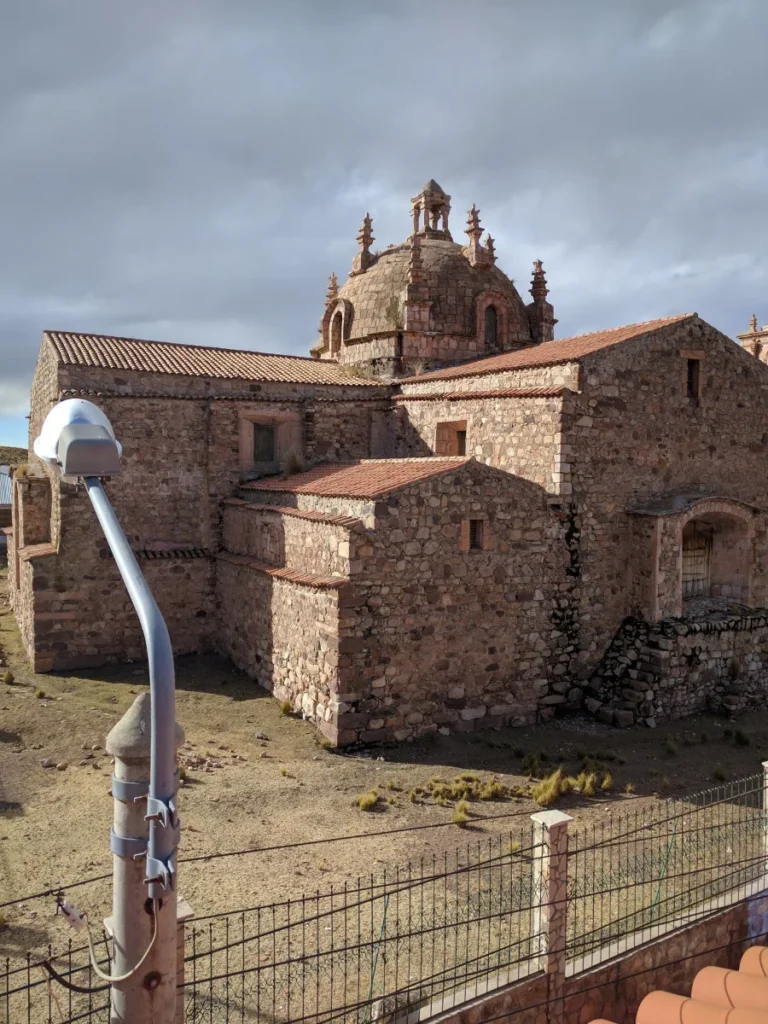
Se ubica en el distrito de Lampa, provincia de Lampa, región Puno, a 15 km al norte de la ciudad de Lampa y a 50 km de Juliaca, donde está el aeropuerto más cercano. El sitio descansa a 3.850 m s. n. m., en un valle amplio rodeado de cerros y, en días despejados, con vistas lejanas hacia el Titicaca.
El complejo arqueológico ocupa 6 hectáreas en una planicie andina con torres de piedra que se elevan entre campos de quinua y papa, cultivados como en tiempos ancestrales.
Llegar desde Puno es sencillo. Toma la carretera asfaltada a Juliaca (1 hora) y continúa hacia Lampa. Desde allí, un taxi te lleva al sitio en unos 20 minutos.
El paisaje es uno de esos que obligan a detenerse: llanuras verdes llenas de llamas pastando y nevados que vigilan el horizonte.
Historia de Pucara Lampa: Cultura Pucará e Influencia Inca
Pucara Lampa es uno de los sitios arqueológicos menos conocidos del altiplano de Puno, pero conserva elementos importantes de la cultura Pucará (aprox. 400 a.C.–200 d.C.), una de las civilizaciones más antiguas del sur andino. Este pueblo desarrolló centros ceremoniales, esculturas en piedra y cerámica decorada con figuras geométricas, camélidos y símbolos religiosos. Si bien la cultura Pucará es famosa por sus chullpas en otras zonas del altiplano, en Pucara Lampa no existen torres funerarias monumentales.
Con la expansión del Imperio Inca, la región pasó a formar parte de su red administrativa. Los incas integraron varias comunidades locales, reforzando caminos y puntos de control estratégicos que conectaban Cusco con el altiplano. Aunque la presencia inca en la zona es reconocida, no existen evidencias oficiales de grandes templos o estructuras mayores dentro de Pucara Lampa.
Las investigaciones arqueológicas y hallazgos de cerámica permiten comprender la continuidad cultural de la zona y la importancia espiritual del paisaje andino. Hasta hoy, las comunidades quechuas mantienen prácticas y celebraciones agrícolas que reflejan la herencia milenaria de la región.
Qué Ver en Pucará: Lo Esencial del Complejo Arqueológico
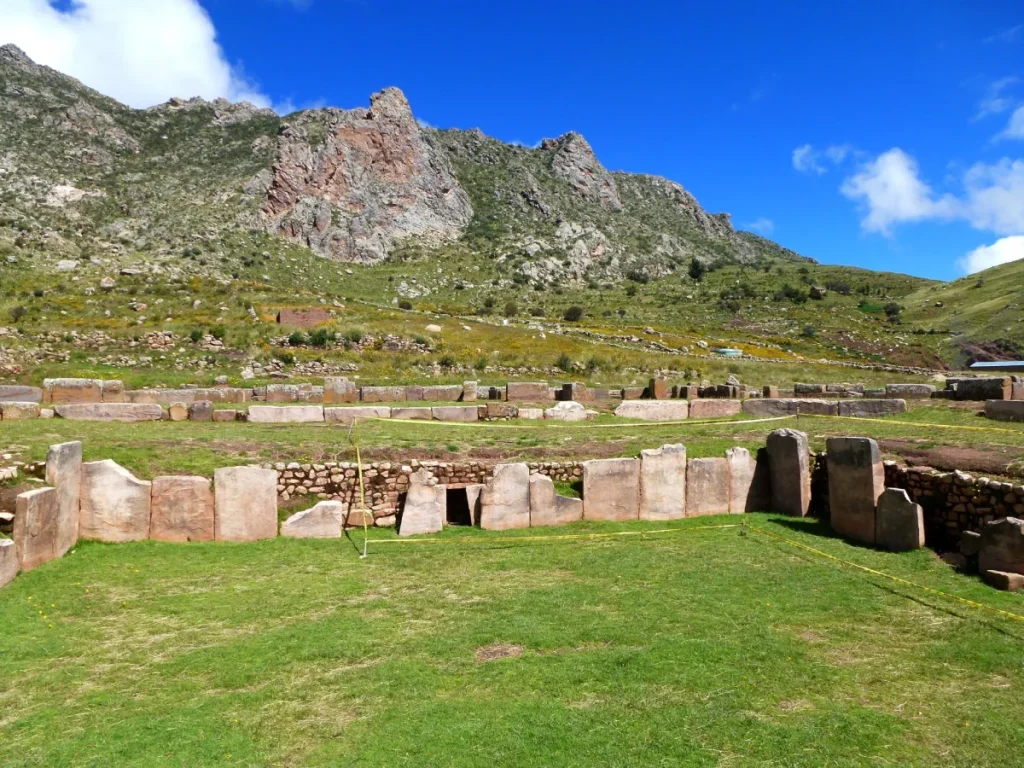
El Complejo Arqueológico de Pucará es uno de los sitios más importantes del altiplano peruano y el mejor representante de la antigua Cultura Pucará (400 a. C. – 200 d. C.). Lo que verás aquí no son chullpas ni torres funerarias, sino plataformas ceremoniales monumentales, esculturas líticas y los restos de un antiguo centro urbano y religioso.
A continuación, te presento la versión correcta y verificable:
1. Kalasaya: La Gran Plataforma Ceremonial
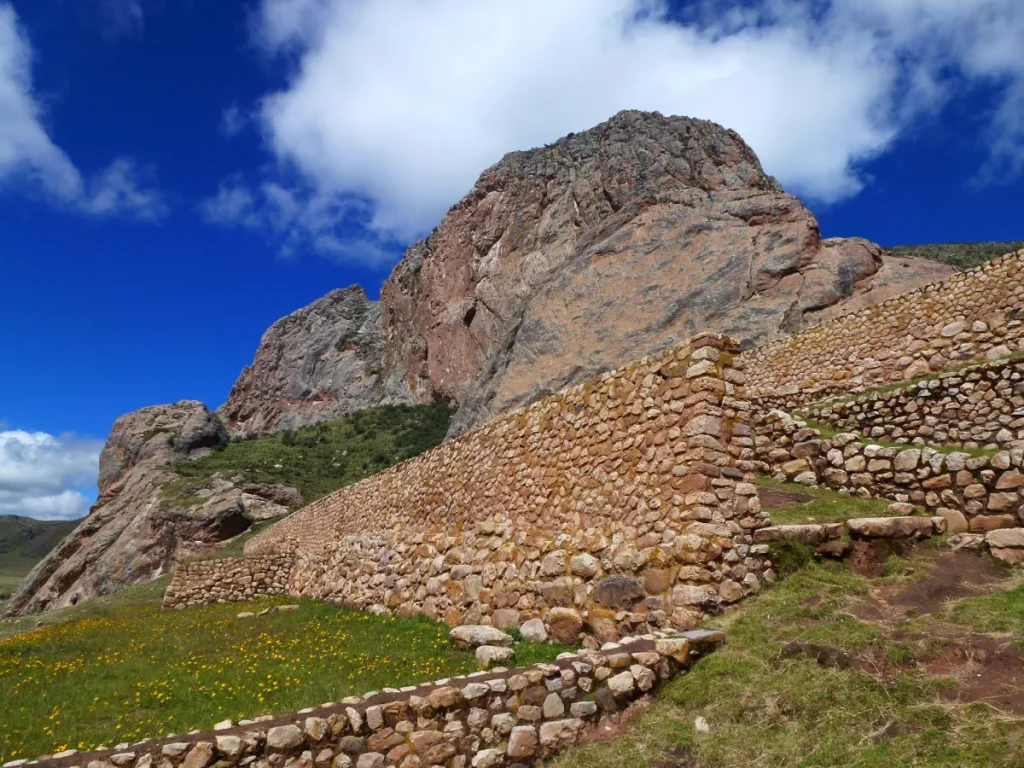
Este es el corazón del sitio. Kalasaya es una pirámide trunca escalonada, construida con grandes bloques de piedra y varias terrazas. Desde su parte superior se obtenía una vista estratégica del valle, ideal para rituales y actividades ceremoniales. Es la estructura más emblemática de Pucará.
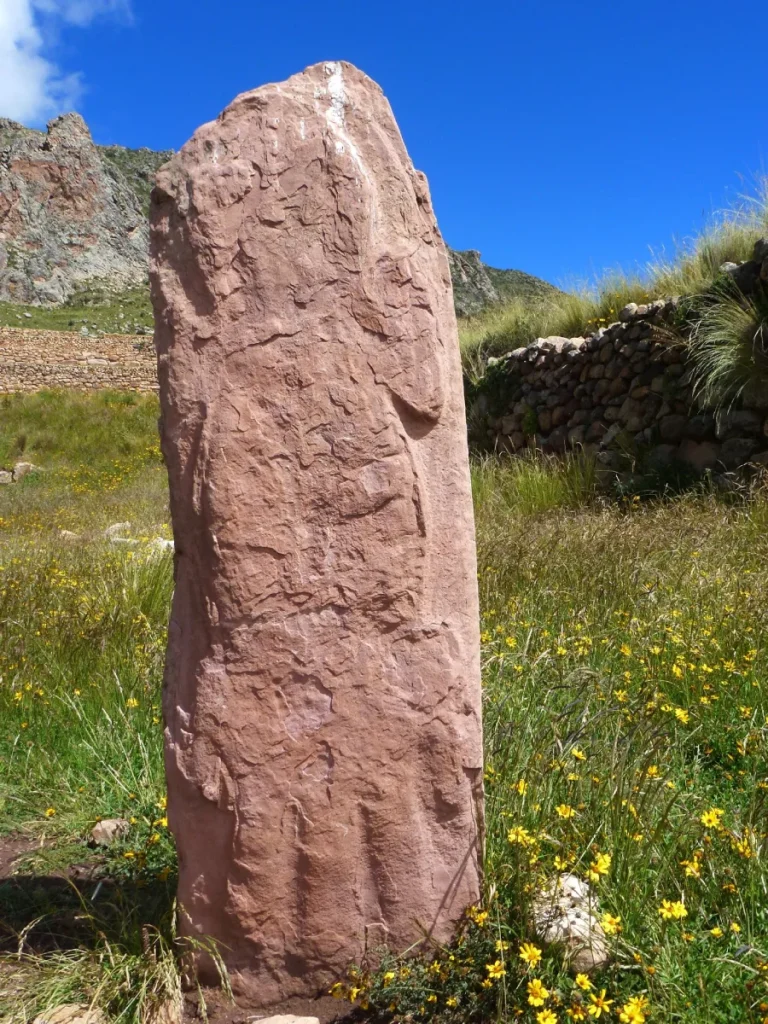
2. Esculturas y Monolitos Líticos
Pucará destaca por su arte en piedra. Aquí se hallaron:
- figuras antropomorfas,
- representaciones de camélidos,
- esculturas de seres míticos,
- estelas con relieves geométricos.
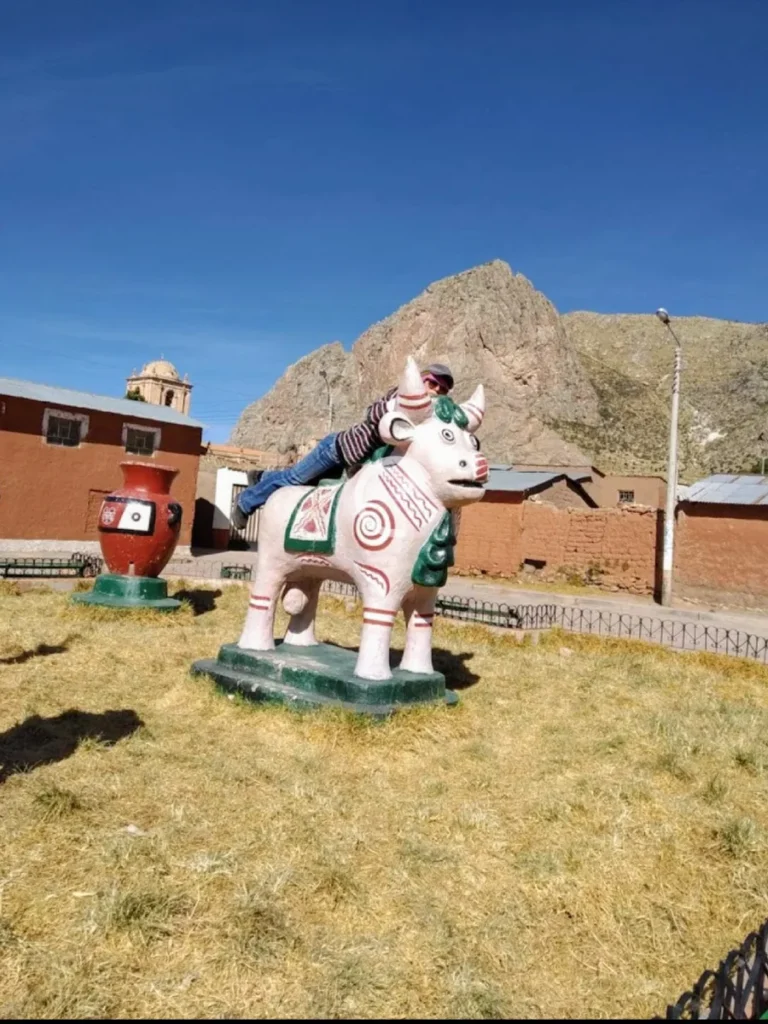
Estas piezas revelan el profundo simbolismo religioso y ceremonial de la cultura Pucará. Muchas se conservan hoy en el Museo Lítico de Pucará, ubicado frente a la plaza del pueblo.
3. Sector Residencial y Urbano
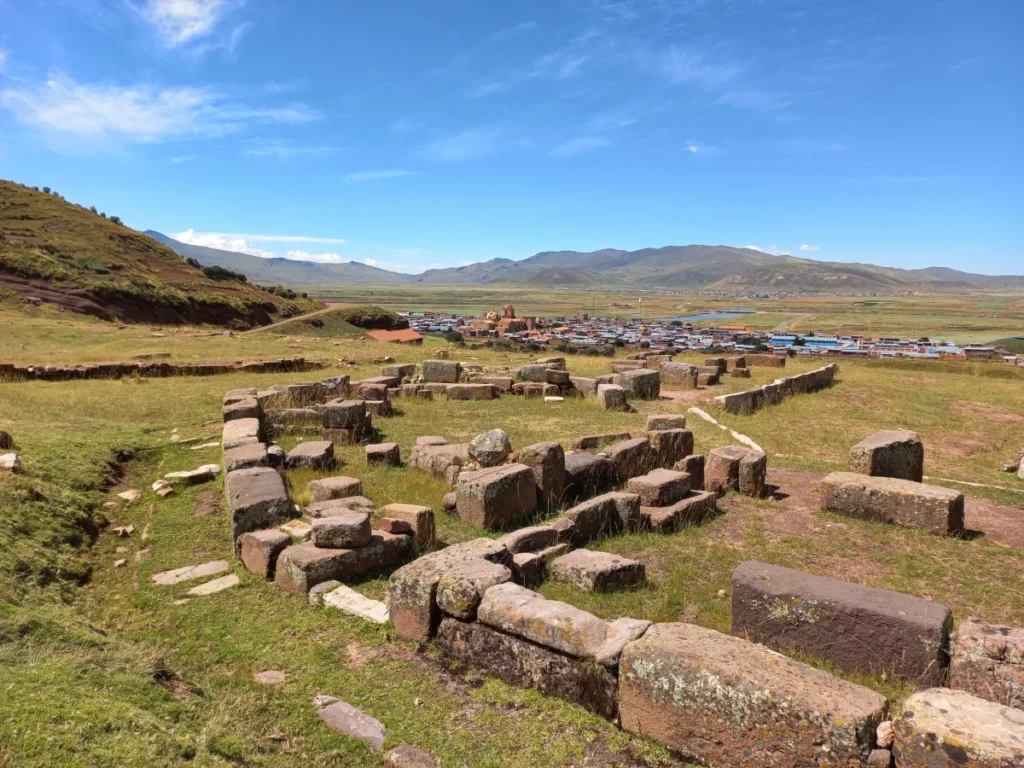
Además del área ceremonial, el complejo incluye restos de viviendas, patios y estructuras cotidianas. Estos espacios muestran que Pucará fue mucho más que un templo: también fue un centro urbano, donde convivían artesanos, agricultores y líderes religiosos.
4. Cerámica Pucará
La cerámica es uno de los mayores aportes de esta cultura. Sus vasijas y platos presentan colores intensos —rojo, ocre, negro— y figuras de llamas, felinos y personajes rituales.
Hoy, estas piezas pueden verse:
- en el Museo Lítico de Pucará,
- en museos de Puno,
- y en colecciones arqueológicas del Perú.
5. Vista Panorámica del Valle de Lampa
Desde las plataformas altas tendrás vistas amplias del valle altoandino donde se desarrolló esta cultura. Es un lugar excelente para fotografía y para entender la ubicación estratégica del sitio en la antigua ruta hacia el Collao.
Leyendas y Tradiciones de Pucará
Pucará no solo destaca por su importancia arqueológica, sino también por las historias que las comunidades del altiplano han transmitido durante generaciones. Estas leyendas hablan de la fuerza espiritual del paisaje, de la relación sagrada entre los antiguos habitantes y las montañas que los rodeaban, y del respeto profundo hacia la naturaleza.
Se cuenta que los sacerdotes de tiempos antiguos realizaban ceremonias relacionadas con los ciclos agrícolas y el movimiento del sol, prácticas que aún hoy inspiran festividades andinas vinculadas al calendario anual. Para muchas familias de la zona, el amanecer en Pucará simboliza renovación y protección, un recordatorio de la conexión entre la vida del altiplano y las energías que provienen de la tierra.
Estas tradiciones no buscan describir estructuras específicas del sitio, sino transmitir la visión espiritual que ha acompañado a las comunidades de la región por siglos. Visitar Pucará es acercarse a esa memoria viva y a la herencia cultural que sigue presente en el día a día del altiplano.
Cómo Llegar a Pucara Lampa: Rutas Cortas y Paisajes Grandes
Cómo llegar a Pucara Lampa es fácil, tanto desde Puno como desde Juliaca.
Desde Puno
- Carretera Puno–Juliaca–Lampa (1 hora).
- Taxi local de Lampa al sitio: 15 minutos (10–15 soles).
Desde Juliaca
- 20 minutos por carretera asfaltada hasta Lampa.
- Taxi o moto-taxi al complejo.
Si viajas por tu cuenta, toma un colectivo desde el terminal de Puno a Lampa (5 soles) y camina los últimos 3 km.
Con Nosotros
Todo se vuelve más fluido: transporte, guía, horarios cómodos y explicaciones profundas sobre la historia de Pucara Lampa y sus leyendas.
Para 2026, los accesos incluyen senderos pavimentados, lo que hace más fácil recorrer las ruinas Pucara Lampa.
La entrada Pucara Lampa cuesta 10 soles.
Horario: 8:00 a 17:00, todo el año.
Consejos Prácticos para una Visita Inolvidable
- Llega temprano para ver el sitio con la mejor luz y menos visitantes.
- Usa calzado cómodo; el terreno combina tierra, piedra y leves pendientes.
- Lleva agua, sombrero y protector solar —el sol del Altiplano es intenso.
- Si puedes, visita con un guía para comprender el simbolismo de las chullpas.
- En temporada seca (mayo–octubre), el clima es ideal para fotografía.
- Durante el solsticio de invierno, el sitio cobra vida con rituales locales.
Recuerda: las chullpas son estructuras sagradas. Evita tocarlas o subirte a ellas.
Por Qué Pucara Lampa Siempre Deja Huella
Pucara Lampa no es un museo: es un valle vivo donde las torres siguen apuntando al cielo como lo hicieron hace siglos. Al atardecer, ver el horizonte con el Titicaca a lo lejos es un momento que muchos viajeros describen como transformador.
Es accesible, económico y perfecto para quienes buscan lugares auténticos y con profundidad cultural. Puedes combinarlo con Sillustani o Uyo Uyo para un día lleno de contrastes andinos.
Descubre Pucará Lampa con Top Inka Travel
Visitar Pucará Lampa puede ser parte de una experiencia más amplia en el Altiplano. Dentro de nuestras rutas oficiales, este sitio se integra en una de las travesías más emblemáticas que conectan Puno con Cusco:
Ruta del Sol desde Puno
En este recorrido cultural y paisajístico, una de las primeras paradas es el Museo de Pucará, donde conocerás la historia de la antigua civilización que habitó el altiplano mucho antes de los incas.
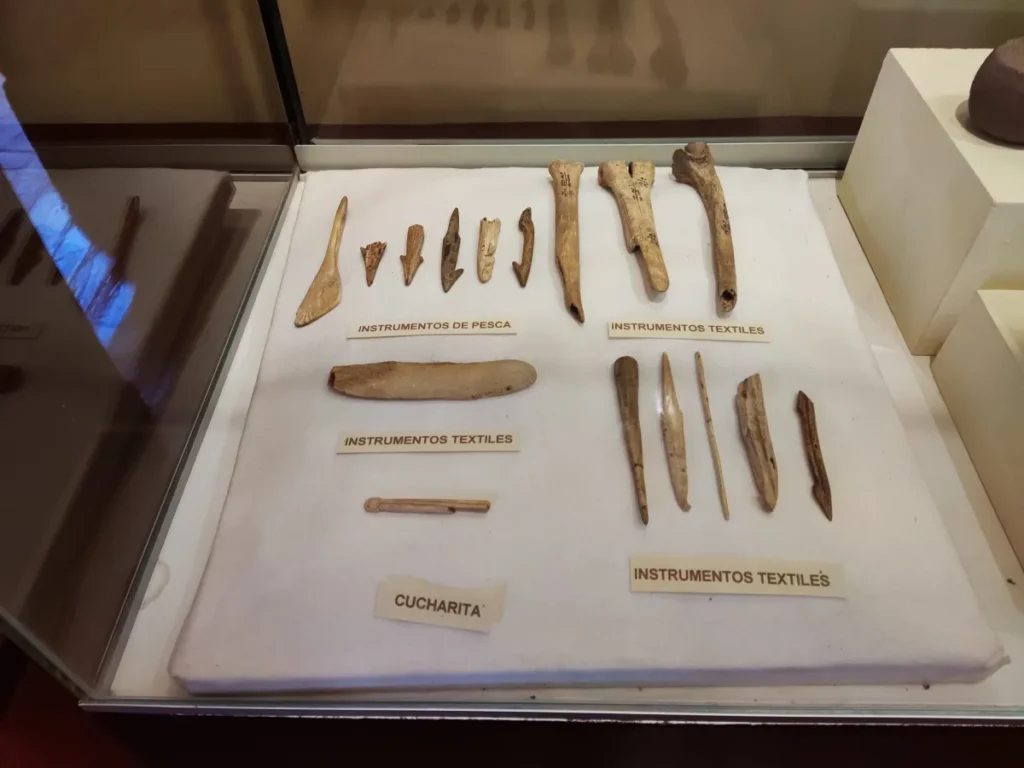
Aquí podrás ver cerámica original, piezas rituales, esculturas y representaciones que explican la cosmovisión Pucara, permitiendo comprender mejor el origen y la evolución de las emblemáticas chullpas del valle.
Además del Museo de Pucará, el tour incluye visitas a:
- Raqchi, templo monumental dedicado al dios Wiracocha
- Andahuaylillas, conocida como la “Capilla Sixtina de América”
- Miradores naturales del corredor andino, con paisajes del Altiplano y la sierra
- Almuerzo buffet en Sicuani, con platos andinos tradicionales
Este viaje es ideal si quieres combinar arqueología, cultura viva y uno de los trayectos panorámicos más hermosos del sur de Perú.