
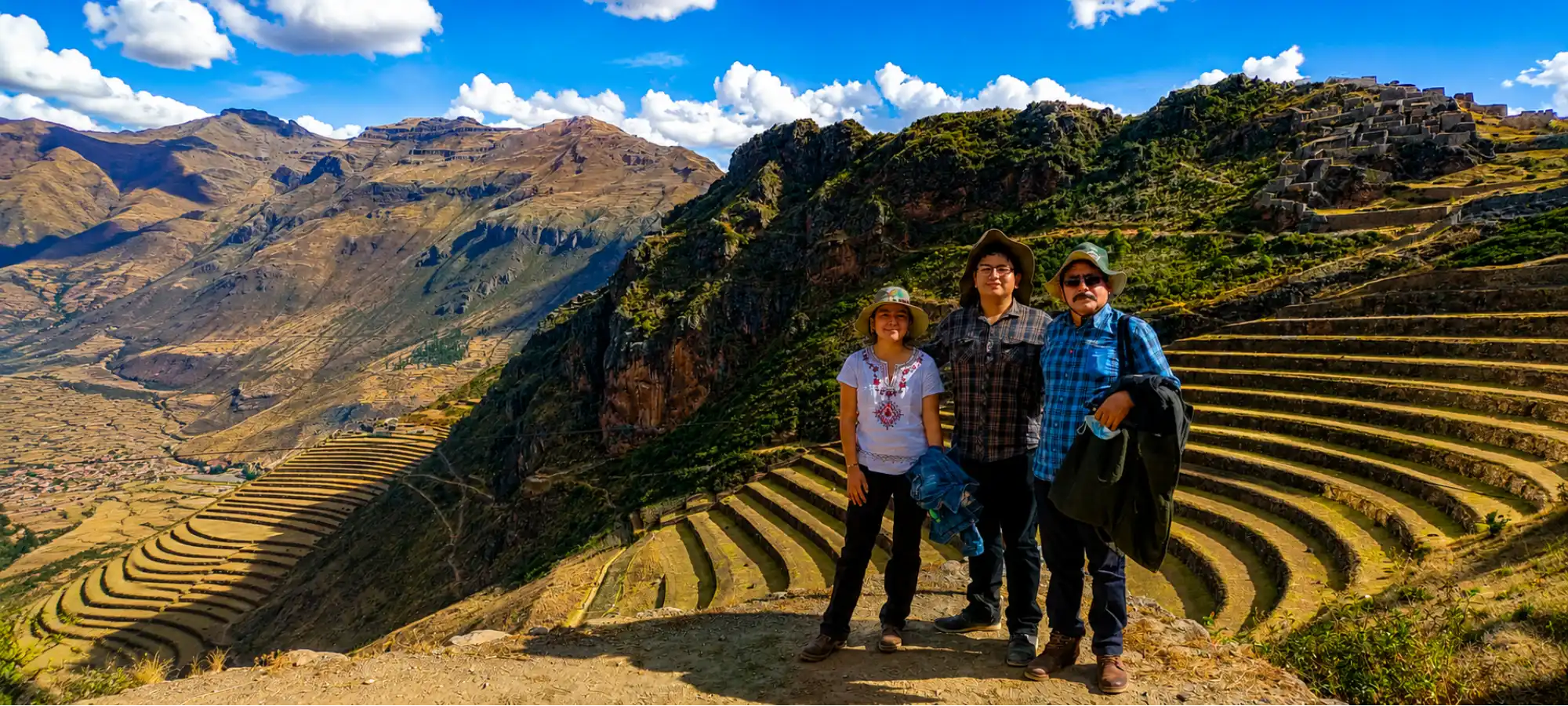
The Pisac archaeological site is one of the most impressive Inca sites in Peru’s Sacred Valley. Located high above the modern town of Pisac, the complex combines agricultural terraces, Inca architecture, mountain paths, and panoramic views over the valley.
Often called the Pisac ruins, the site shows how the Incas adapted construction and agriculture to the steep geography of the Andes.
If you’re planning to visit Pisac from Cusco, this guide covers the site’s history, its famous terraces, what to see, and practical information for your trip.
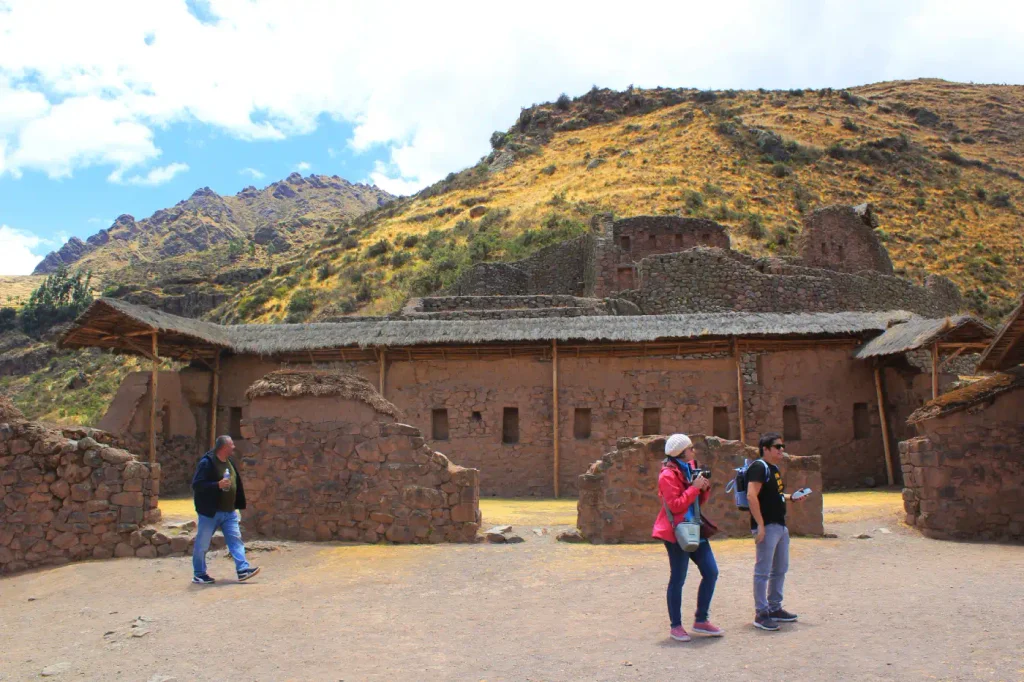
Where Is the Pisac Archaeological Site?
The Pisac archaeological site is located in the mountains above Pisac town, in the Sacred Valley of the Incas.
The archaeological complex and the town are separate areas. Pisac Market is located below in the town, while the ruins extend across the surrounding mountain slopes.
This elevated position provides excellent views of the terraces and the Sacred Valley.
If you also want to explore the town and market, see our complete Pisac Peru guide for planning the entire visit.
History of the Pisac Ruins
The history of Pisac is closely connected to the Inca presence in the Sacred Valley.
During the Inca period, Pisac developed as a complex site with agricultural, residential and ceremonial areas. Its location also provided extensive views across the surrounding territory.
Rather than building independently of the landscape, the Incas adapted the complex to the mountain itself.
Terraces followed the natural slopes, paths connected different areas, and buildings occupied strategic positions across the site.
This relationship between architecture and geography is one of the most fascinating aspects of the Pisac Inca ruins.
The Famous Pisac Terraces
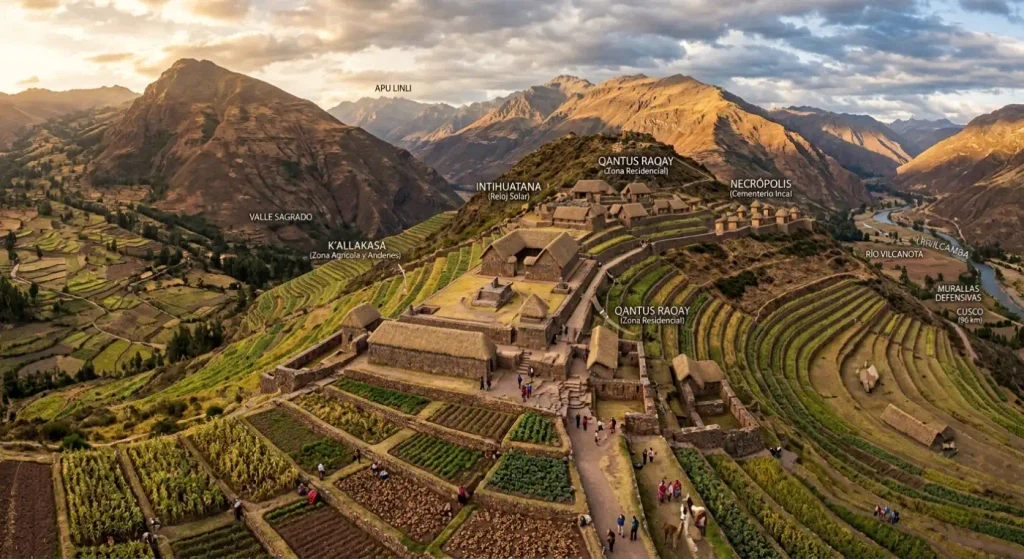
The Pisac terraces are the most recognizable feature of the archaeological site.
Large agricultural terraces descend across the mountains and follow the natural contours of the terrain. They allowed steep slopes to be used more effectively for agriculture while helping manage the challenging Andean landscape.
Today, the terraces also create some of the most impressive views at Pisac.
From higher areas of the complex, you can see the terraces stretching across the mountains with the Sacred Valley below.
What to See at the Pisac Archaeological Site
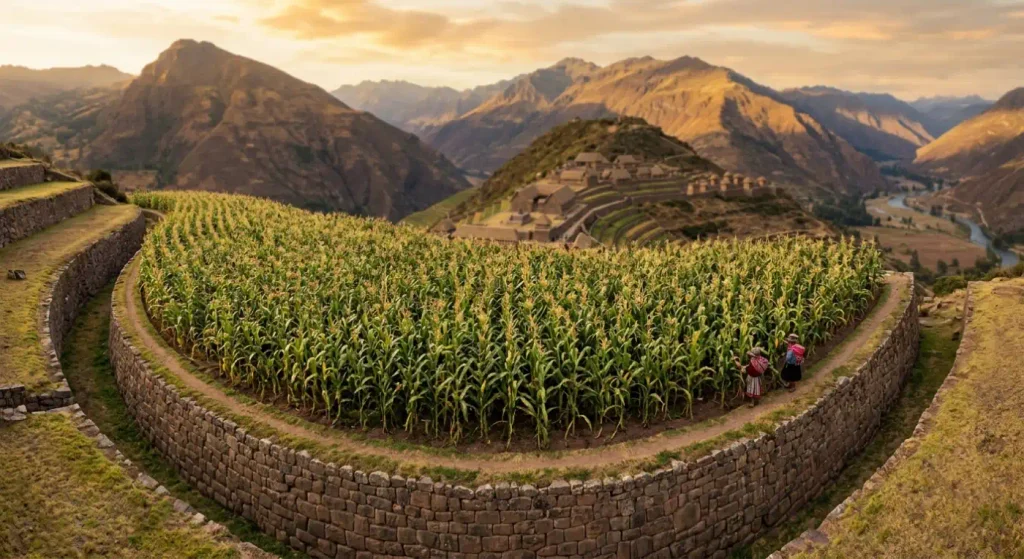
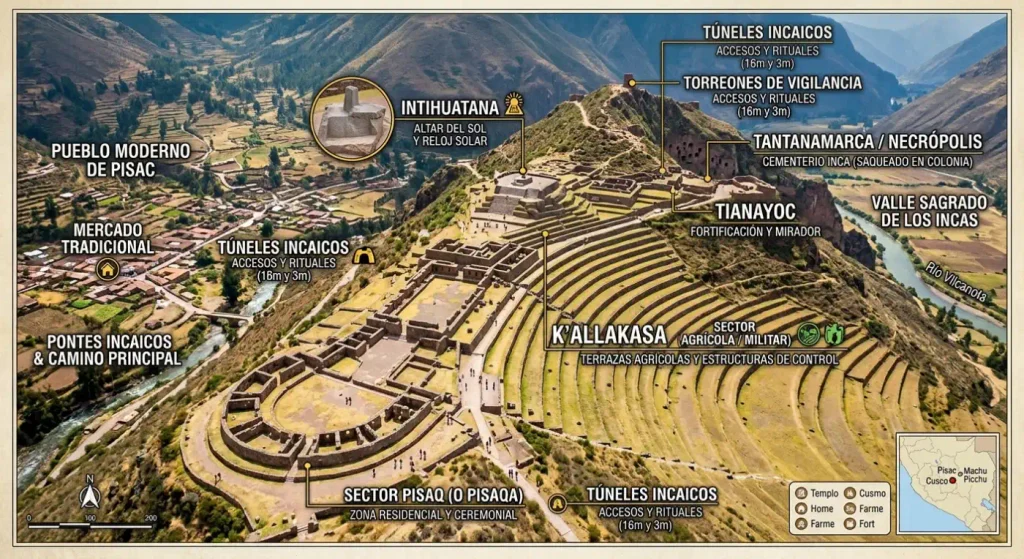
The Pisac ruins cover a large area rather than a single group of buildings.
As you explore the complex, you’ll find agricultural terraces, stone structures, pathways, viewpoints and different archaeological sectors.
Some of the best-known areas include Intihuatana, Qallaqasa and Pisaqa.
Intihuatana is particularly interesting for its ceremonial character and carefully constructed stone architecture.
Walking between the different sectors also helps visitors understand the scale of Pisac and how closely its architecture was connected to the surrounding mountains.
Sacred Valley Views from Pisac
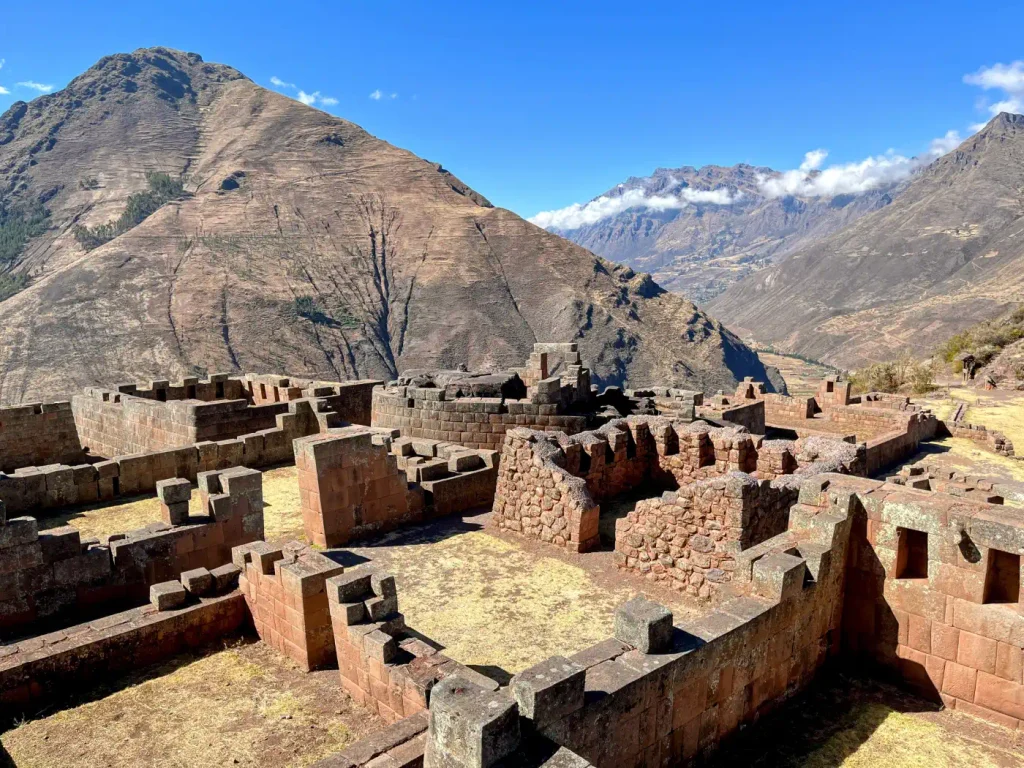
One of the highlights of visiting the Pisac archaeological site is the scenery.
Its elevated position offers panoramic views over the Sacred Valley, with agricultural terraces descending toward the lower areas and mountains surrounding the landscape.
These viewpoints are not only beautiful for photography. They also help explain why Pisac’s location was so significant.
From above, the relationship between agricultural land, mountains and settlements becomes much easier to understand.
How to Visit the Pisac Ruins from Cusco
You can visit the Pisac ruins from Cusco independently or as part of a Sacred Valley tour from Cusco.
Independent travel gives you more flexibility and allows you to spend additional time exploring the archaeological complex.
A tour can be more convenient if you want to combine Pisac with other Sacred Valley attractions during the same day.
Remember that the ruins are located above Pisac town, so independent travelers should consider transportation to the archaeological site when planning the route.
Pisac Entrance Ticket
The archaeological site is included in certain options of the Cusco Tourist Ticket, known locally as the Boleto Turístico del Cusco.
The ticket can include access to several archaeological attractions around Cusco and the Sacred Valley.
Prices, ticket options and conditions may change, so check the current information before your visit.
How Long Do You Need at the Pisac Ruins?
Allow enough time to explore several sections rather than visiting only one viewpoint.
The archaeological complex extends across mountainous terrain, and walking between different areas is part of the experience.
Comfortable shoes, water, sunscreen and sun protection are recommended.
Travelers interested in Inca history, archaeology or photography may want to spend additional time exploring the site before continuing to Pisac town or other Sacred Valley destinations.
Are the Pisac Ruins Worth Visiting?
Yes. The Pisac ruins are worth visiting, especially if you’re interested in Inca history and the landscapes of the Sacred Valley.
The combination of enormous agricultural terraces, mountain architecture and panoramic views makes Pisac different from many other archaeological sites around Cusco.
Visiting the ruins together with the town and Pisac Market also provides a more complete experience of the destination.
Frequently Asked Questions About the Pisac Archaeological Site
Where are the Pisac ruins?
The Pisac ruins are located in the mountains above Pisac town in the Sacred Valley, near Cusco.
What can you see at the Pisac archaeological site?
You can see agricultural terraces, Inca buildings, pathways, ceremonial areas and panoramic views of the Sacred Valley.
What are the Pisac terraces?
The Pisac terraces are agricultural platforms built into the mountain slopes to make steep terrain more suitable for cultivation.
Is Pisac included in the Cusco Tourist Ticket?
Pisac is included in certain options of the Cusco Tourist Ticket. Check current conditions before traveling.
Can you visit Pisac from Cusco in one day?
Yes. Pisac can easily be included in a day trip or a wider Sacred Valley tour from Cusco.
Discover the Pisac Archaeological Site
The Pisac archaeological site is one of the best places in the Sacred Valley to understand how the Incas integrated agriculture, architecture and mountain geography.
Its famous terraces are only part of the experience. Walking through the archaeological sectors reveals stone structures, ancient pathways and spectacular views across the valley.
Continue planning your trip with our Pisac Peru travel guide and information about the Cusco Tourist Ticket.
If you want to combine Pisac with other destinations, you can also visit Pisac on a Sacred Valley tour from Cusco.