

Discover the Majestic Waqrapukara
Important Facts about Waqrapukara, reveal that this impressive architectural complex features temples, plazas, and buildings that blend seamlessly with the surrounding natural landscape. Waqrapukara is an increasingly popular tourist destination for those interested in the history and archaeology of the Andean region of Peru, offering a spectacular alternative for travelers seeking authentic experiences beyond traditional tourist circuits.
This Andean fortress, built atop a rocky promontory that rises majestically over the highland landscape, represents one of the most remarkable architectural testimonies of the pre-Inca cultures of southern Peru. Its name, derived from the Quechua language, means “horned fortress” or “horned pyramid,” directly referencing the distinctive shape of the mountain it sits upon—featuring two rocky peaks resembling bull horns, giving it a unique and unmistakable appearance.
Strategic Location in the Cusco Highlands
Waqrapukara is strategically located in the Acomayo Province of the Cusco region, at an impressive altitude of 4,300 meters (14,100 feet) above sea level. This privileged location was not chosen at random but reflects defensive, ceremonial, and territorial considerations characteristic of pre-Hispanic Andean cultures.
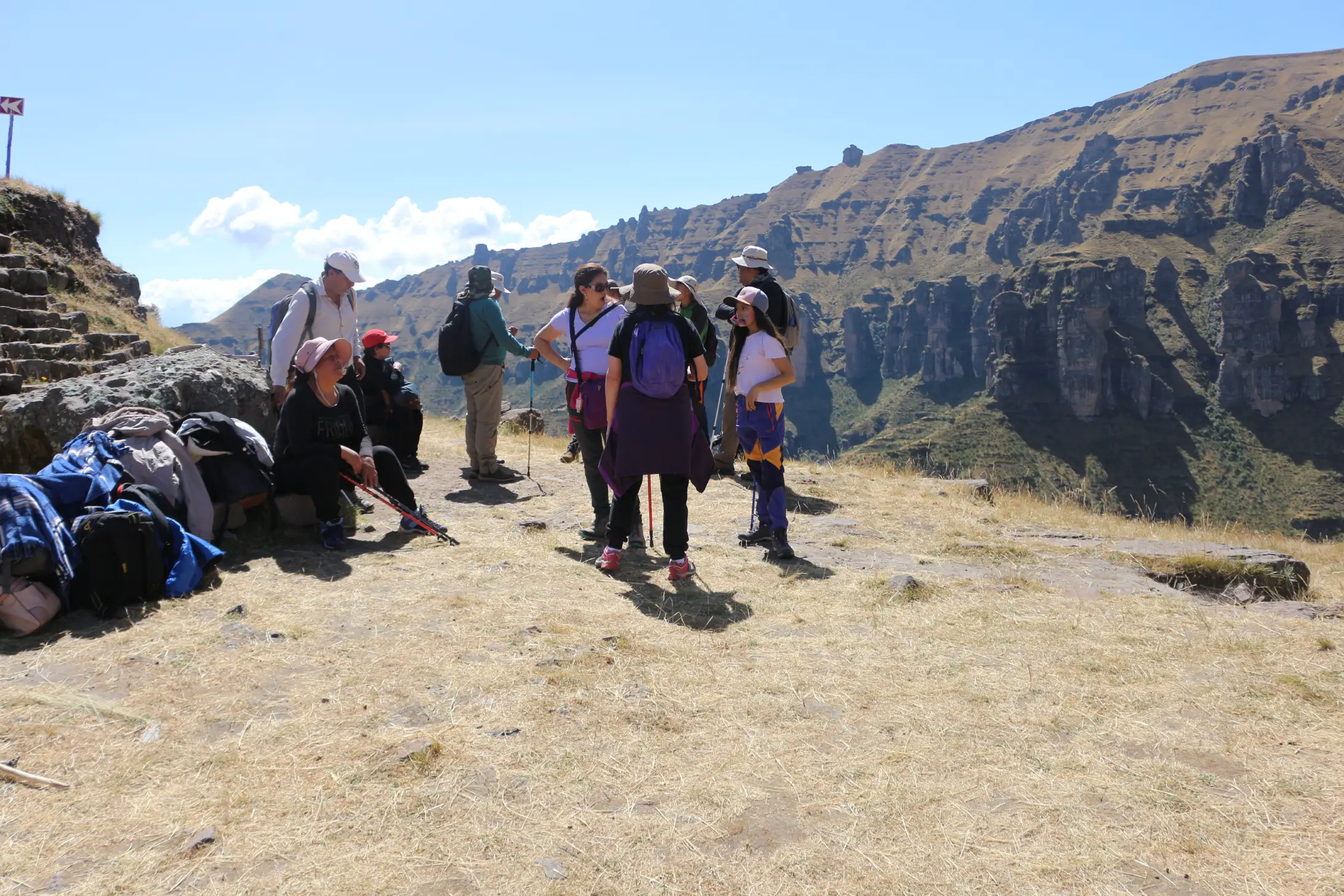
The archaeological site is built along a mountain ridge that offers panoramic views of the surrounding region, including snow-capped peaks, deep valleys, and highland plateaus stretching to the horizon. From this elevated position, ancient inhabitants could monitor trade and communication routes connecting different regions of what is now Peru.
To reach Waqrapukara from Cusco, visitors must embark on a roughly 3.5-hour drive to the village of Sangarará, the starting point for the final hike to the archaeological site. The last stretch requires a 2- to 3-hour trek, depending on pace and fitness level, through breathtaking high-Andean landscapes.
Monumental Architecture Integrated with Nature
The Waqrapukara archaeological complex consists of an impressive series of stone structures, including a large central plaza, ceremonial platforms, a sophisticated aqueduct system, and numerous buildings serving residential, ceremonial, and storage purposes. This remarkable site showcases advanced architectural techniques and an extraordinary adaptation to the natural environment.
Massive granite walls protect the complex, reaching up to 5 meters (16 feet) in height and, in some critical sections, up to 2 meters (6.5 feet) thick.These walls served not only as defenses but also as stabilizing structures for the terraced platforms built on the rugged mountain terrain.
The earliest constructions were primarily residential, following architectural patterns also found in other major Andean ceremonial centers like Pachacamac (Lima) and Maukallaqta (Arequipa). These similarities suggest shared construction traditions among different Andean cultures.
At the lower part of the complex, visitors can observe a system of eight agricultural terraces stretching approximately 153 meters (500 feet) in length, each averaging 1.8 meters (6 feet) in height. These terraces served not only for farming but also contributed to the structural stability of the site. Here, two particularly important enclosures stand out, featuring finely crafted double-jamb doorways, niches, and exceptional stonework that highlight the builders’ technical skill.


History and Mysteries of the Fortress
Archaeological research indicates that Waqrapukara was primarily built by the Qanchi culture, a pre-Inca people who inhabited this Andean region before the Inca Empire’s expansion. The Qanchis were renowned as expert farmers and engineers who developed sophisticated irrigation systems and construction techniques adapted to the harsh highland environment.
The site was officially rediscovered in the early 20th century by Western explorers, though local communities had always preserved its memory. Formal archaeological studies began in the 1980s and 1990s, revealing the site’s true scale and significance.
Along the trek to Waqrapukara, visitors can explore smaller but equally intriguing archaeological sites like Tambopukara, Yactapukara, and Ayapukara, which formed part of a broader defensive and ceremonial network controlling the region. These secondary sites provide further evidence of the social and political complexity of the cultures that lived here.
A fascinating academic debate surrounds Waqrapukara’s primary function. Some researchers argue it was a major pilgrimage route, where different ethnic groups gathered for religious ceremonies and spiritual rituals. Others propose it was primarily a strategic military fortress, designed to control territory and repel invasions.
The finely crafted stone stairways leading to the religious sector suggest ceremonial importance, while the presence of astronomical alignments in some structures supports the theory that Waqrapukara was a significant regional ceremonial center.


Biodiversity and Spectacular Landscapes
Waqrapukara captivates not only for its archaeological value but also for the extraordinary natural beauty surrounding it. During the hike and exploration, visitors can enjoy the high-Andean flora and fauna typical of this Peruvian Andean region.
The landscape is dotted with crystal-clear streams winding through the mountains, creating oases of vegetation in the arid highlands. Turquoise lagoons, fed by Andean glacial meltwater, provide a stunning contrast against the reddish and ochre tones of the surrounding rock formations.
Local wildlife includes South American camelids like llamas, alpacas, and occasionally wild vicuñas, grazing freely in the highland meadows. Birdwatchers may spot Andean condors soaring on thermal updrafts.
The high-altitude vegetation consists mainly of cold-resistant grasses, cushion plants adapted to extreme conditions, and occasional groves of queñua trees growing in wind-protected ravines. This biodiversity makes the visit a full immersion into the Andean ecosystem.


Essential preparations for the adventure
The visit to Waqrapukara requires careful preparation due to the extreme conditions of altitude, unpredictable weather and the physically demanding nature of the trek. Proper planning is essential to ensure a safe and enjoyable experience.
The weather factor deserves special attention, as at 4,300 meters altitude weather conditions can change rapidly. Daytime temperatures can be pleasant in direct sunlight, but drop dramatically at night and in the presence of clouds. The possibility of snowfall exists throughout the year, although it is more likely during the wet season months between December and March.
Acclimatization to the altitude is crucial to fully enjoy the experience. It is strongly recommended that visitors spend at least two or three days in the city of Cusco (located at 3,400 meters) before embarking on the Waqrapukara trek.
This period of gradual acclimatization allows the body to adapt to the lower oxygen concentration and significantly reduces the risk of experiencing symptoms of altitude sickness.
Personal equipment should include specialized trekking footwear with good grip and ankle support, as the terrain is uneven and may be wet or slippery. Clothing should follow the layering principle, combining thermal base layers, insulating mid-layers, and a waterproof and windproof outer jacket.
Trekking poles are highly recommended, especially for people who are not used to hiking in mountainous terrain, as they provide additional stability and reduce the impact on knees and ankles during the descent.


Food and Hydration for the Trek
Since there are no restaurants, shops, or commercial services of any kind in the Waqrapukara area, visitors must bring all necessary food and drinks for the entire excursion. Nutritional planning is especially important due to the increased energy expenditure required for physical activity at high altitude.
Recommended foods include various nuts such as walnuts, almonds, raisins, and dates, which provide concentrated energy and are easy to transport. Energy bars, dark chocolate, and dried fruits are excellent options to maintain energy levels during the hike.
Hydration deserves special attention at this altitude, where dehydration can occur more quickly due to accelerated breathing and lower atmospheric humidity. It is recommended to bring at least 2-3 liters of water per person, preferably supplemented with rehydration drinks to replace electrolytes lost during exercise.
During the rainy season (November to April), it is essential to carry rain protection equipment, including high-quality rain ponchos or waterproof jackets. The weather in the Andes can be extremely unpredictable, with the possibility of rain, hail, or even snow at any time of day.
Practical Access Information and Costs
One of the advantages of Waqrapukara for independent travelers is that it doesn’t require purchasing special tourist tickets in advance like other main attractions in Cusco. Access to the archaeological site is managed directly on-site, providing flexibility for visitors who prefer to travel without prior reservations.
Admission to Waqrapukara costs 15 Peruvian soles (approximately 4 US dollars), a very affordable fee considering the site’s uniqueness and magnificence. This ticket must be purchased only at the control booth located at the entrance to the protected area, as there is no online sales system or advance sales points in Cusco city.
Access hours are flexible, although it is recommended to start the hike early in the morning to take advantage of the best weather conditions and have enough time to explore the site comfortably before returning. Most visitors begin the hike between 7:00 and 8:00 AM, which allows arrival at Waqrapukara around noon and provides several hours for exploration.
Transportation Options and Logistics
Access to Waqrapukara can be organized in different ways, depending on budget, available time, and travelers’ personal preferences. The most popular option is to book an organized tour from Cusco that includes transportation, a guide, and sometimes meals, eliminating logistical concerns and allowing complete focus on the experience.
For independent travelers, there is the option of taking public transportation from Cusco to Sangarará, the village closest to the archaeological site. This option is more economical but requires more planning and flexibility with schedules. Local buses depart from Cusco’s terrestrial terminal, and the trip takes between 3 and 4 hours, depending on road conditions and intermediate stops.
Another alternative is to rent a private vehicle or hire a taxi for the transfer to Sangarará, which provides greater comfort and schedule flexibility. This option is especially recommended for groups of 3-4 people, as the cost is shared and becomes competitive compared to organized tours.
Best Time to Visit Waqrapukara
The choice of the ideal time to visit Waqrapukara depends on several factors, including weather conditions, tourist traffic, and each traveler’s personal preferences. The dry season, which runs approximately from May to September, offers the most predictable and favorable conditions for visiting.
During these months, the chances of rain are lower, the skies are usually clearer allowing spectacular panoramic views, and the trails are in better condition for hiking. However, it’s important to note that nights can be extremely cold, with temperatures that easily drop below freezing.
The wet season, between October and April, presents additional challenges due to the higher probability of precipitation, but also offers unique advantages such as greener landscapes, higher water flow in streams, and fewer tourists. More adventurous travelers who don’t mind the possibility of rain can enjoy a more intimate and authentic experience during these months.
Cultural Impact and Contemporary Significance
Waqrapukara represents much more than just a tourist destination; it is a living testimony to the cultural, architectural, and spiritual sophistication of pre-Hispanic Andean civilizations. For contemporary local communities, the site maintains deep cultural and spiritual significance that transcends its value as a tourist attraction.
The responsible preservation and promotion of Waqrapukara contributes directly to the economic development of rural communities in the region, providing employment opportunities as local guides, muleteers, and tourism service providers. This community-based tourism represents a sustainable economic alternative for populations that traditionally depended exclusively on subsistence agriculture and livestock.
Visiting Waqrapukara offers travelers a unique opportunity to connect with the deep history of the Andes, understand the complexity of pre-Columbian societies, and appreciate the extraordinary human capacity to adapt to extreme natural environments. This experience transcends simple archaeological tourism to become a lesson about resilience, innovation, and respect for the natural environment.
Conclusion: A Transformative Experience in the Andes
The important facts about Waqrapukara confirm that this archaeological site represents one of the most authentic and emotionally impactful experiences available for travelers interested in pre-Hispanic Andean culture. The combination of historical value, natural beauty, physical challenge, and spiritual significance makes the visit a transformative adventure that remains etched in the memory of those who experience it.
For travelers seeking alternatives to traditional tourist circuits in Cusco, Waqrapukara offers the opportunity to explore an exceptional archaeological site with fewer visitors, allowing for a more intimate and personal connection with Andean cultural heritage. The physical demands of the route add an element of personal achievement that amplifies the satisfaction of the experience.
Careful planning, respect for the natural and cultural environment, and proper physical preparation are key to maximizing enjoyment of this unique adventure in the Peruvian Andes. Waqrapukara awaits the most adventurous travelers with its ancient secrets, spectacular views, and powerful spiritual energy that connects the present with the glorious past of Andean civilizations.