
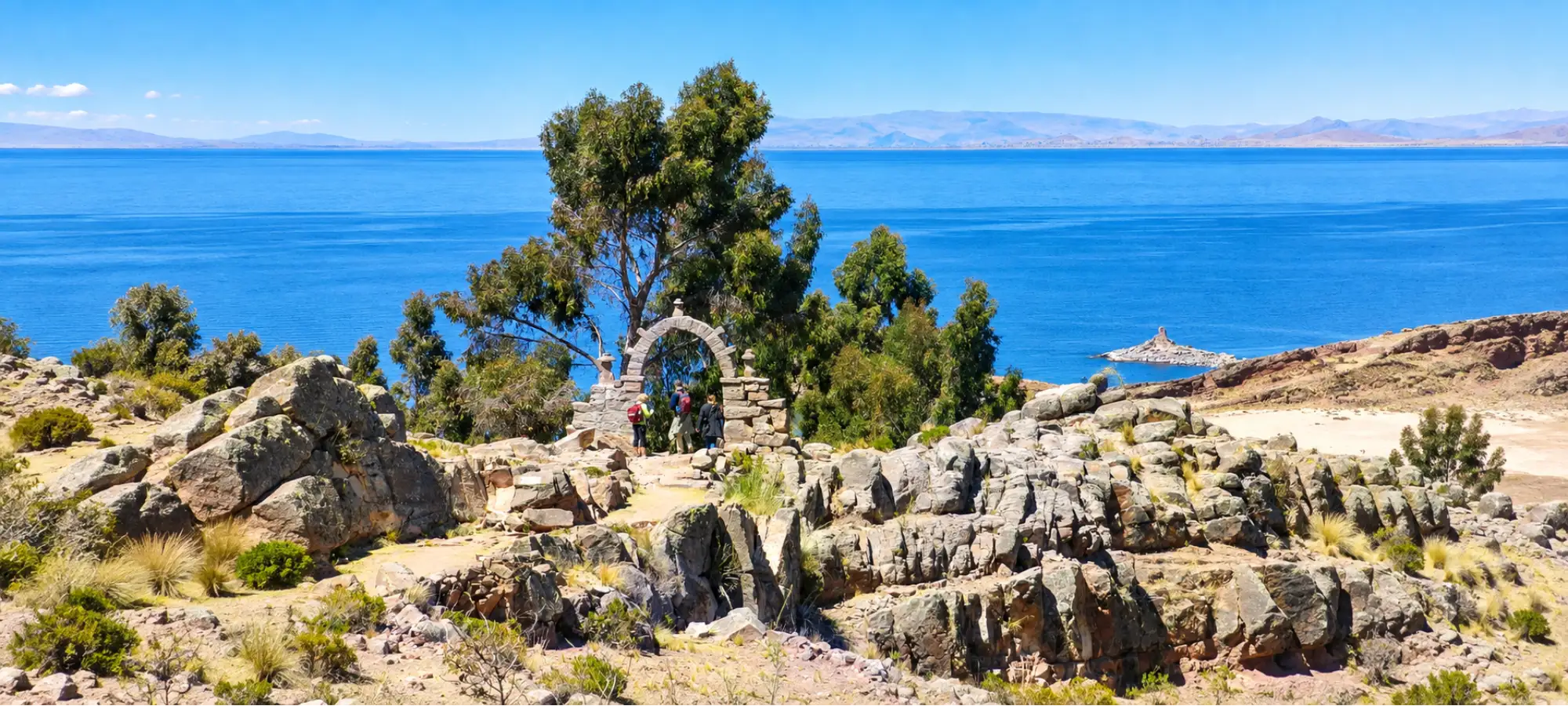
If you are planning a trip to Lake Titicaca, you may be wondering whether to visit Uros or Taquile. Both can be reached from Puno and are among the best-known places to explore on the Peruvian side of the lake, but they offer very different experiences.
The Uros Islands are known for their floating islands made primarily from totora reeds. Taquile, on the other hand, is a natural island located farther out on Lake Titicaca, known for its textile traditions, community life, walking trails, and expansive views across the lake.
So, when comparing Uros vs Taquile, the right choice largely depends on how much time you have and what you want to experience. Uros is easier to fit into a short stay in Puno, while Taquile requires more travel time and involves more walking.
If you have a full day available, you do not necessarily have to choose between them. The Uros and Taquile Full Day Tour allows you to experience both destinations during the same Lake Titicaca itinerary.
Below, we compare Uros and Taquile in terms of scenery, culture, travel time, walking, and the overall type of visit to help you decide which option fits your trip.
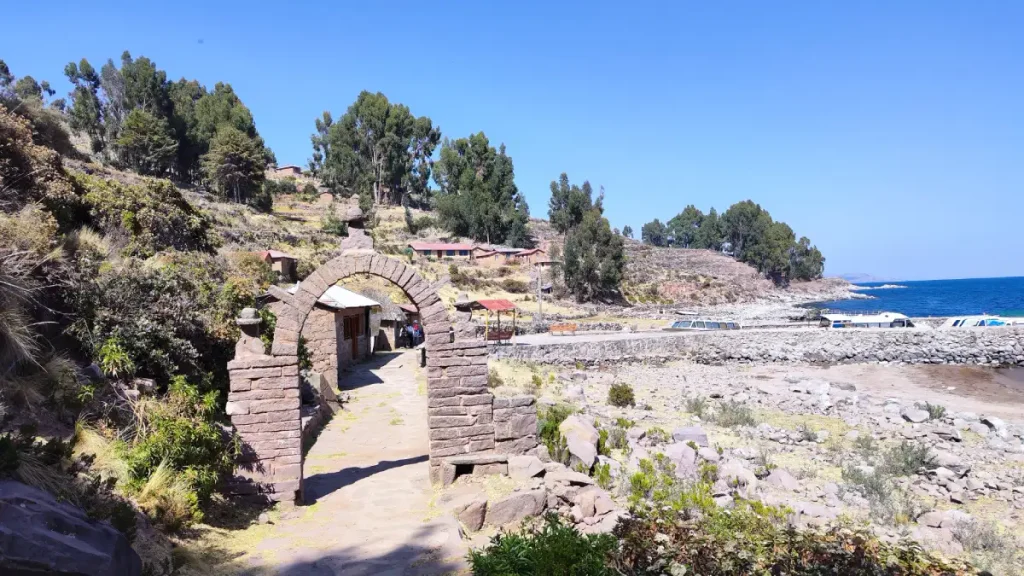
Uros vs Taquile: Main Differences
Although Uros and Taquile are both located on Lake Titicaca and commonly visited from Puno, they should not be seen as two versions of the same experience.
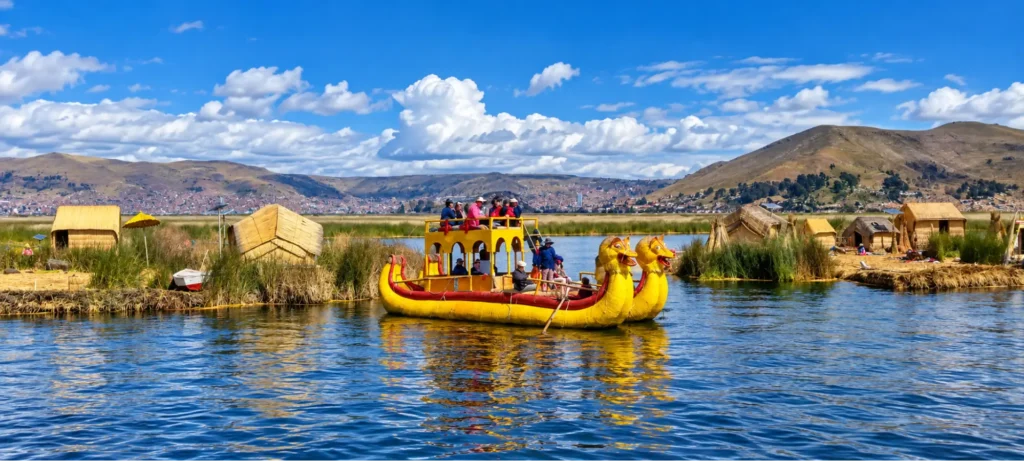
The main attraction of Uros is the floating-island environment itself. Local families have traditionally used totora reeds to construct and maintain the islands, as well as boats, homes, handicrafts, and other everyday objects.
Taquile offers a very different setting. It is a natural island with agricultural areas, walking paths, communities, and viewpoints overlooking Lake Titicaca. It is particularly well known for its textile traditions and community-based cultural practices.
| Feature | Uros Islands | Taquile Island |
|---|---|---|
| Type | Floating islands | Natural island |
| Distance from Puno | Closer | Farther away |
| Known for | Totora reed islands | Textile traditions and community life |
| Walking | Limited | More walking required |
| Time needed | Suitable for shorter visits | Better with more time available |
| Best suited for | Travelers with limited time or an interest in the floating islands | Travelers interested in landscapes, textiles, and a longer cultural visit |
| Can they be combined? | Yes | Yes |
The biggest practical difference is time. If you only have a few hours in Puno, Uros is generally easier to include. If you have a full day, reaching Taquile becomes much more practical.iamente entre una y otra. Cuando se dispone de un día completo, Uros y Taquile pueden formar parte del mismo recorrido.
What Are the Uros Islands Like?
The Uros Islands are unlike conventional islands. They are floating platforms constructed and maintained using totora, an aquatic reed that grows naturally in the shallow areas of Lake Titicaca.
During a visit, travelers can learn how these islands are built and maintained, see structures made from totora, and hear explanations about the daily activities of the families who receive visitors.
The floating islands are also considerably closer to Puno than Taquile. This makes them particularly convenient for travelers with limited time who still want to experience Lake Titicaca.
For more detailed planning information, see our Uros Islands guide, learn how to get to the Uros Islands from Puno, or read our guide answering are the Uros Islands worth visiting?.
These guides explore Uros in greater depth, while this comparison focuses specifically on deciding between Uros and Taquile.
What Is Taquile Island Like?
Taquile feels very different from Uros as soon as you arrive. Rather than floating platforms, you will find a natural island with paths, agricultural land, local communities, and open views across Lake Titicaca.
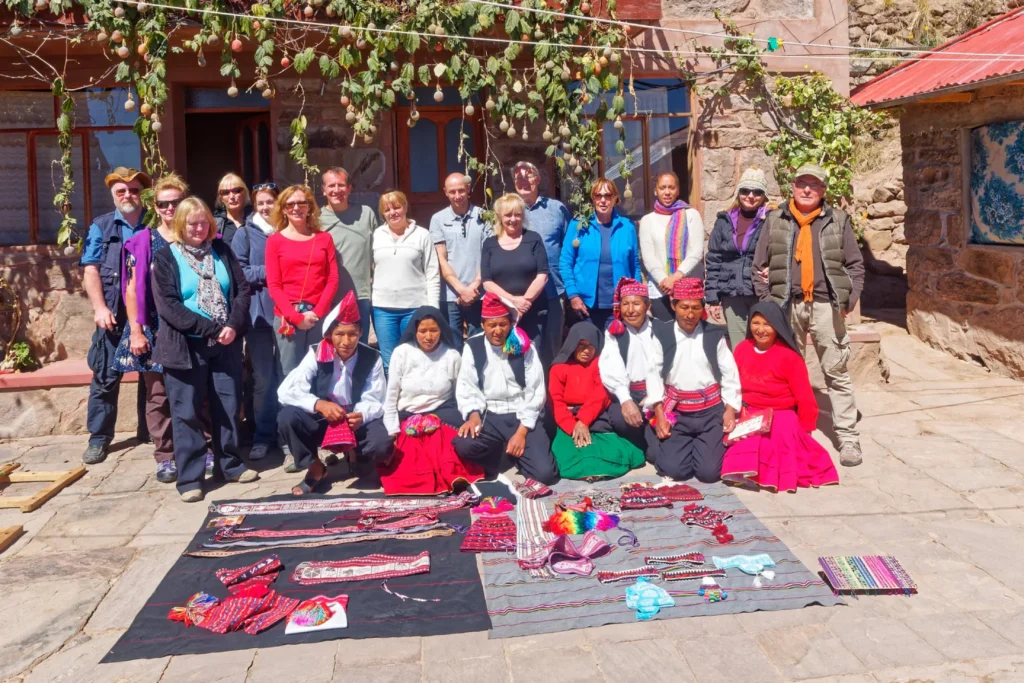
One of the island’s defining cultural features is its textile tradition. Textile production remains closely connected with the island’s cultural identity, social organization, and knowledge passed between generations.
Travelers should also expect more walking here than on the Uros Islands. Visiting different areas of Taquile involves following paths across terrain with elevation changes, and the high altitude of Lake Titicaca can make physical activity feel more demanding for some visitors.
Walking at a comfortable pace, staying hydrated, and avoiding unnecessary exertion can make the visit more manageable.
If Taquile is part of your itinerary, read our guide on how to visit Taquile Island from Puno and learn more about the traditional textiles of Taquile.

Uros or Taquile: Which Is Better If You Have Limited Time?
If your schedule in Puno is tight, the Uros Islands are generally easier to visit.
Their proximity to Puno means less time is spent traveling by boat compared with a trip to Taquile. This makes Uros suitable for travelers who only have part of a day available before continuing their journey elsewhere in Peru.
A shorter visit does not mean there is nothing to learn. Uros provides an opportunity to understand the construction of the floating islands and the importance of totora in this part of Lake Titicaca.
If Uros is your main priority, you can consider the Uros Islands Tour from Puno, which focuses specifically on visiting the floating islands.
Taquile, by comparison, works better when you can dedicate a larger portion of the day to exploring Lake Titicaca.
Is Taquile Worth Visiting If You Have a Full Day?
If you have enough time, Taquile adds another perspective to a Lake Titicaca trip.
The journey takes you farther from Puno, and once on the island, walking becomes an important part of the visit. Rather than focusing on the construction of floating islands, Taquile offers an opportunity to explore a natural island landscape and learn about local textile traditions and community life.
For travelers interested in photography and scenery, the island also provides broad views across Lake Titicaca from different points along the walking route.
The longer journey means Taquile is less practical for a short excursion. However, when you have a full day available, it can be combined with Uros rather than treated as an alternative.
Our guide on how to visit Taquile Island from Puno provides more specific information about planning a trip to the island.
Which Requires More Walking: Uros or Taquile?
Taquile generally requires more walking.
Visits to the Uros Islands involve relatively short movements within the floating islands being visited. Taquile has paths connecting different areas, and its terrain includes slopes and changes in elevation.
This difference is worth considering because Lake Titicaca sits at high altitude. Even travelers who normally walk long distances may notice that physical activity feels different at this elevation.
You do not need to rush. Walking slowly, drinking enough water, and allowing time for breaks are sensible precautions when exploring Taquile.
Travelers who prefer minimal walking may therefore find Uros easier, while those comfortable with a more active visit can consider Taquile or a combined itinerary.
Can You Visit Uros and Taquile in One Day?
Yes. If you have a full day available in Puno, visiting Uros and Taquile together is a practical way to experience both environments.
A combined route visits the floating Uros Islands and then continues farther across Lake Titicaca toward Taquile. This creates a clear contrast within the same day: the totora-based floating islands followed by the natural landscapes and cultural traditions of Taquile.
This option is particularly useful for travelers who only have one full day allocated to Lake Titicaca but want to see more than one part of the lake.
Top Inka Travel offers the Uros and Taquile Full Day Tour for travelers who want to visit both destinations during the same excursion.
If you are still planning your stay in the region, our Lake Titicaca travel guide and Puno travel guide can help you decide how much time to dedicate to the lake and its islands.
Uros vs Taquile for Culture and Local Traditions
Both destinations provide opportunities to learn about local traditions, but travelers encounter them in different ways.
On Uros, much of the visit focuses on the relationship between local communities and totora. This reed has historically been used for constructing and maintaining the floating islands and for making boats, structures, and other practical objects.
Taquile is particularly associated with textile production. Clothing and textile techniques form an important part of local cultural expression and community traditions.
You can explore this subject in greater detail in our article about the traditional textiles of Taquile.
For this reason, choosing based purely on which destination is “more cultural” is not especially useful. Uros and Taquile highlight different aspects of life around Lake Titicaca.
Visiting both provides a broader perspective than treating the two destinations as interchangeable attractions.
Uros and Taquile or Amantani: What Is the Difference?
If you can spend more than one day on Lake Titicaca, another option is Amantani Island.
Adding Amantani changes the pace of the trip considerably. Instead of completing the main island visits within a single day, itineraries involving Amantani can include an overnight stay and more time within local communities.
A simple way to compare the options is:
- Only a few hours available: Uros
- One full day: Uros + Taquile
- Two days and one night: Uros + Taquile + Amantani
If you are considering spending more time on Lake Titicaca, read our Amantani Island guide and learn what it is like staying with a local family on Amantani.
You can also compare the one-day excursion with the Uros, Taquile and Amantani 2-Day Tour.
If you are still deciding between the two natural islands specifically, our upcoming guide Taquile vs Amantani: Which Island Should You Visit? will compare them in greater detail.
How Much Time Should You Spend on Lake Titicaca?
The amount of time you should allocate depends on how important Lake Titicaca is within your Peru itinerary.
Travelers with only a few hours can focus on Uros. With one complete day, combining Uros and Taquile provides a more varied look at the lake. Travelers with two days can consider extending the route toward Amantani.
If Puno is more than a short stop between destinations, allowing additional time also makes it easier to explore beyond the islands.
Our Puno travel guide provides a broader overview of the destination, while the Lake Titicaca travel guide focuses specifically on planning a visit to the lake.
Uros or Taquile: How to Choose
The easiest way to decide between Uros and Taquile is to consider your available time first and your interests second.
Choose Uros if you have limited time and your priority is seeing the floating islands and learning about the use of totora.
Consider Taquile if you have more time, are comfortable with additional walking, and are particularly interested in traditional textiles, community life, and natural island landscapes.
If you have a full day, however, there is little need to make the decision an either-or choice. Visiting both islands allows you to experience two contrasting environments within Lake Titicaca.
Travelers planning a full day on the lake can explore the Uros and Taquile Full Day Tour, while those still organizing their itinerary can browse our Puno tours to compare other experiences in the region.
Frequently Asked Questions About Uros and Taquile
Are Uros and Taquile the same?
No. Uros consists of floating islands constructed and maintained primarily with totora reeds, while Taquile is a natural island in Lake Titicaca. They also differ in their distance from Puno, landscapes, cultural features, and the amount of walking involved.
Which is closer to Puno, Uros or Taquile?
The Uros Islands are closer to Puno. Reaching Taquile requires traveling farther across Lake Titicaca, so more time should be allocated to the journey.
Which requires more walking, Uros or Taquile?
Taquile generally requires more walking. Its paths connect different parts of the island and include changes in elevation. Walking during a typical Uros visit is more limited.
Can I visit Uros and Taquile on the same day?
Yes. Uros and Taquile can be combined in a full-day excursion from Puno. This is a practical option for travelers who want to experience both the floating islands and Taquile but only have one full day available.
Which should I visit if I only have half a day?
Uros is generally better suited to a half-day itinerary because the floating islands are much closer to Puno. Taquile requires a longer boat journey and is better suited to travelers with more time.
Is Uros or Taquile better for photography?
They offer different photographic settings. Uros is characterized by totora islands, reed structures, and scenes close to the water, while Taquile offers natural island landscapes and wider views across Lake Titicaca.
Do I need to choose between Uros and Taquile?
Not necessarily. If you have a full day in Puno, both destinations can be included in the same excursion. Choosing only one becomes more relevant when your time in Puno is limited.