
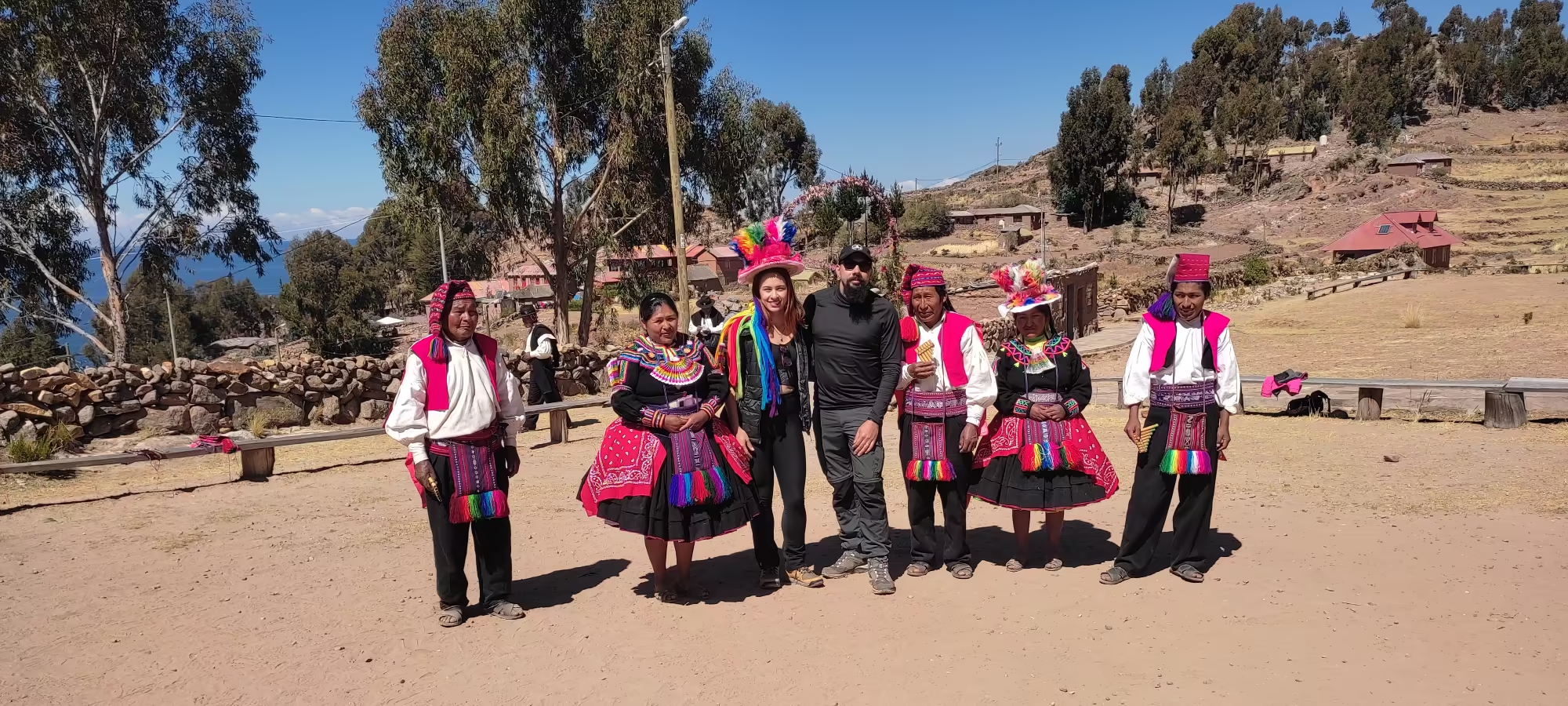
Taquile Island is one of the most fascinating places to visit on the Peruvian side of Lake Titicaca. Unlike the floating Uros Islands, Taquile is a natural island known for its panoramic lake views, agricultural terraces, walking paths and remarkable textile traditions.
For travelers staying in Puno, an important question is how to visit Taquile Island from Puno and how much time to allow for the trip.
Most travelers visit Taquile on a full-day excursion, often combining the island with the Uros Floating Islands. Longer Lake Titicaca itineraries may also include Amantani Island.
If you are planning a trip to Taquile Island in Peru, this guide explains how to get there, what to see, how long the journey takes, what the walking is like and how to include Taquile in your Lake Titicaca itinerary.

Where Is Taquile Island?
Taquile Island is located on Lake Titicaca, in the Puno region of southern Peru.
It lies considerably farther from Puno than the Uros Islands, which means reaching Taquile requires a longer boat journey across the lake.
The island is part of many Lake Titicaca tours from Puno and is frequently combined with Uros on full-day excursions.
Its location also provides expansive views across the lake. On clear days, the combination of deep blue water, agricultural terraces and distant mountains creates some of the most memorable scenery on the Peruvian side of Lake Titicaca.
Why Visit Taquile Island?
There are several reasons to include Taquile Island in your Puno itinerary.
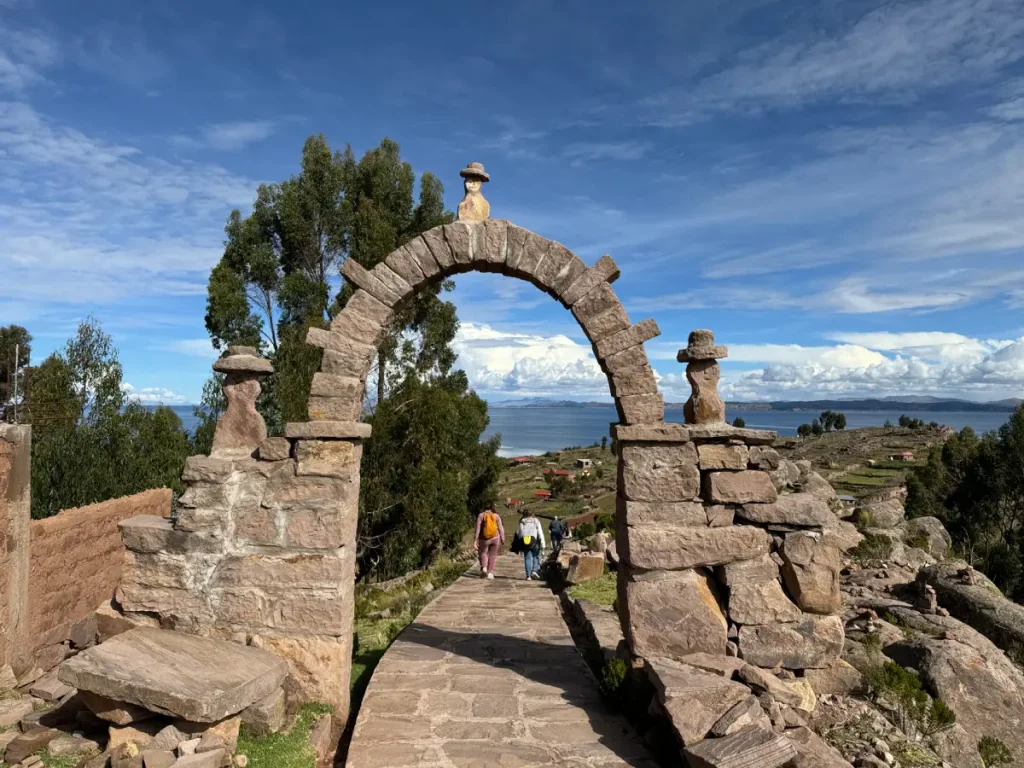
Unlike Uros, Taquile is not a floating island. It is a natural island with stone paths, agricultural terraces, hillsides and communities spread across the landscape.
One of its most distinctive cultural features is its textile tradition.
The textile art of Taquile has received international recognition from UNESCO as part of the island’s intangible cultural heritage.
Textiles are not simply souvenirs for visitors. Knitted and woven garments form part of local cultural practices, knowledge and social traditions passed between generations.
Taquile also offers something many travelers want from Lake Titicaca: the opportunity to walk through the landscape rather than experience the lake primarily from a boat.
How to Visit Taquile Island from Puno
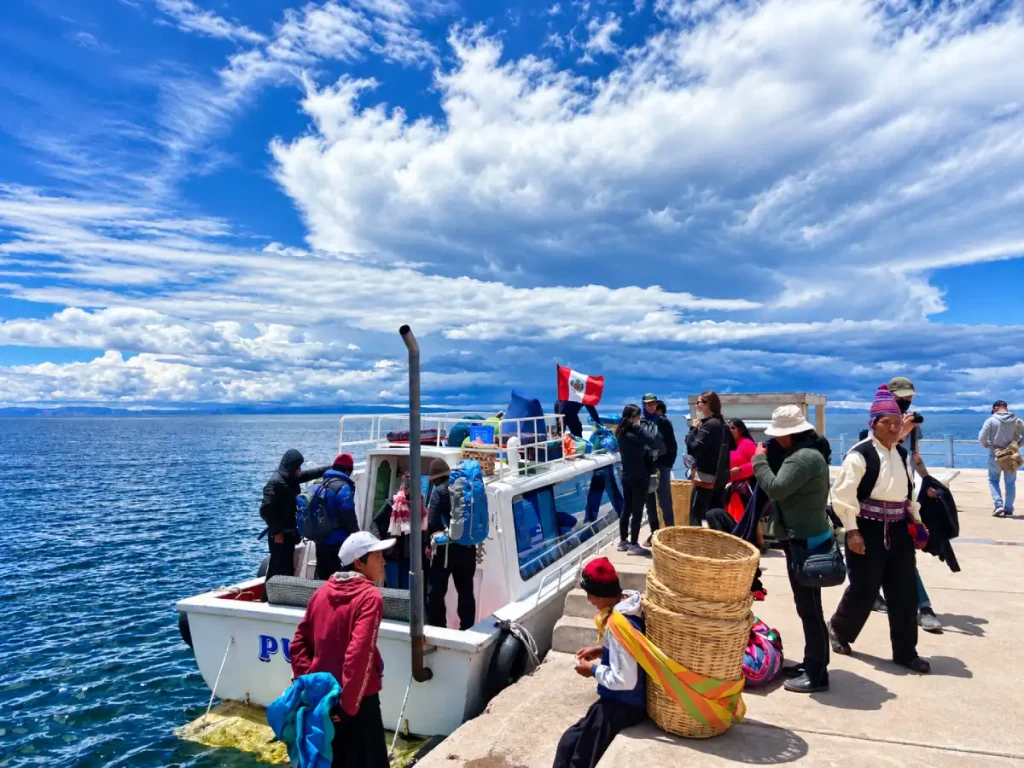
The most common way to visit Taquile Island from Puno is by boat.
Because of the distance across Lake Titicaca, many international travelers choose an organized excursion that coordinates transportation, island visits and the return to Puno.
There are two particularly common ways to include Taquile in your itinerary.


Uros and Taquile Full-Day Tour
A Uros and Taquile tour from Puno is one of the most practical choices if you have one full day available.
Tours usually leave Puno in the morning and first visit the Uros Floating Islands before continuing across Lake Titicaca toward Taquile.
Once on Taquile, the itinerary generally includes walking through part of the island, learning about local culture and textile traditions, enjoying views of the lake and having some time to experience the island before returning to Puno.
The exact route, walking distance and stops depend on the tour and boat service.
Uros, Amantani and Taquile in Two Days
Travelers who want to spend more time exploring Lake Titicaca can consider a two-day itinerary combining Uros, Amantani and Taquile.
This option allows you to experience three very different environments instead of trying to see the lake during a single day.
It is particularly suitable for travelers who consider Lake Titicaca one of the main destinations of their Peru itinerary.


How to Get to Taquile Island from Puno
If you are researching how to get to Taquile Island from Puno, the important thing to understand is that access is by boat.
Boats depart from the Puno area and cross Lake Titicaca toward Taquile. Some itineraries travel directly toward the island, while many tourist excursions stop at Uros first.
The exact departure arrangements depend on the service you choose.
Because boat schedules and operating conditions can change, avoid planning your trip around an old timetable found online. Confirm current departure and return arrangements for your travel date.
For most visitors, booking a Taquile Island tour from Puno is the simplest way to coordinate the journey.
How Long Is the Boat Ride from Puno to Taquile Island?
Taquile is significantly farther from Puno than Uros.
Travel time varies according to the type of boat, lake conditions and whether the itinerary includes additional stops.
As a general reference, conventional boats traveling directly between Puno and Taquile may take approximately 2.5 to 3.5 hours, while faster services can reduce travel time.
If your excursion visits Uros first, the journey is naturally divided into different sections.
Because of these distances, travelers should generally consider Taquile a full-day trip from Puno rather than a short excursion.
Always check the itinerary of the specific service you plan to book.
Can You Visit Taquile Island Independently?
Independent travel to Taquile is possible, but it requires more planning than visiting on an organized excursion.
You need to coordinate boat transportation, departure times and the return to Puno while leaving enough time to explore the island.
Services can vary by season and demand, so travelers should verify current arrangements locally rather than relying entirely on old travel blogs or forum posts.
If you have limited time in Puno, an organized Taquile Island tour can make the logistics considerably easier.
Independent travel may appeal more to visitors who have a flexible schedule and want greater control over their time.
Things to Do on Taquile Island
Although the island is widely known for its textiles, there are several things to do on Taquile Island during a visit.
Walk Across Taquile Island
Walking is a major part of the experience.
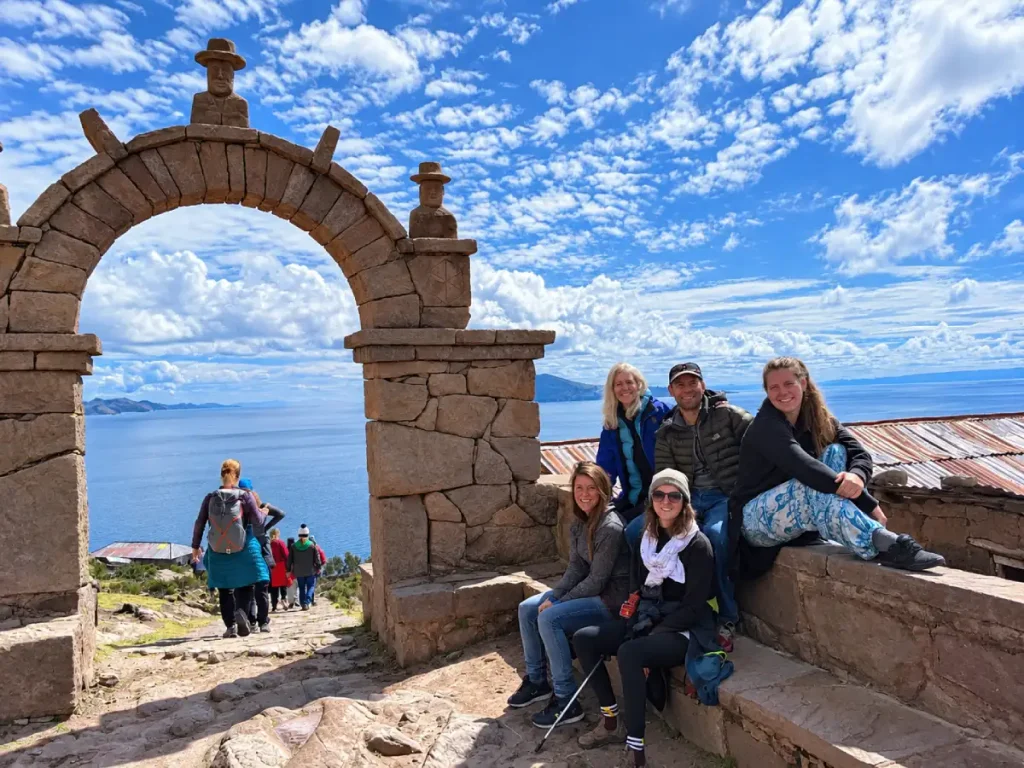
Paths cross agricultural areas and different sections of the island, with frequent views over Lake Titicaca.
The landscape can look peaceful, but the altitude makes some sections more physically demanding than they might appear.
Take your time, especially when walking uphill.
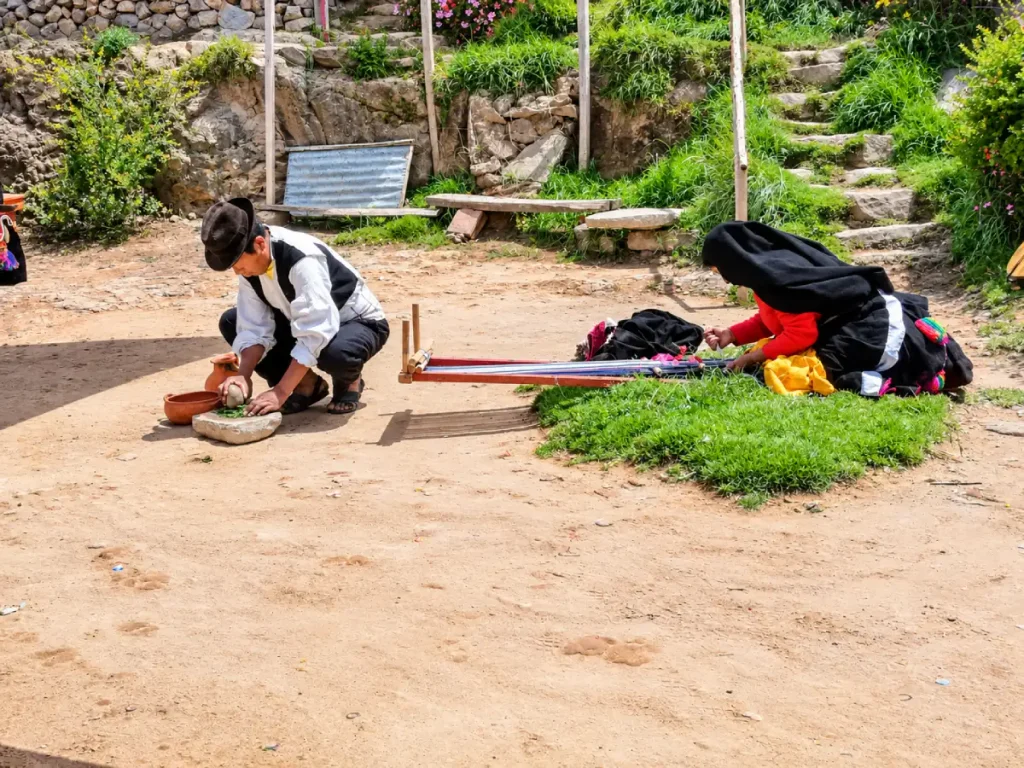
Discover Taquile’s Textile Traditions
Taquile’s textiles are one of the island’s most important cultural expressions.
Knitted and woven garments, hats, belts and other textiles are connected with knowledge passed through generations.
Different textile traditions also have cultural and social meanings beyond their visual appearance.
We will explore this subject in greater depth in our dedicated guide to the textiles of Taquile Island.
Enjoy the Views of Lake Titicaca
Taquile offers a completely different perspective on Lake Titicaca from the floating islands.
Stone paths, agricultural terraces and hillsides overlook the lake, creating excellent viewpoints throughout the island.
On clear days, visibility across the water can be impressive.
Learn About Contemporary Island Life
Tourism is part of Taquile’s present-day economy, but the island is also home to a living community.
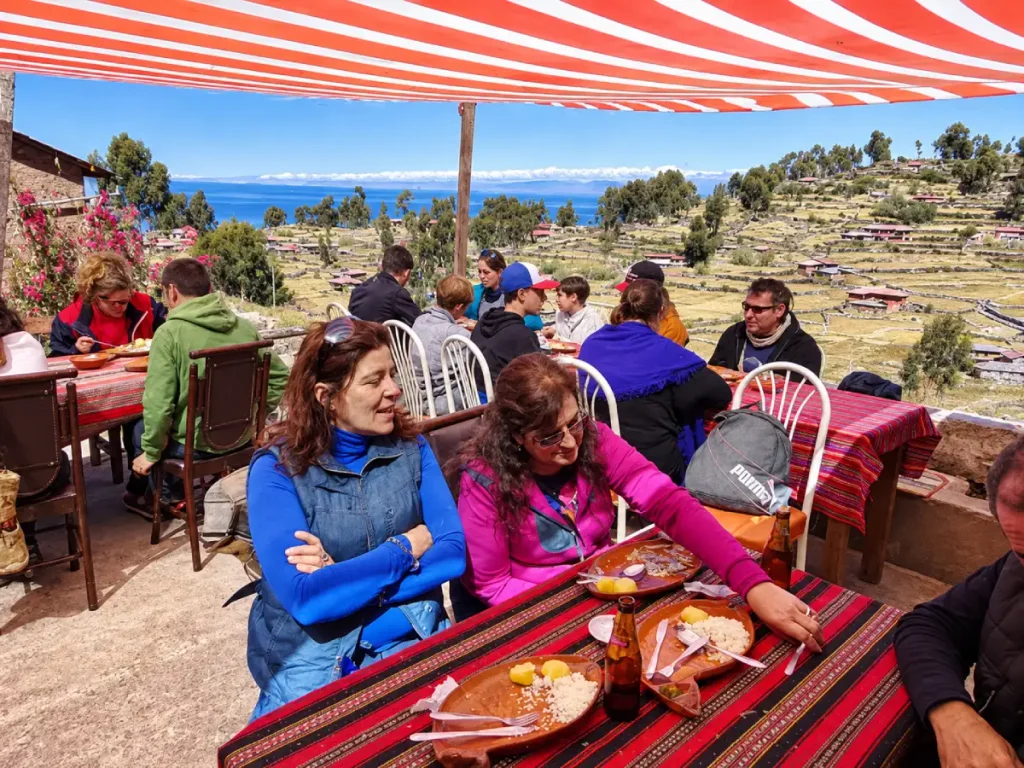
A visit can provide some insight into how local traditions, agriculture, textile production and tourism coexist today.
It is best to approach Taquile as a contemporary community rather than expecting life on the island to remain unchanged from centuries ago.
Is Taquile Island Difficult to Walk?
Travelers should consider this before booking.
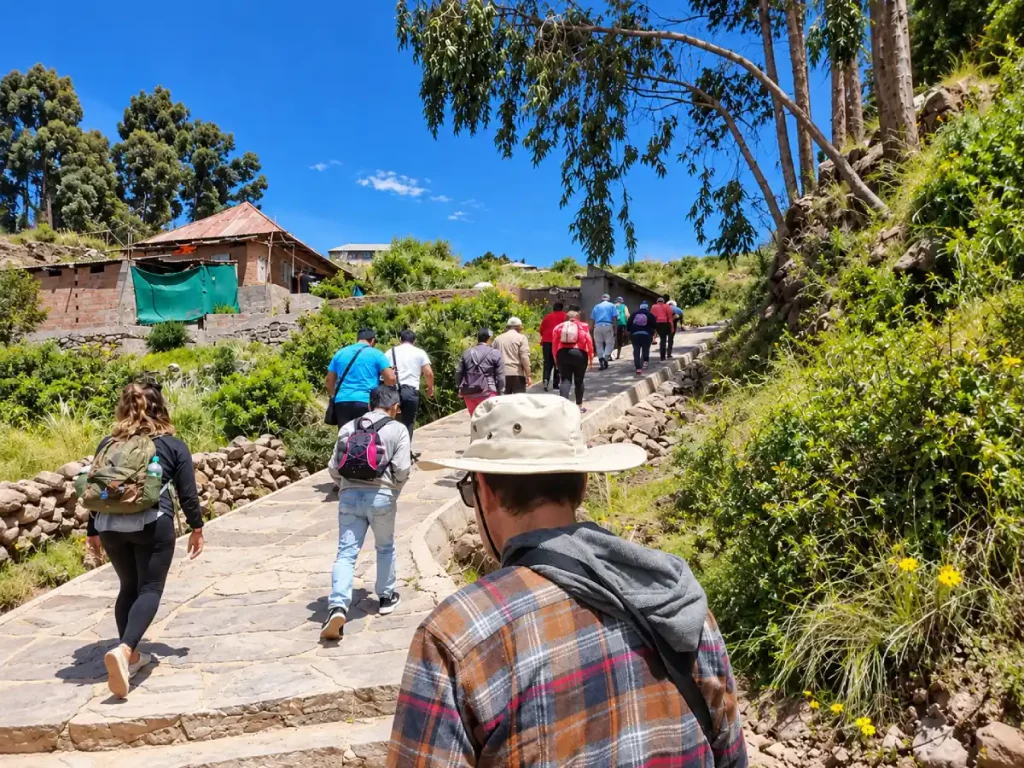
A visit to Taquile involves walking, and depending on the landing point and route, you may encounter uphill sections and stairs.
The main challenge is not necessarily the technical difficulty of the paths but the high altitude of Taquile Island.
Lake Titicaca itself lies at approximately 3,812 meters (12,507 feet) above sea level, while parts of Taquile reach higher elevations.
At this altitude, climbing stairs or walking uphill may feel noticeably harder than at sea level.
Walk slowly, stay hydrated and pay attention to how your body responds to the altitude.
Travelers arriving directly from low elevations may prefer to spend some time adjusting to the altitude before taking on longer walks.
How Much Time Do You Need on Taquile Island?
For travelers staying in Puno, a full day is generally the most practical amount of time for visiting Taquile.
Much of the day is required because of the boat journey rather than because you need an entire day to walk around the island.
A full-day excursion allows enough time to travel across Lake Titicaca, visit part of Taquile and return to Puno.
If you also want to visit Amantani, consider a two-day itinerary.
Travelers spending several days in Puno can combine the islands with archaeological and cultural attractions elsewhere in the region.
Uros vs Taquile: Which Should You Visit?
The Uros Islands and Taquile Island offer very different experiences.
Uros is known for its floating platforms constructed with totora reeds. The islands are relatively close to Puno and can be visited during a half-day trip.
Taquile is a natural island farther across Lake Titicaca. The experience involves more walking and focuses on landscapes, agricultural terraces and textile traditions.
If you only have half a day, Uros is easier to include.
If you have a full day, you may not need to choose between Uros vs Taquile. Many excursions combine both destinations.
This is one reason a Uros and Taquile full-day tour is a popular way to experience Lake Titicaca from Puno.
Taquile vs Amantani: What Is the Difference?
Travelers also frequently compare Taquile vs Amantani.
Both are natural islands on Lake Titicaca, but they usually play different roles in a travel itinerary.
Taquile is commonly visited as part of a full-day excursion from Puno.
Amantani is often included in longer itineraries, particularly two-day trips that spend a night on the island before continuing to Taquile.
For this reason, travelers do not necessarily need to choose one or the other.
A longer Lake Titicaca itinerary can include Uros, Amantani and Taquile.
What Is the Best Time to Visit Taquile Island?
Taquile Island can be visited throughout the year, but weather conditions vary between seasons.
The period from roughly May through September is generally associated with drier conditions in the Peruvian Altiplano. Clearer skies are more common, although mornings, evenings and nights can be particularly cold.
During the wetter part of the year, landscapes can appear greener, but rain and changing weather conditions are more frequent.
Regardless of the season, weather on Lake Titicaca can change quickly.
Sun exposure is also strong at high altitude, even when temperatures feel cool.
What to Bring to Taquile Island
You do not need extensive equipment for a day trip, but the altitude and rapidly changing conditions make a few items particularly useful:
- Comfortable walking shoes.
- Sunscreen.
- Sunglasses.
- Hat or cap.
- Water.
- Light layers.
- Warm jacket or windbreaker.
- Rain protection during the wetter months.
- Cash for small purchases.
Dressing in layers is particularly useful because temperatures can change noticeably throughout the day.
Can You Visit Uros and Taquile in One Day?
Yes. Visiting Uros and Taquile in one day is one of the most common ways to explore Lake Titicaca from Puno.
The day usually begins early, with Uros as the first stop before continuing toward Taquile.
Because Taquile lies farther across the lake, this is a significantly longer excursion than visiting only the Uros Islands.
The advantage is that you experience two very different destinations during the same day: the floating totora platforms of Uros and the natural landscape and textile traditions of Taquile.
Is Taquile Island Worth Visiting?
For travelers who want to experience more than a short visit to Uros, Taquile Island can be a valuable addition to a Lake Titicaca itinerary.
Its landscapes, agricultural terraces, walking routes and textile traditions create an experience distinct from the floating islands.
However, there are two practical considerations: the long boat journey and walking at high altitude.
Travelers who are comfortable with both can easily dedicate a full day to Uros and Taquile.
If you have very limited time in Puno, you may prefer a shorter Lake Titicaca excursion.
How to Include Taquile in Your Puno Itinerary
The best option depends on how much time you have.
If you have one full day for Lake Titicaca, combining Uros and Taquile is one of the most practical itineraries.
With two days, you can consider an itinerary covering Uros, Amantani and Taquile.
Travelers with additional time can combine Lake Titicaca with attractions around Puno, such as the Sillustani burial towers.
Our guide to the best things to do in Puno can help you organize the rest of your stay.
You can also explore our Lake Titicaca Peru guide if you are still deciding which islands to visit.
Frequently Asked Questions About Taquile Island
Where is Taquile Island?
Taquile Island is located on the Peruvian side of Lake Titicaca in the Puno region of southern Peru.
How do you get to Taquile Island from Puno?
Travelers reach Taquile by boat from Puno. Many organized excursions combine Taquile with a visit to the Uros Floating Islands.
How long does it take to get from Puno to Taquile Island?
Travel time depends on the boat, weather conditions and itinerary. Conventional direct services may take approximately 2.5 to 3.5 hours as a general reference.
Can you visit Taquile Island in one day?
Yes. Taquile is commonly visited as a full-day trip from Puno, often combined with Uros.
How much time do you need for Taquile Island?
Plan a full day when traveling from Puno because of the navigation time across Lake Titicaca.
Is Taquile Island at high altitude?
Yes. Lake Titicaca is approximately 3,812 meters (12,507 feet) above sea level, and parts of Taquile are higher.
Is there a lot of walking on Taquile Island?
Walking is an important part of most visits. Depending on the itinerary, you may encounter slopes and stairs, which can feel more demanding because of the altitude.
Can you visit Uros and Taquile on the same day?
Yes. Uros and Taquile day tours from Puno are a common way to visit both destinations in one day.
Explore Taquile Island and Lake Titicaca from Puno
Taquile Island combines spectacular Lake Titicaca scenery, agricultural terraces, walking paths and one of the region’s most recognized textile traditions.
Getting there requires more time than visiting Uros, but Taquile offers travelers another perspective on the Peruvian side of Lake Titicaca.
If you have one full day, our Uros and Taquile Full-Day Tour from Puno allows you to experience both destinations. Travelers looking for a longer journey can explore Uros, Amantani and Taquile in 2 days and 1 night.