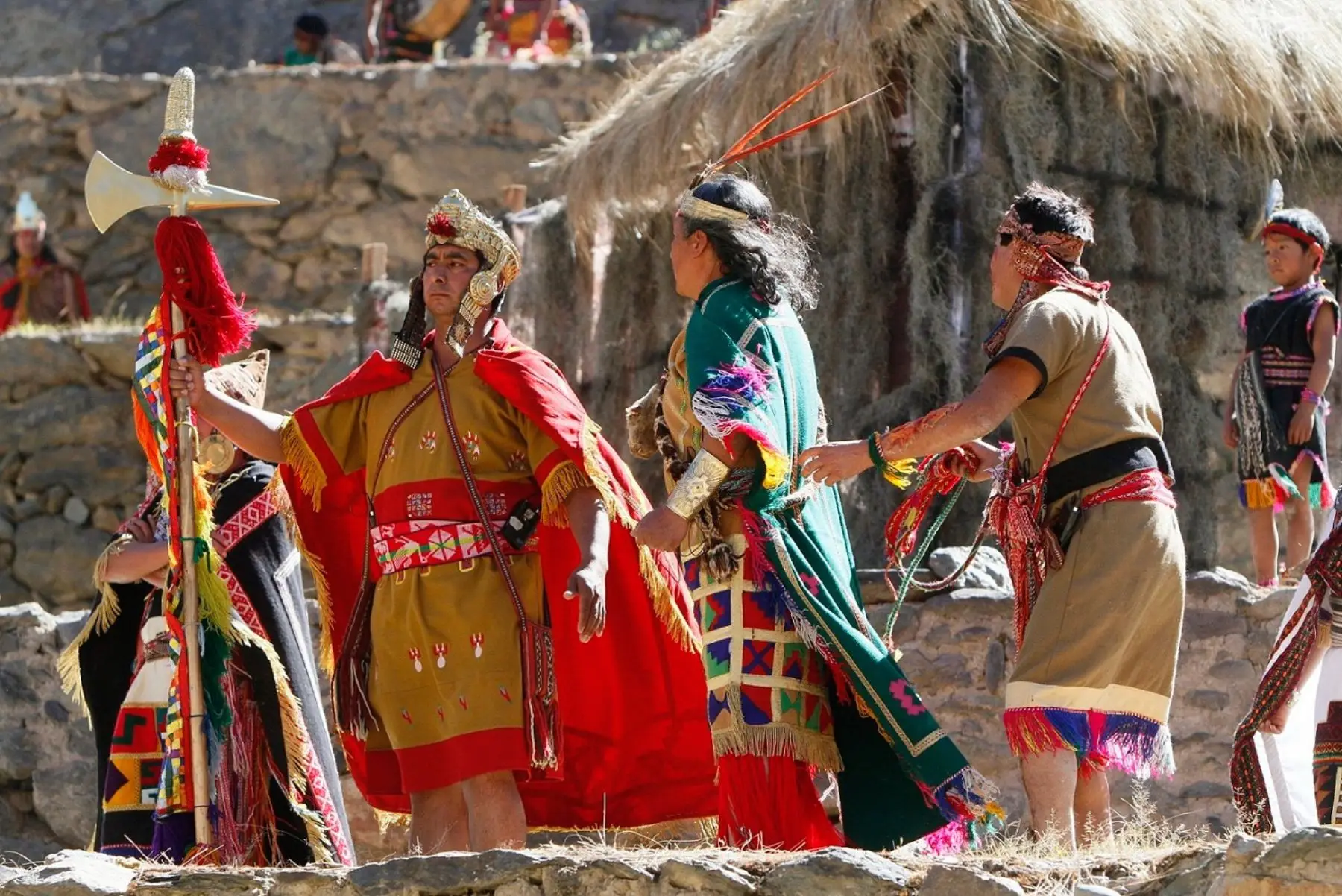
Summary Ollantay’s Story, is one of the most important works of Quechua literature. This drama tells the story of the forbidden love between a brave warrior and an Inca princess. The tale has survived for centuries, offering a glimpse into the traditions and life of the Inca Empire.


Main Characters
- Ollantay: A courageous general in the Inca army. Though not of royal blood, he earned great respect for his bravery in battle and loyalty to the empire.
- Cusi Coyllur (“Joyful Star”): The beautiful daughter of Emperor Pachacútec. Her name means “Star of Joy” in Quechua.
- Pachacútec: The powerful Inca emperor, father of Cusi Coyllur, known for his strict adherence to imperial traditions and laws.
- Ima Súmac: The secret daughter of Ollantay and Cusi Coyllur.
- Rumi Ñawi: An Inca general and rival of Ollantay.
The Story
A Forbidden Love
Many years ago, during the reign of Emperor Pachacútec, a brave warrior named Ollantay lived. Despite not being of noble blood, he had earned great respect for his courage and loyalty. Ollantay fell deeply in love with Cusi Coyllur, the emperor’s daughter. However, Inca law forbade their union, as only royalty could marry within their own lineage to preserve the purity of noble blood.
The Rejected Proposal
One day, Ollantay risked everything for love. He boldly approached Pachacútec and asked for Cusi Coyllur’s hand in marriage. Enraged by this audacity, the emperor immediately refused and warned Ollantay to abandon his impossible love. Yet, Ollantay’s heart remained steadfast. Secretly, he and Cusi Coyllur continued their relationship, and from their love, a daughter named Ima Súmac was born.
Rebellion and Punishment
When Pachacútec discovered his orders had been defied, he imprisoned Cusi Coyllur in the Acllahuasi (House of the Chosen Women) and ordered Ollantay’s capture. Knowing his life was in danger, Ollantay fled to the fortress of Ollantaytambo (now named after him) and rebelled against the emperor. There, he gathered followers and resisted the Inca army for years.
Forgiveness and Reunion
Years later, when Túpac Yupanqui succeeded his father as emperor, he sought to resolve the conflict peacefully. He sent General Rumi Ñawi with an offer of reconciliation. Ollantay was brought before the new emperor, who, instead of punishing him, recognized his valor and appointed him as his chief general. During a visit to the Acllahuasi, Ima Súmac—now a young woman—recognized her mother, Cusi Coyllur, who had been imprisoned all those years.
Moved by this tale of love and suffering, Túpac Yupanqui freed Cusi Coyllur and allowed her and Ollantay to finally be together, thus ending the social restrictions that had kept them apart.
Historical and Cultural Significance
The legend of Ollantay is considered the most important theatrical work in Quechua literature. Though its current written form dates to the colonial era (likely the 18th century), it is believed to be based on much older oral traditions from Inca times.
The story teaches us about:
- The strict social rules of the Inca Empire
- The importance of lineage and royal blood
- The tension between duty and personal feelings
- The possibility of change within traditions
The Legacy of Ollantay
Today, the legacy of this story lives on in:
- The fortress of Ollantaytambo, one of the most important archaeological sites in the Sacred Valley
- Theatrical performances of Ollantay still staged in Cusco and other cities
- Streets, plazas, and schools named after Ollantay or Cusi Coyllur


Final Reflection
Summary Ollantay’s Story, reminds us that love can overcome great obstacles and even inspire societal change. It is a timeless tale of courage, loyalty, and the enduring power of the human heart.