
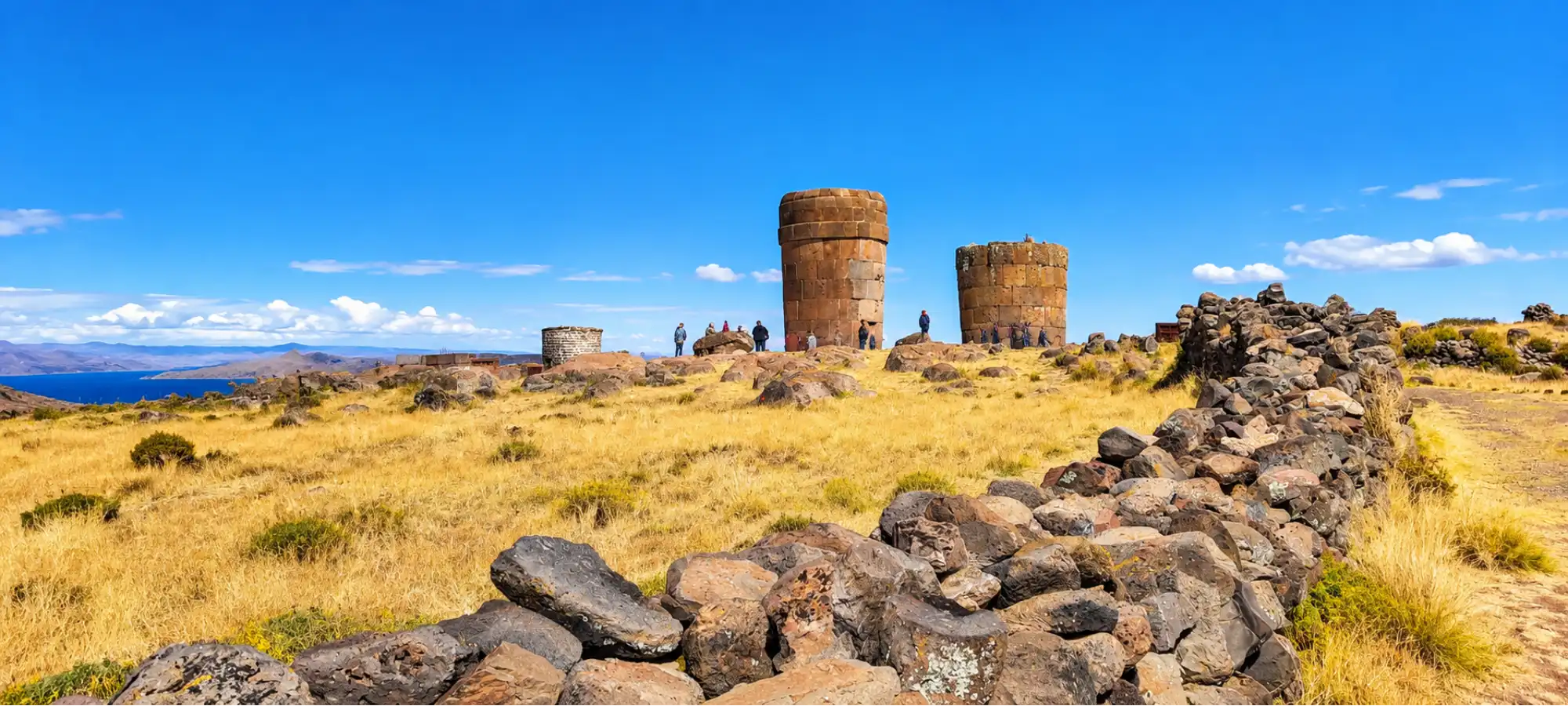
About 34 km from the city of Puno, Sillustani is one of the most important archaeological sites in the Peruvian Altiplano. The site is best known for its large pre-Hispanic funerary towers, called chullpas, which were built during different periods by societies that inhabited this part of southern Peru.
Sillustani is not only an archaeological visit. The burial towers stand on elevated terrain overlooking Lake Umayo, creating a landscape where history, architecture and the open scenery of the Altiplano come together. Its proximity to Puno also makes it possible to visit the site without dedicating an entire day.
For travelers planning several days in the region, the Puno Travel Guide can help you combine Sillustani with Lake Titicaca, the Uros Islands, Taquile and other places around Puno.
What Is Sillustani and Why Visit It from Puno?
Sillustani is a pre-Hispanic funerary complex located near Atuncolla in the Puno region of southern Peru. Its most recognizable structures are the chullpas, stone burial towers associated with important members of the societies that lived in the Altiplano before and during the Inca period.
The site is particularly valuable because it helps travelers understand a part of Puno’s history that extends beyond Lake Titicaca and its island communities. Different construction styles can be seen throughout the complex, reflecting changes in architecture, social organization and funerary practices over time.
Another advantage is its location. Sillustani can usually be explored as a half-day trip from Puno, making it a practical addition to an itinerary that already includes the lake. If you are still deciding what else to see in the region, our guide to Things to Do in Puno provides a broader overview.
Where Is Sillustani and How Far Is It from Puno?
Sillustani is located approximately 34 km north of Puno, near the rural community of Atuncolla. Traveling by road from the city generally takes around 45 minutes to one hour, depending on traffic, transportation and road conditions.
Because the archaeological site is relatively close to Puno, travelers can usually visit it during a morning or afternoon excursion. This makes Sillustani especially useful for itineraries where a complete day has already been reserved for Lake Titicaca.
The setting is very different from the lakeside areas around Puno. The journey crosses open highland landscapes before reaching the elevated archaeological complex overlooking Lake Umayo.
What Are the Sillustani Chullpas?
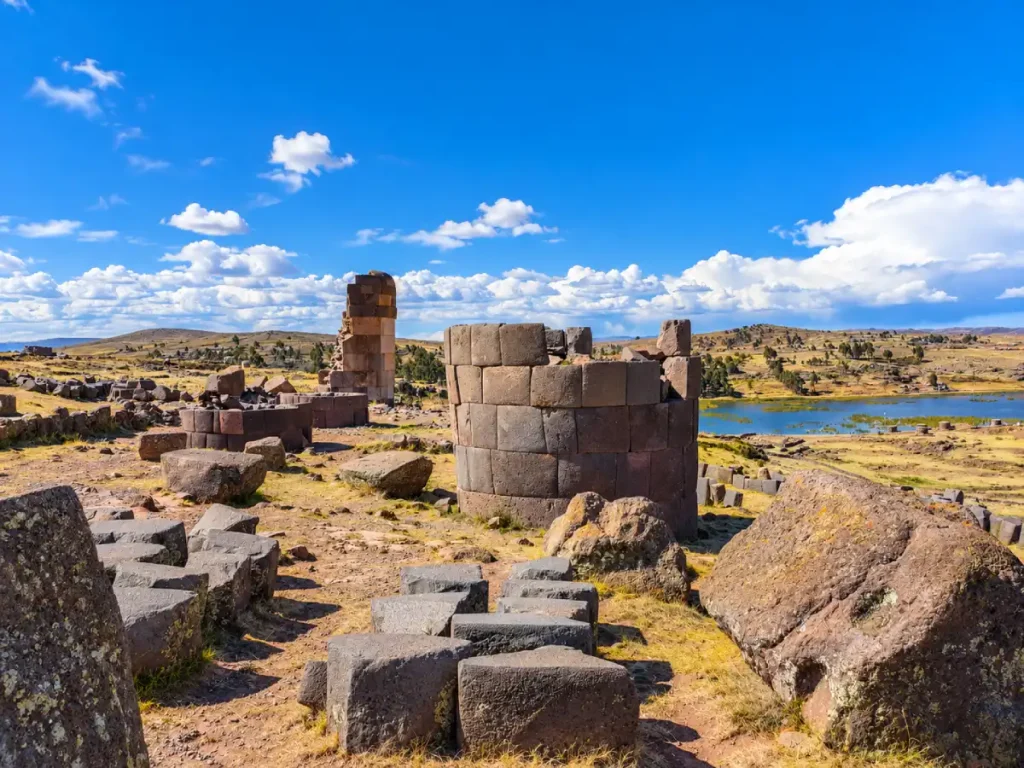
The Sillustani chullpas are pre-Hispanic funerary towers constructed to hold human remains and objects connected with burial practices. They vary considerably in size, construction technique and state of preservation, which indicates that the complex developed over different periods rather than being built all at once.
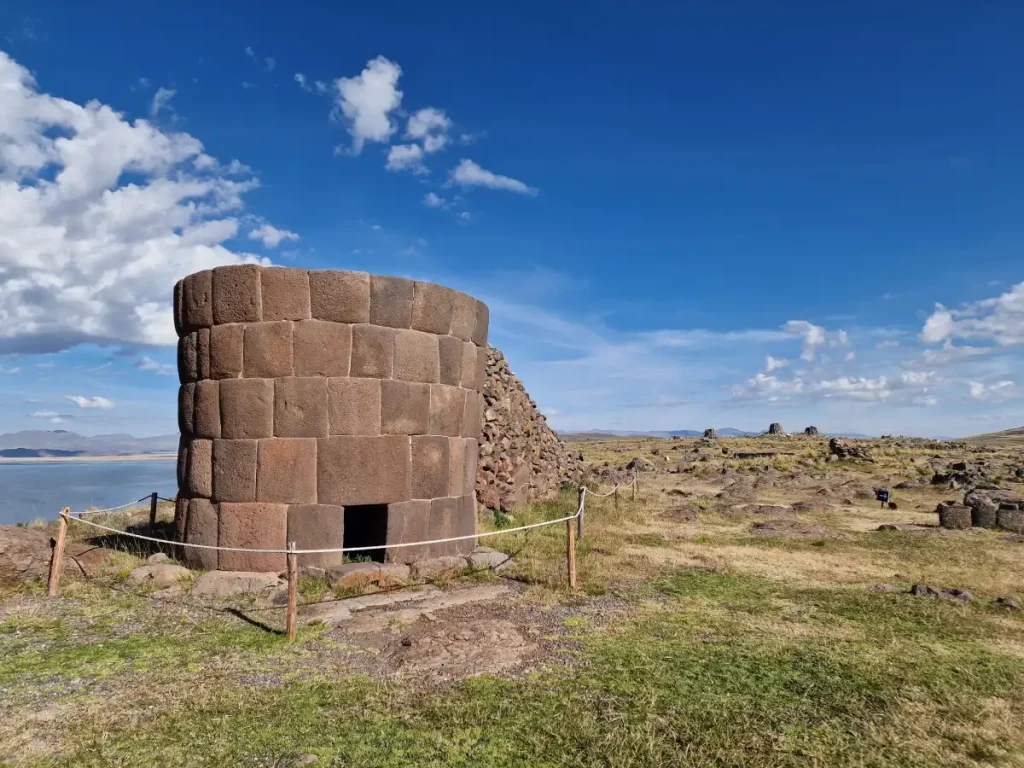
Some towers were built with carefully shaped stone blocks fitted together with considerable precision, while others use simpler masonry. Several structures also have a distinctive form in which the upper section is wider than the base, creating an inverted truncated-cone appearance.
The chullpas should not be understood simply as ancient tombs. They were part of wider funerary traditions connected with ancestry, social status and the beliefs of the communities that lived in the Altiplano. Understanding this context makes the visit much more meaningful than simply viewing the towers as isolated monuments.
Colla Culture and Inca Influence at Sillustani
Long before the Incas expanded into the Puno region, the Altiplano was home to several powerful societies. One of the most important was the Colla or Kolla society, which controlled areas around Lake Titicaca and is closely associated with the funerary traditions found at Sillustani.
The complex contains structures connected with this pre-Inca period, while later construction and modifications reflect the arrival of the Incas in the region. For this reason, describing Sillustani simply as an “Inca cemetery” would overlook an important part of its history.
The site instead provides an opportunity to see how different periods of Andean history overlap in the same landscape. This is particularly useful for travelers who have already visited Inca sites around Cusco and want to learn more about the cultures that developed elsewhere in the Andes.
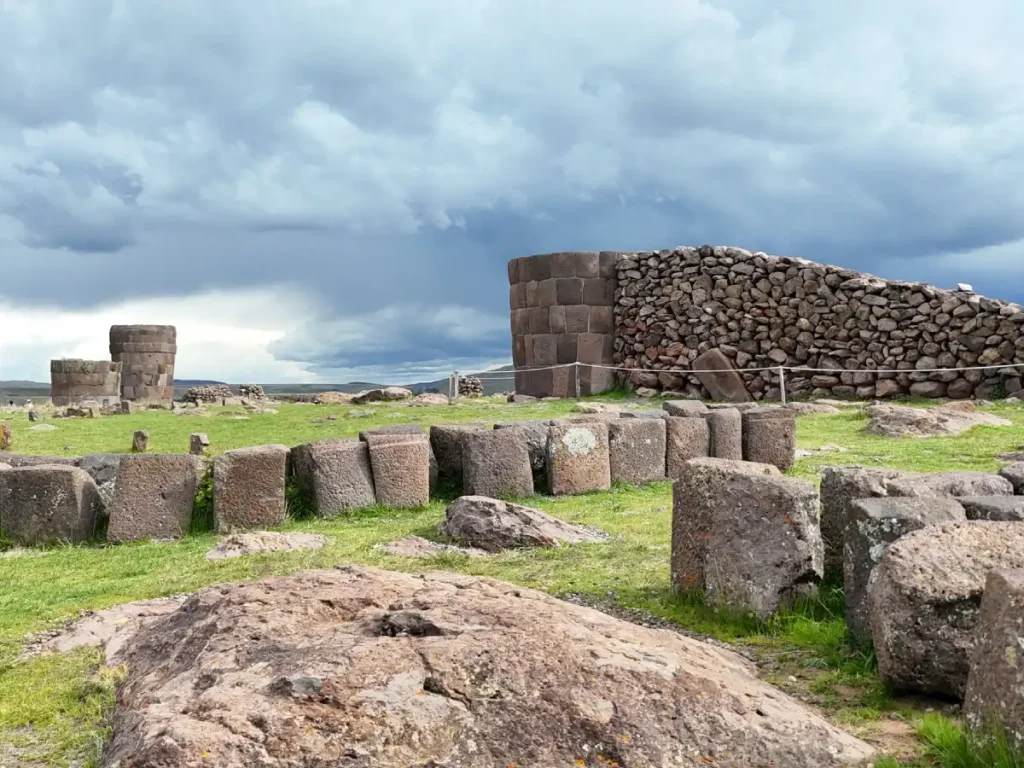
Which Burial Towers Should You Look For at Sillustani?
There are numerous funerary structures throughout Sillustani, but some stand out because of their height, stonework or level of preservation. One of the best known is commonly referred to as the Lizard Chullpa, which is often highlighted during guided visits to the complex.
Rather than concentrating only on the names of individual towers, it is useful to compare their architecture. Some structures have carefully worked stone surfaces, while others are constructed from smaller and less regular stones. These differences help reveal the various building traditions represented at the site.
Several monumental chullpas reach considerable heights and dominate the surrounding landscape. Their position on elevated ground also means that walking between the towers provides changing views of Lake Umayo and the surrounding Altiplano.
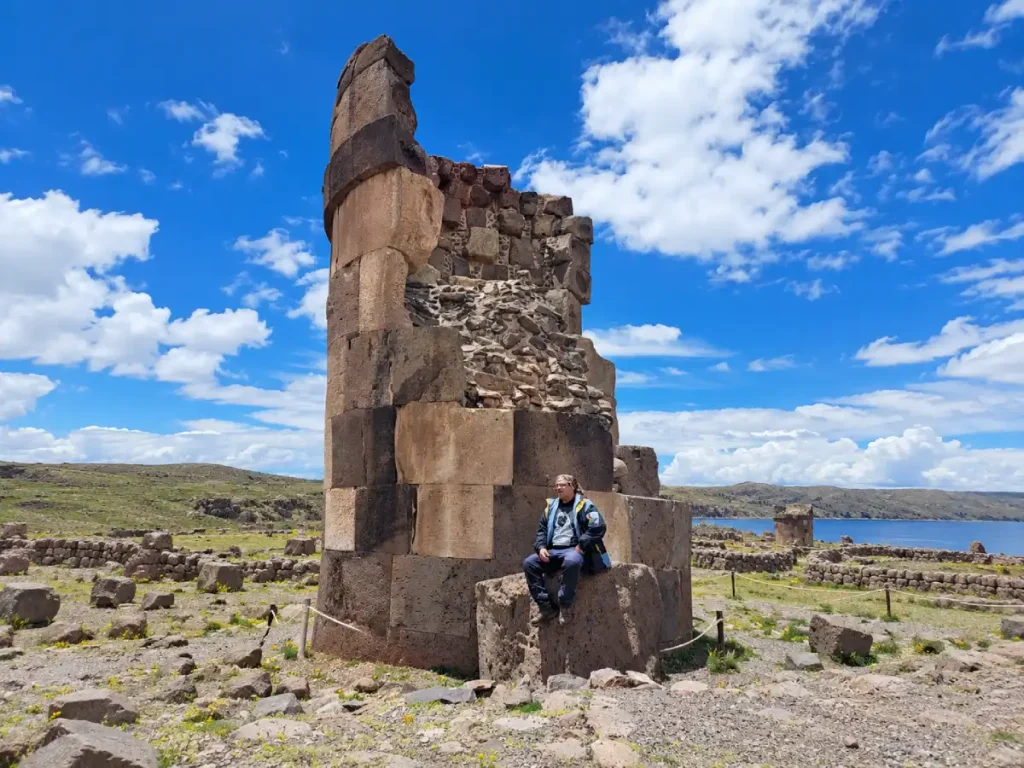
Lake Umayo: The Landscape Around Sillustani
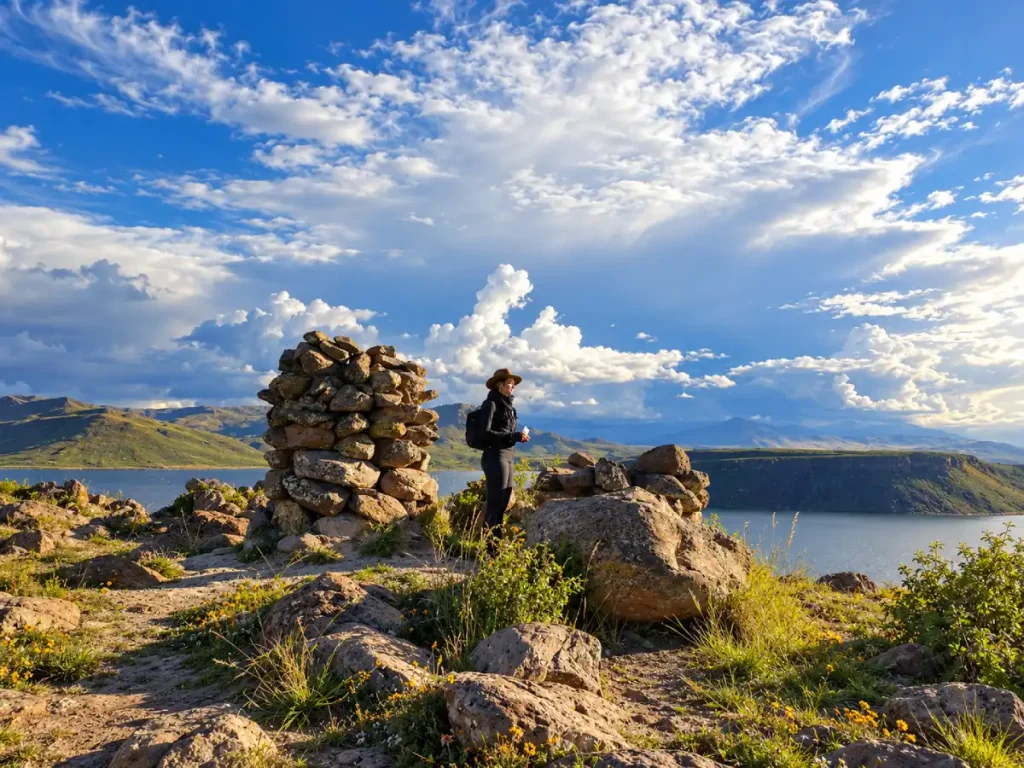
One of the most striking aspects of visiting Sillustani is the view of Lake Umayo. The archaeological complex stands on high ground beside the lake, creating a dramatic setting that distinguishes it from many other archaeological sites in southern Peru.
As you walk through the complex, different sections offer views across the water, nearby fields and the rolling terrain of the Altiplano. On clear days, the combination of stone towers, open sky and the deep colors of the lake makes the area particularly attractive for photography.
The landscape also adds context to the archaeological site. Rather than seeing the chullpas as isolated structures, visitors can appreciate how they were positioned within a wider natural environment. For travelers who are also exploring the Lake Titicaca region, Sillustani provides a completely different perspective on Puno’s highland scenery.
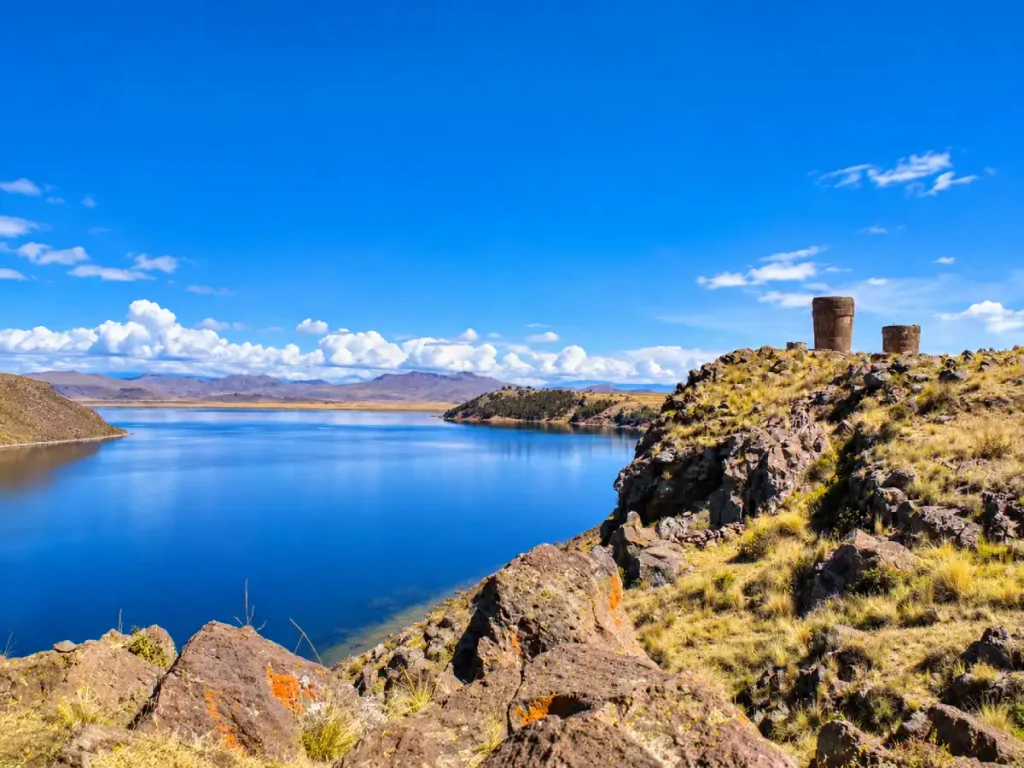
How High Is Sillustani and Is the Visit Difficult?
Sillustani is located at around 3,900 meters above sea level, so altitude is an important factor to consider even though the visit does not involve a long trek.
The archaeological complex includes sloping paths and sections of uneven ground. Travelers who have recently arrived from lower elevations may notice that walking uphill requires more effort than expected, especially when combined with strong sun or cold wind.
The best approach is to walk slowly, drink water regularly and take breaks when necessary. Spending some time in Puno before the visit may help you become more familiar with the altitude, but it does not guarantee complete acclimatization because each traveler responds differently.
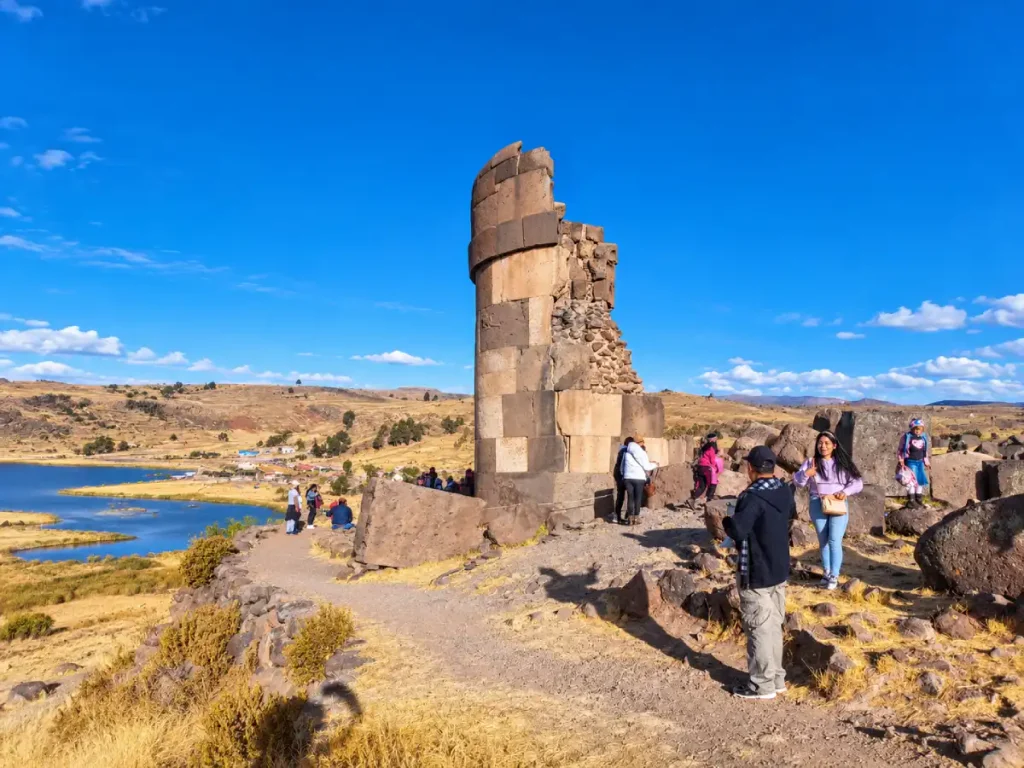
How Long Do You Need to Visit Sillustani?
Most travelers can explore the main archaeological area in approximately one and a half to two hours. The exact amount of time depends on your walking pace, interest in archaeology and how long you spend enjoying the views over Lake Umayo.
Once transportation from Puno is included, the excursion generally fits comfortably into half a day. This makes it easier to incorporate into a two- or three-day stay without sacrificing an entire day that could be used for Lake Titicaca.
Travelers who prefer transportation and historical interpretation to be arranged in advance can consider the Sillustani Chullpas Half Day Tour.
How to Get to Sillustani from Puno
Sillustani is reached by road from Puno. Travelers can either arrange transportation independently or join an organized half-day excursion.
Visiting independently offers more flexibility, particularly if you want to control how long you stay at the site. However, you will need to organize transportation in both directions and decide whether to hire a guide separately once you arrive.
An organized excursion simplifies the logistics and also provides historical context that can be difficult to understand simply by walking between the towers. The Sillustani Chullpas Half Day Tour includes the archaeological site as part of a guided half-day experience from Puno.
If you are comparing other excursions in the region, you can also browse the Puno Tours available from Top Inka Travel.
When Is the Best Time to Visit Sillustani and What Should You Bring?
Sillustani can be visited throughout the year, but weather conditions change noticeably between the dry and rainy seasons. From approximately May to September, rainfall is generally less frequent and clear skies are more common, although mornings and late afternoons can be very cold.
During the wetter months, the surrounding landscape can become greener, but visitors should be prepared for rain, cloud cover and rapidly changing weather. Conditions in the Altiplano can change quickly at any time of year, so dressing in layers is more practical than relying on a single heavy garment.
Comfortable walking shoes, a warm jacket or windbreaker, sunglasses, a hat, sunscreen and water are useful throughout the year. Carrying some cash is also practical for personal expenses. Because the site is exposed, protection from both strong sun and cold wind is important.
Is Sillustani Worth Visiting During a Trip to Puno?
Sillustani is particularly worthwhile for travelers interested in archaeology, pre-Hispanic history and Altiplano landscapes. It offers something very different from the island experiences on Lake Titicaca and helps explain the long history of the Puno region before the expansion of the Inca Empire.
Its half-day format is another advantage. Travelers with two days in Puno can spend one day exploring Lake Titicaca and use part of the second day for Sillustani. With three or more days, it becomes even easier to combine the archaeological site with Uros, Taquile, Amantani and other destinations without rushing.
Those with only one day in Puno will usually need to choose according to their main interest. If Lake Titicaca is the priority, the islands may come first. With additional time, Sillustani is a strong addition because it provides historical context that the lake excursions do not.
A simple itinerary could dedicate the first day to Lake Titicaca and use the following morning or afternoon for the Sillustani Chullpas Half Day Tour. For wider trip planning, use the Puno Travel Guide and our guide to Things to Do in Puno.
Frequently Asked Questions About Sillustani
What are the Sillustani burial towers?
The Sillustani burial towers, or chullpas, are pre-Hispanic funerary structures built during different periods in the Altiplano. Several are associated with important members of Colla society, while later structures and modifications reflect Inca influence in the region.
How far is Sillustani from Puno?
Sillustani is approximately 34 km from Puno. Traveling by road generally takes around 45 minutes to one hour, depending on transportation and road conditions.
How long does a Sillustani visit take?
Most travelers spend around one and a half to two hours inside the archaeological complex. Including transportation from Puno, the experience is normally organized as a half-day excursion.
Is Sillustani an Inca site?
Not exclusively. Sillustani has important pre-Inca origins and is strongly associated with the Colla culture. The Incas later occupied the region and influenced parts of the site.
What is Lake Umayo?
Lake Umayo is the body of water beside the Sillustani archaeological complex. Its location below the elevated burial towers creates one of the most distinctive landscapes around the site.
Can you visit Sillustani without a tour?
Yes. Independent transportation can be arranged from Puno. However, a guided visit makes it easier to understand the different building techniques, funerary traditions and historical periods represented at the complex.
Is there a lot of walking at Sillustani?
The visit involves walking on sloping and sometimes uneven paths, but it is not a long-distance trek. The altitude can make uphill sections feel more demanding than they would at lower elevations.
Can Sillustani and Lake Titicaca be included in the same Puno itinerary?
Yes. They complement each other well because they represent different aspects of the region. Lake Titicaca focuses more on landscapes, islands and living communities, while Sillustani provides archaeological and historical context.