
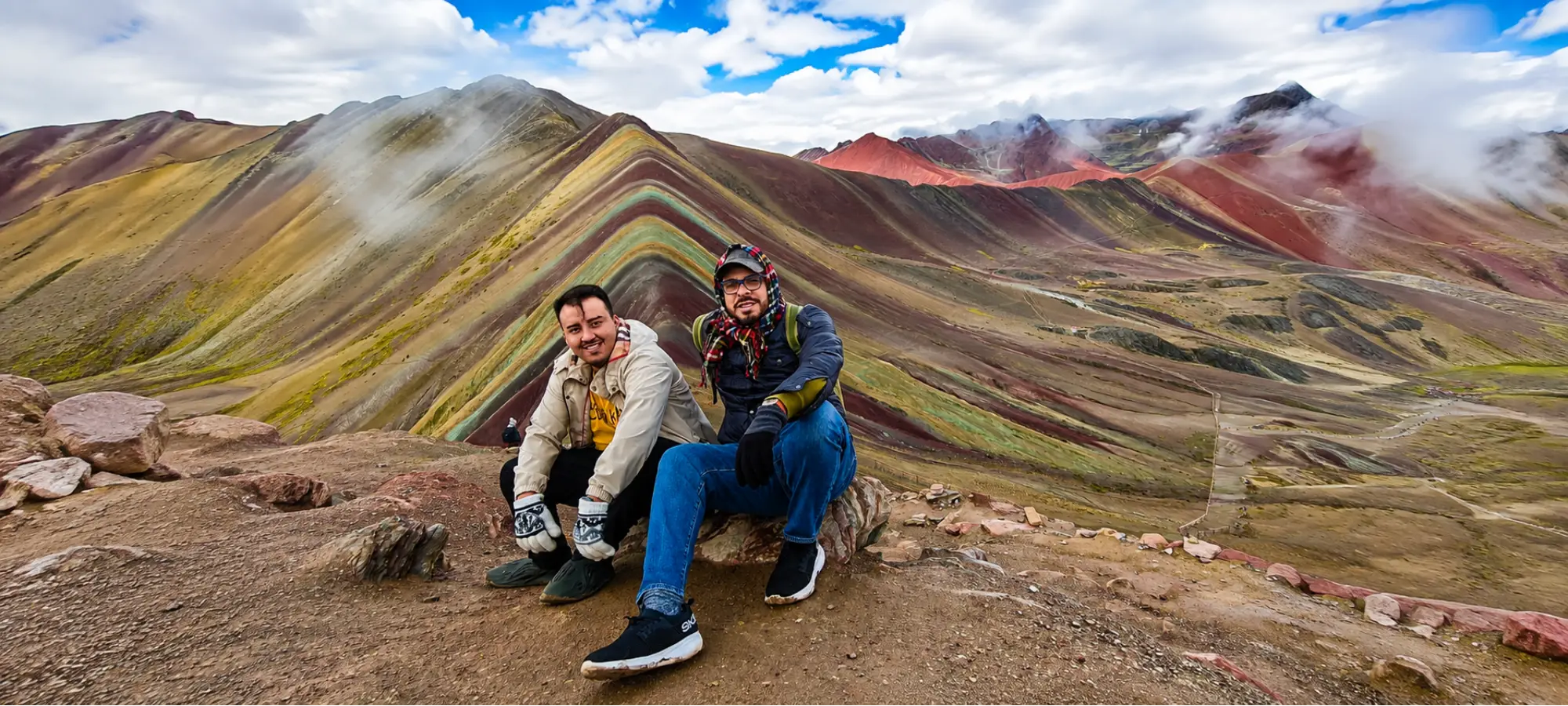
Rainbow Mountain Peru, locally known as Vinicunca, has become one of the most recognizable natural attractions near Cusco. Its striking mineral bands, extreme altitude, and dramatic Andean surroundings attract travelers looking for something completely different from Peru’s archaeological sites and historic cities.
Most visitors recognize the classic photograph of the colorful mountain, but there is much more to Vinicunca than its appearance.
Why does Rainbow Mountain have so many colors? How high is it? Does it really have seven colors? Is Red Valley nearby? And can you reach Rainbow Mountain by ATV?
Here are 12 interesting Rainbow Mountain facts to know before visiting Vinicunca from Cusco.
1. Rainbow Mountain Is Also Called Vinicunca
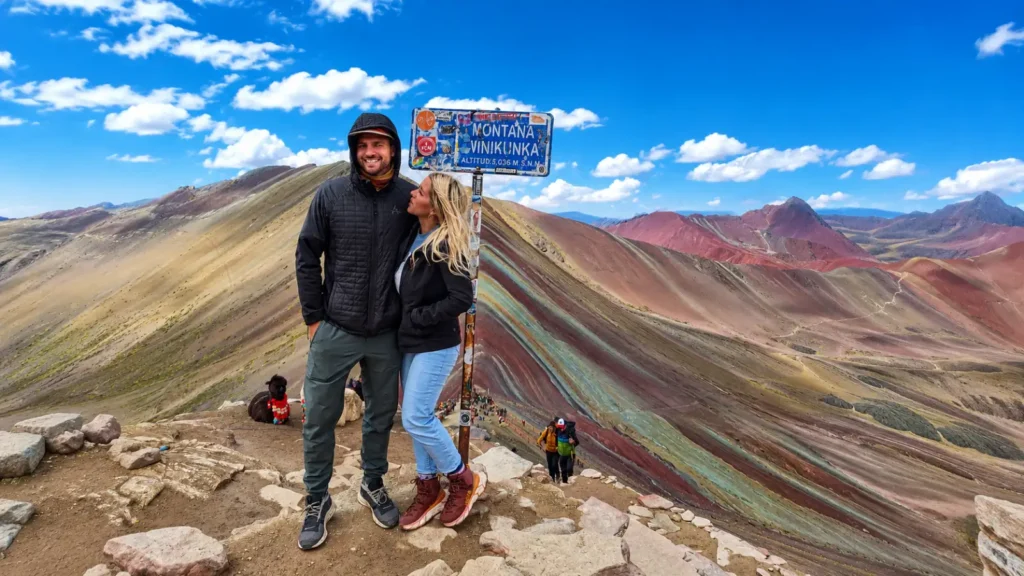
One of the most important facts about Rainbow Mountain Peru is that its local name is Vinicunca.
International travelers usually call it Rainbow Mountain, while you may also see names such as Mountain of Seven Colors.
These names refer to the same famous mountain in the Cusco region of Peru.
Today, Vinicunca Peru is one of the best-known day trips from Cusco, particularly among travelers interested in nature, photography, and high-altitude landscapes.
2. The Colors of Rainbow Mountain Are Natural
Yes, the famous Rainbow Mountain colors are natural.
The different bands visible across Vinicunca are associated with mineral-rich geological layers that developed over long periods of time.
Geological processes exposed these layers, while erosion helped shape the landscape visible today.
Different mineral compositions contribute to the mountain’s red, yellow, greenish, white, brown, and ochre tones.
This unusual geology is what gives Vinicunca its distinctive striped appearance.
3. Rainbow Mountain Doesn’t Have Exactly Seven Colors
You may hear Vinicunca described as the Mountain of Seven Colors, but that doesn’t mean you’ll see exactly seven perfectly separated stripes.
The name is a popular description of its multicolored appearance.
In reality, the mountain contains numerous shades and transitions between different mineral layers.
Weather and lighting also influence what you see.
Sunlight can make some colors more noticeable, while clouds, moisture, or snow can soften or temporarily hide parts of the mountain.
This means Vinicunca can look different from one day to another.
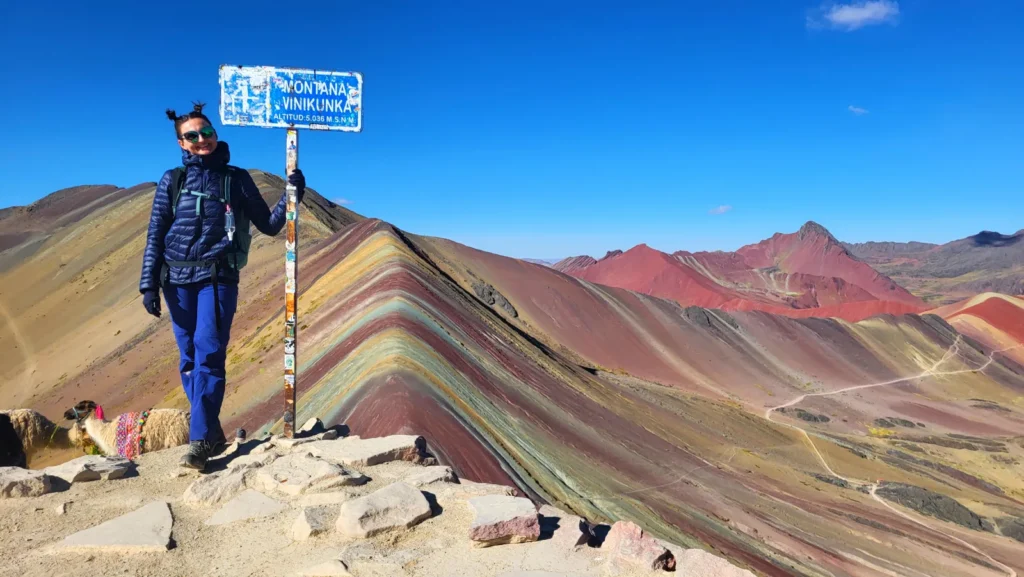
4. Rainbow Mountain Is Around 5,000 Meters Above Sea Level
The Rainbow Mountain altitude is one of the most important things travelers need to understand before visiting.
The main viewing area is located at roughly 5,000 meters above sea level, making this a genuine high-altitude excursion.
Even travelers who regularly hike may find physical activity more difficult at this elevation.
There is considerably less available oxygen than at sea level, so shortness of breath and fatigue can occur more quickly.
Spending time acclimatizing in Cusco before your trip is therefore important.
If you’re planning the excursion, our Rainbow Mountain Altitude Guide and article about how to avoid altitude sickness at Rainbow Mountain provide more detailed preparation advice.
5. Rainbow Mountain Doesn’t Always Look Like Instagram Photos
This is one of the most useful Rainbow Mountain facts for travelers.
Vinicunca is naturally colorful, but some photographs online have significantly increased saturation and contrast.
The mountain may look more subtle in person.
That doesn’t make the landscape less interesting. It simply means travelers should arrive with realistic expectations.
Weather makes a major difference as well.
On a clear day, sunlight may emphasize the mineral bands. Clouds and moisture can make the colors appear softer, while snow can temporarily cover sections of the mountain.
6. Weather Can Completely Change the Landscape
The appearance of Rainbow Mountain in Peru isn’t constant throughout the year.
Clear conditions can provide excellent visibility across Vinicunca and the surrounding mountains.
Rain, clouds, fog, and snow can produce a very different experience.
Seasonal vegetation also influences the colors of the surrounding landscape.
This is why choosing the best time to visit Rainbow Mountain can matter, particularly for travelers hoping to photograph the mountain under clearer conditions.
Even during the drier months, however, mountain weather can change quickly.
7. Vinicunca Is Part of a Much Larger Andean Landscape
The classic photograph makes Rainbow Mountain look like a single isolated attraction.
In reality, the surrounding scenery is a major part of the experience.
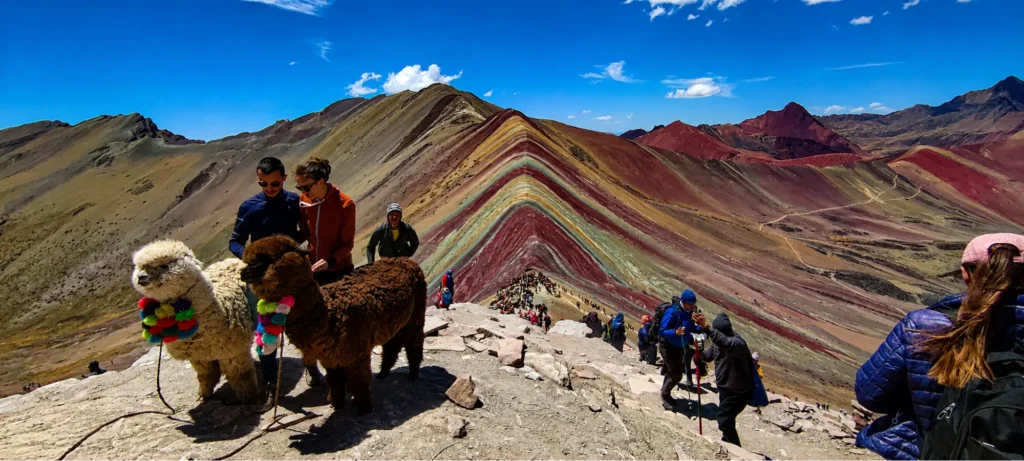
The journey toward Vinicunca from Cusco takes travelers into a high-altitude environment filled with mountains, valleys, grasslands, and remote Andean communities.
Llamas and alpacas can also be seen in the region.
For many visitors, these landscapes make the journey almost as memorable as reaching the famous Rainbow Mountain viewpoint.
8. Rainbow Mountain Is Near Ausangate
Another interesting fact about Vinicunca is its location within the broader mountain environment associated with the Vilcanota mountain range and Ausangate.
Ausangate is one of the most prominent mountains in this part of the Peruvian Andes.
Its presence helps define the dramatic high-altitude landscape surrounding the Rainbow Mountain region.
This is also why the scenery feels so different from central Cusco.
Instead of colonial streets and archaeological sites, you’re surrounded by open grasslands, mountains, valleys, and high Andean terrain.
9. Red Valley Is Close to Rainbow Mountain
Many travelers don’t realize that another impressive natural attraction is located nearby: Red Valley Peru.
Red Valley and Rainbow Mountain aren’t the same place.
Vinicunca is known for its multicolored mineral bands, while Red Valley features much broader mountain slopes dominated by red, rust, brown, and ochre tones.
Their proximity means travelers can potentially visit Rainbow Mountain and Red Valley in one day.
This is especially useful considering the amount of time required to travel from Cusco to the region.
10. You Don’t Have to Do the Entire Route on Foot
Hiking is the traditional way to experience Rainbow Mountain, but it isn’t the only option.
Travelers can also consider a Rainbow Mountain ATV Tour.
ATVs allow visitors to cover a significant section of certain routes with less physical effort than a longer traditional hike.
Some walking may still be required depending on the route and access conditions.
An ATV also doesn’t eliminate the effects of altitude. You’ll still be traveling through an environment close to 5,000 meters above sea level.
However, it can provide a different way to experience the landscape while adding adventure to the excursion.
11. You Can Combine Rainbow Mountain, Red Valley and an ATV Experience
Travelers looking for more than the classic Vinicunca viewpoint can combine several experiences during the same day.
A Rainbow Mountain ATV Tour with Red Valley can include an ATV section, the famous mountain, and the landscapes of Red Valley.
This combination makes practical sense because traveling to this region from Cusco already takes several hours.
Instead of returning immediately after seeing Vinicunca, continuing through the area allows you to experience more of the surrounding Andes.
It also provides much greater landscape variety: colorful mineral bands at Rainbow Mountain followed by the extensive red slopes of Red Valley.
12. Rainbow Mountain Changes Throughout the Year
Vinicunca is a natural landscape, so its appearance changes with the seasons.
During the drier part of the year, earthy and mineral tones tend to dominate the scenery, while clearer skies may improve mountain visibility.
During wetter periods, vegetation around the area can become greener, creating different contrasts with the mineral colors.
Rain and clouds are also more likely to affect visibility.
Snowfall can occasionally transform the landscape even further.
There is therefore no single appearance that represents Rainbow Mountain Peru throughout the entire year.
Why Did Rainbow Mountain Become So Famous?
Vinicunca’s international popularity grew alongside increased tourism in the Cusco region and the widespread sharing of travel photography online.
Its unusual colors made it particularly attractive on social media, where images of the mountain quickly reached travelers around the world.
As a result, a Rainbow Mountain day trip from Cusco became a popular addition to itineraries that traditionally focused on destinations such as Machu Picchu and the Sacred Valley.
However, the destination is much more interesting when you understand its geology, altitude, and surrounding Andean environment rather than viewing it only as a photography stop.
What Makes Rainbow Mountain Unique?
No single characteristic explains the appeal of Vinicunca.
Its mineral layers create the famous colors, but the location adds another dimension to the experience.
You’re traveling into a remote Andean environment at approximately 5,000 meters above sea level, surrounded by mountains, valleys, high-altitude grasslands, and local communities.
Nearby attractions such as Red Valley add even more variety.
For travelers interested in geology, nature, photography, and mountain scenery, this combination makes Vinicunca Rainbow Mountain a distinctive destination.
Frequently Asked Questions About Rainbow Mountain
What is the real name of Rainbow Mountain?
The mountain is widely known as Vinicunca, although international travelers usually refer to it as Rainbow Mountain Peru.
Why is Rainbow Mountain colorful?
Its different colors are associated with mineral-rich geological layers exposed on the surface of the mountain.
Does Rainbow Mountain really have seven colors?
“Mountain of Seven Colors” is a popular name. In reality, Vinicunca displays numerous shades and mineral tones rather than exactly seven perfectly separated colors.
How high is Rainbow Mountain?
The main visiting area is approximately 5,000 meters above sea level, making altitude an important consideration when planning the trip.
Where is Rainbow Mountain in Peru?
Vinicunca is located in the Cusco region of the Peruvian Andes, within the broader high-altitude landscape near Ausangate.
Can you visit Rainbow Mountain by ATV?
Yes. Some routes allow travelers to cover a significant portion of the journey by ATV, although some walking may still be necessary.
Is Red Valley near Rainbow Mountain?
Yes. Red Valley is located near Rainbow Mountain, making it possible to combine both landscapes during the same day trip from Cusco.
Rainbow Mountain: More Than a Colorful Mountain
These Rainbow Mountain facts show that Vinicunca is much more than the colorful photograph that made it famous.
Its appearance comes from natural geological layers, the main visiting area sits at approximately 5,000 meters above sea level, and the mountain forms part of a much larger Andean landscape near Ausangate.
Travelers can also explore nearby Red Valley or choose an ATV route instead of relying entirely on hiking.
For those who want to combine scenery and adventure, the Rainbow Mountain ATV Tour with Red Valley from Cusco by Top Inka Travel brings together Vinicunca, an ATV experience, and Red Valley in a single full-day trip.