
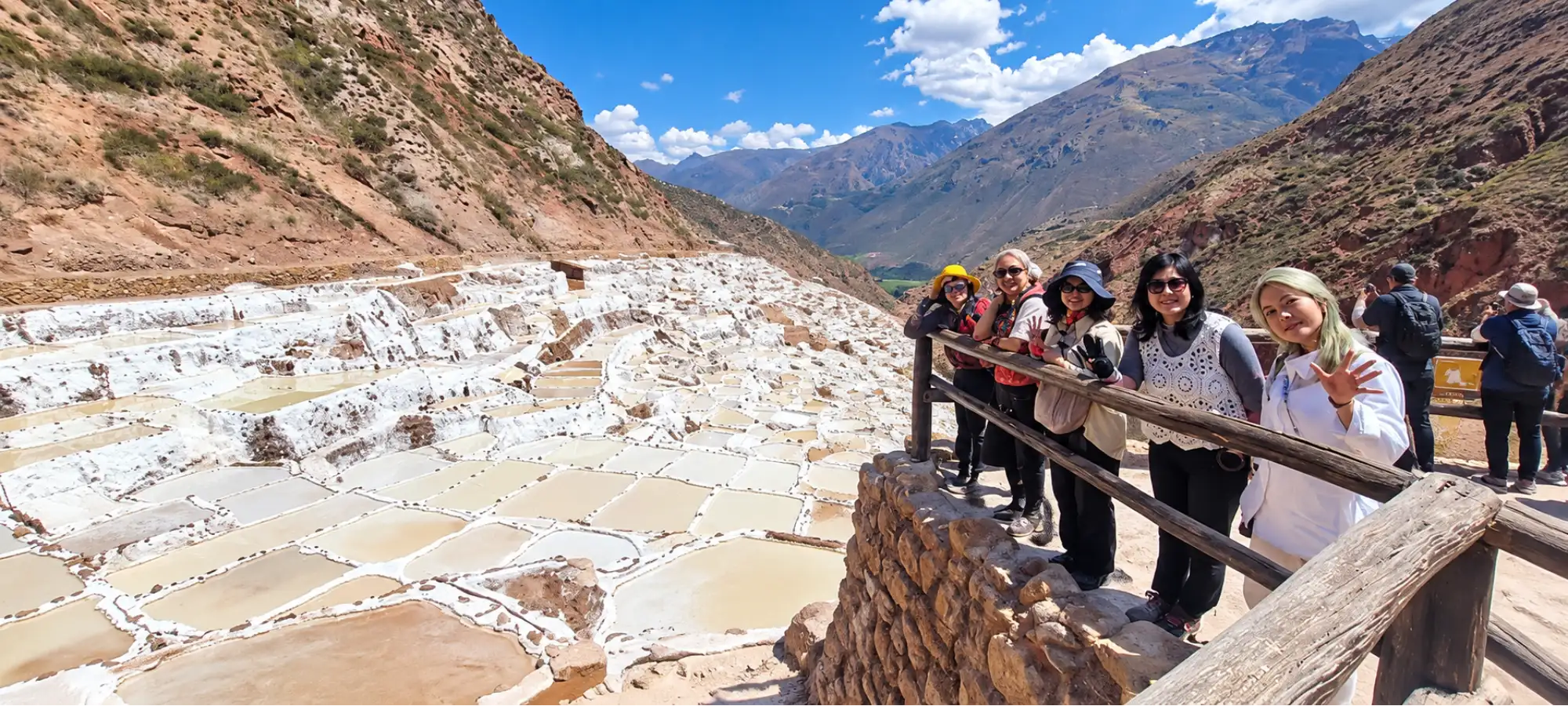
Can you imagine a place where thousands of white pools shimmer like diamonds under the Andean sun? A site where time seems to have stood still, and ancient techniques have endured for over a thousand years? Welcome to the most important facts about the Maras Salt Mines, one of the most stunning treasures of the Sacred Valley of the Incas.
Nestled in the highlands of Cusco, these salt terraces are not just an extraordinary visual spectacle but also a living testament to the engineering and wisdom of our ancestors. Each pool tells a story of family tradition, communal work, and respect for nature—passed down through generations.
In this comprehensive guide, we’ll share the key facts about the Maras Salt Mines, from their fascinating origins millions of years ago to practical tips for your visit. You’ll discover essential information about their location, history, operation, and everything you need to know for an unforgettable experience in this place where history, nature, and culture meet in perfect harmony.

What Are the Maras Salt Mines?
The Maras Salt Mines are like a hidden treasure of salt tucked away in Peru’s mountains. Picture thousands of small white pools gleaming under the sun, like giant mirrors on the mountainside. These special pools have been producing salt for countless years—long before the Inca Empire even existed.

Location and Altitude
The Salt Mines are located in the Sacred Valley of the Incas, near the town of Maras in the Cusco region. They sit at an altitude of approximately 10,500 to 11,090 feet above sea level (3,200–3,380 meters), meaning they’re perched high in the mountains. To put it in perspective, it’s like standing atop 10 skyscrapers stacked on top of each other.
Fascinating History
The Maras Salt Mines are believed to have been built between 500 and 1100 AD by the Wari civilization, predating the Incas. That makes these salt pools older than many of the world’s famous cities. During the Inca Empire, the mines gained importance for their role in food preservation, as salt was highly valued for keeping food fresh.


The Miracle Beneath the Mountains
What makes Maras truly extraordinary isn’t just what you see—it’s what flows unseen beneath the earth. A natural underground spring, ten times saltier than the ocean, rises from depths dating back to the dinosaurs. This mineral-rich brine travels through ancient rock layers before emerging to fill the 3,000 terraced pools—a gift from the earth, perfected over 110 million years.
Here, geology and human ingenuity meet: as the Andean sun evaporates the water, it leaves behind the purest pink-tinted salt, carrying traces of the mountains’ minerals. This isn’t just salt production—it’s alchemy on an epic scale, where time, pressure, and tradition transform water into white gold.


How Is the Salt Produced?
The process is simple yet impressive: Saltwater flows down from the mountains into the small pools. Then, the sun and wind evaporate the water, leaving behind pure white salt. Local workers tend to these pools daily, using the same techniques their ancestors did hundreds of years ago.
Fun Facts
- There are around 3,000 salt pools in total
- Each pool has a different owner from the local community
- Maras salt is considered among the finest in the world
- Families have passed down pool ownership for generations
- The Maras Salt Mines are one of the largest pre-Hispanic salt extraction sites in the Cusco region
Weather & Best Time to Visit
From April to October, Maras experiences the dry season with clear skies and mild temperatures—ideal for exploring the salt terraces. Daytime temps can reach 70°F (21°C), while nights drop to 34°F (1°C). Bring warm clothing—it gets very cold after sunset!
Modern Tourist Significance
In recent decades, the Maras Salt Mines have become a major tourist attraction, renowned for their unique landscape and as a living example of traditional salt production. Thousands of visitors come each year to witness this incredible site and learn about its history.
How to Get There
Located less than 31 miles (50 km) north of Cusco, you can reach the mines by car, organized tour, or even on foot if you’re up for adventure. There’s a hiking trail or a gravel road for vehicles.
Supporting the Local Community
When visiting, remember you can support local families by buying salt directly from them. This special salt isn’t just delicious—it represents generations of labor to maintain this extraordinary place.
Preservation & Future
The Maras Salt Mines are more than a tourist spot—they’re a living heritage we must protect. Local communities work daily to preserve these ancestral traditions and safeguard this one-of-a-kind site for future generations.
Final Thoughts
The Maras Salt Mines are truly a magical place where nature, history, and human effort combine to create something extraordinary. They stand as proof of how our ancestors worked in harmony with nature to create beauty and utility that endures to this day.
Visiting the Salt Mines is like stepping back in time, witnessing ancient wisdom still alive in every salt pool shimmering under the Andean sun.ajar en el tiempo y ver cómo la sabiduría ancestral sigue viva en cada piscina de sal que brilla bajo el sol andino.