
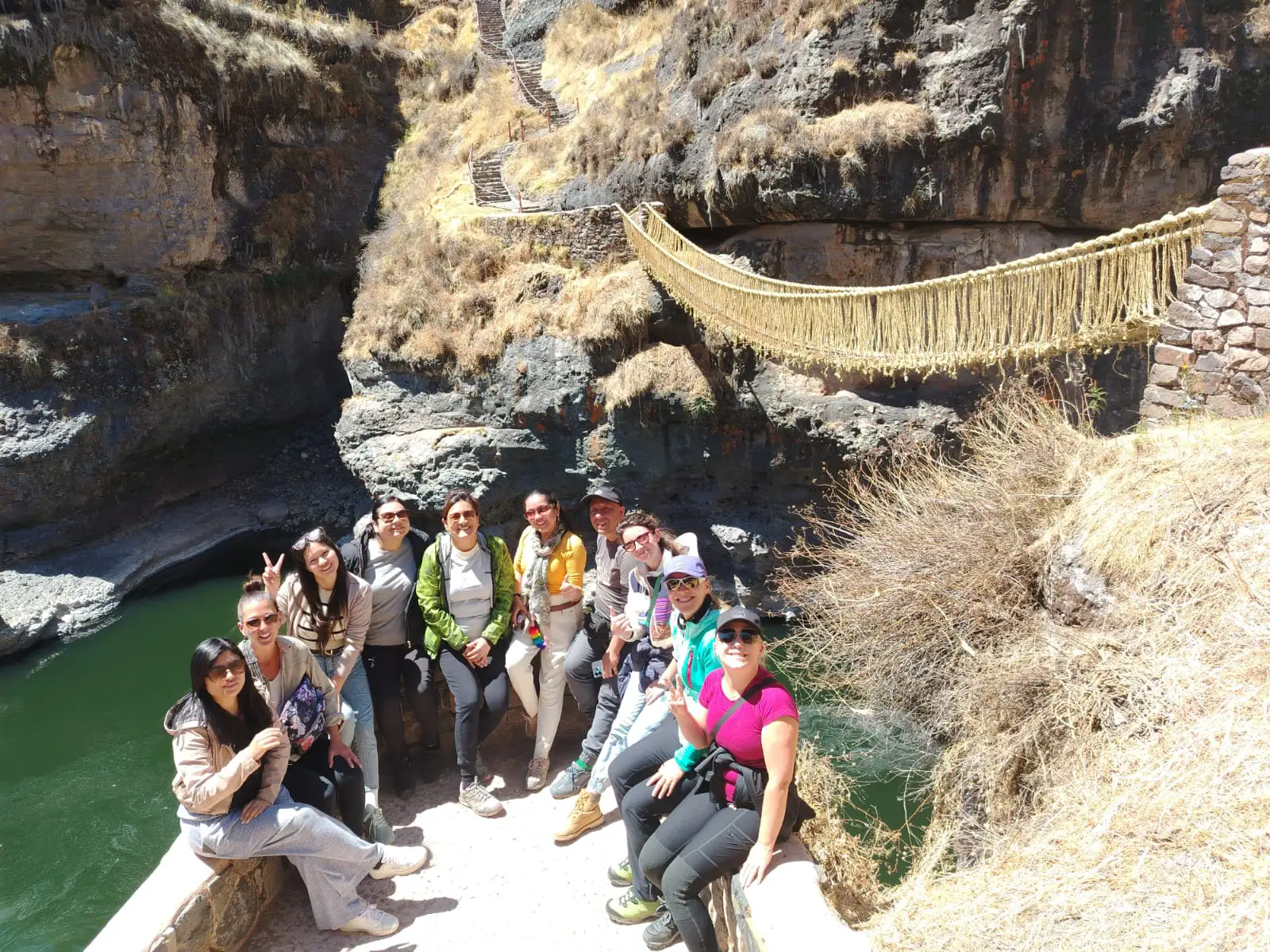
Hey history lover! I’m from the Top Inka Travel team, and the first time I saw the Q’eswachaka bridge being rebuilt, I felt like I’d stepped into a time machine. There, in the deep canyon of the Apurímac River, Quechua communities from four towns gathered under the June sun, braiding ropes that have crossed the same spot for 600 years. The wind carried chants to the apus (mountain spirits), and when the old bridge fell into the water, a new one rose handwoven with ichu grass, just like the Incas did.
Whether you’re searching for “Q’eswachaka bridge construction,” “Inca rope bridge Peru,” “how the Q’eswachaka bridge is made,” or “Q’eswachaka festival” this guide in Spanish is for you. With witness accounts, UNESCO reports, and the voices of the chakarauwaq (master builders), we’ll walk you through the ritual step by step. It’s not just engineering it’s a ceremony that connects the past and present, and a reminder that some Inca secrets still sway in the wind.
The Legend Behind Q’eswachaka: Why This Bridge Endures
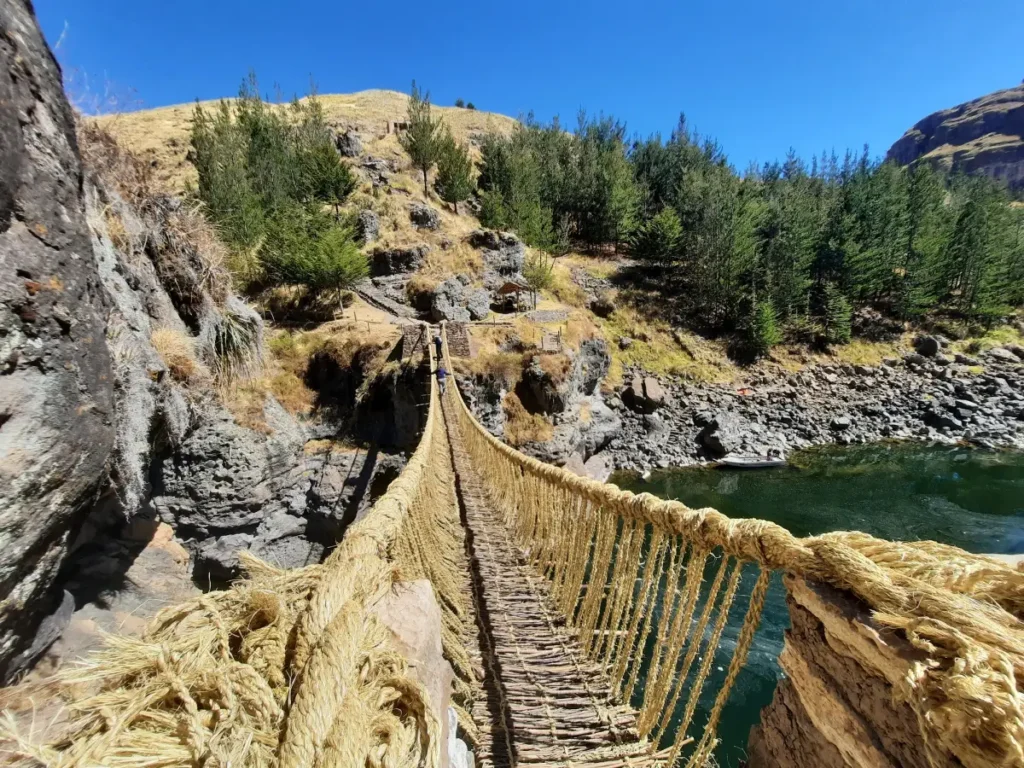
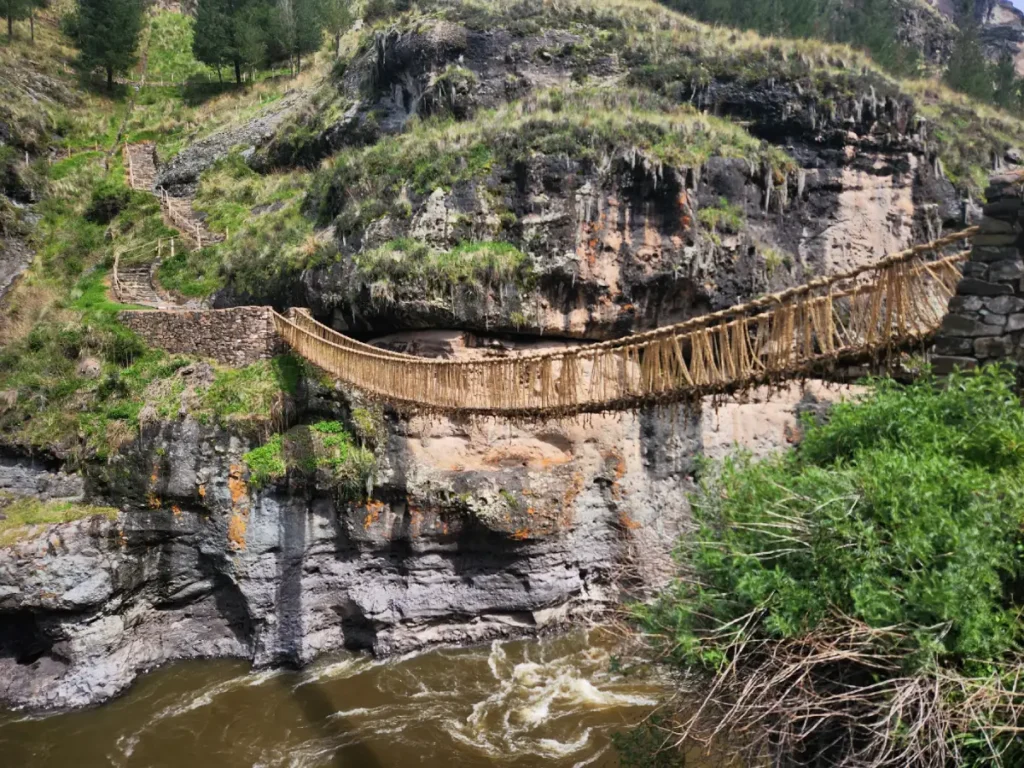
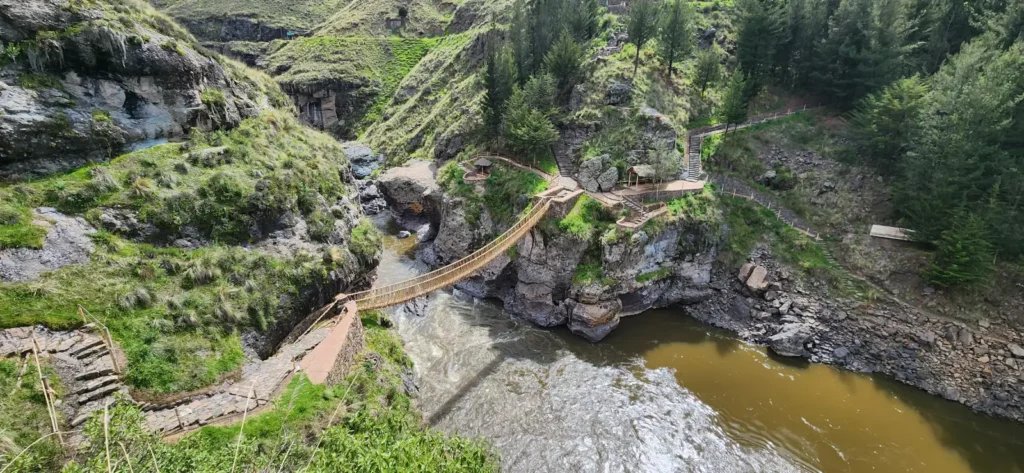
Deep in Cusco’s Canas Province, the Apurimac River carves a 30-meter gorge that once isolated villages like Huinchiri, Chaupibanda, Choccayhua, and Ccollana Quehue. Legend has it that Inca emperor Pachacutec ordered the first Q’eswachaka (“rope bridge” in Quechua) around 1438 to link his empire’s roads the Qhapaq Ñan. Villagers say the apus demanded it be rebuilt yearly as an offering, or the river god would flood the canyon.
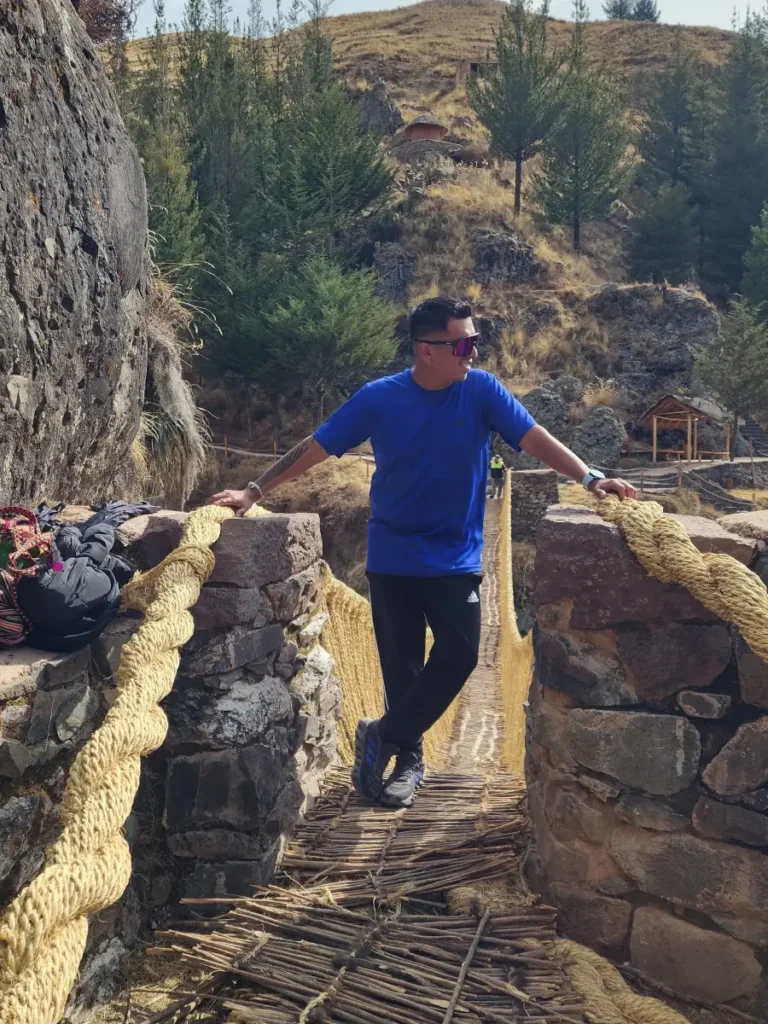
Fast-forward 600 years: modern roads bypassed it, but the communities refused to let it fade. In 2009, Peru’s government declared it cultural heritage, and UNESCO followed in 2018 as Intangible Cultural Heritage. Today, 1,000 people from those four villages reconvene every June, turning a 3-day labor into a festival of music, chicha (corn beer), and chuño phasi (freeze-dried potatoes). It’s the world’s last Inca rope bridge 28 meters long, 1.2 meters wide, swaying 30 meters above the rapids.
One elder, Eleuterio Ccallo Tapia, told me: “Our grandfathers walked it with llamas carrying potatoes. Now we build it to remember them.” It’s not tourism it’s obligation, pride, and survival.
Where Q’eswachaka Hangs: The Heart of the Andes
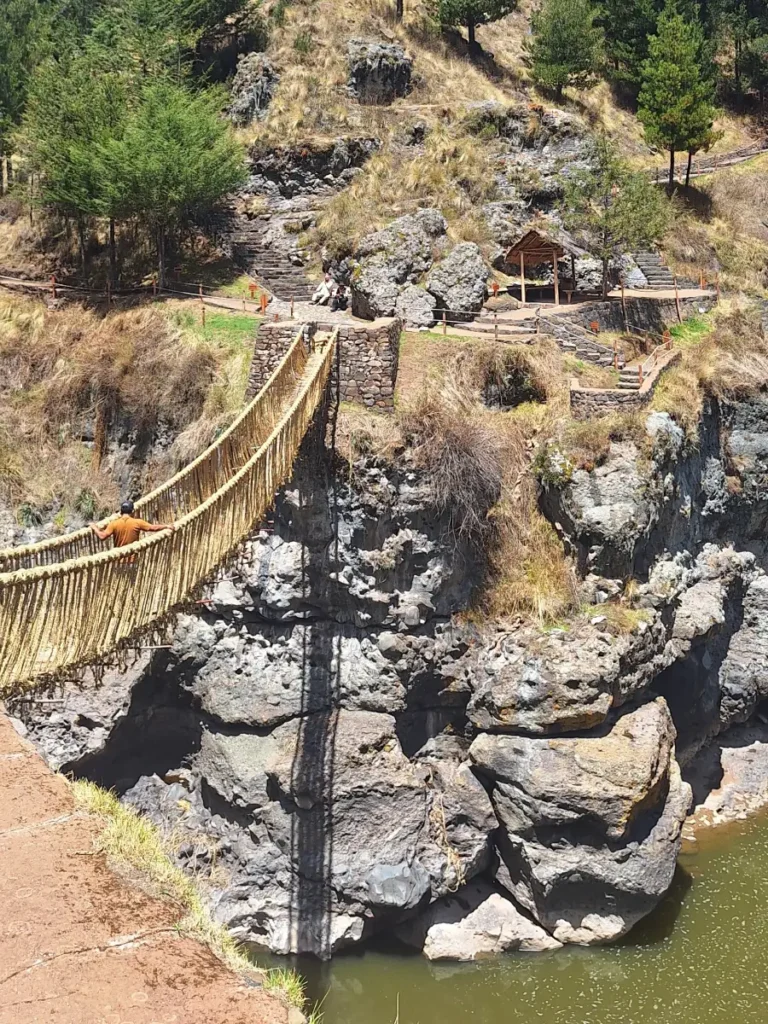
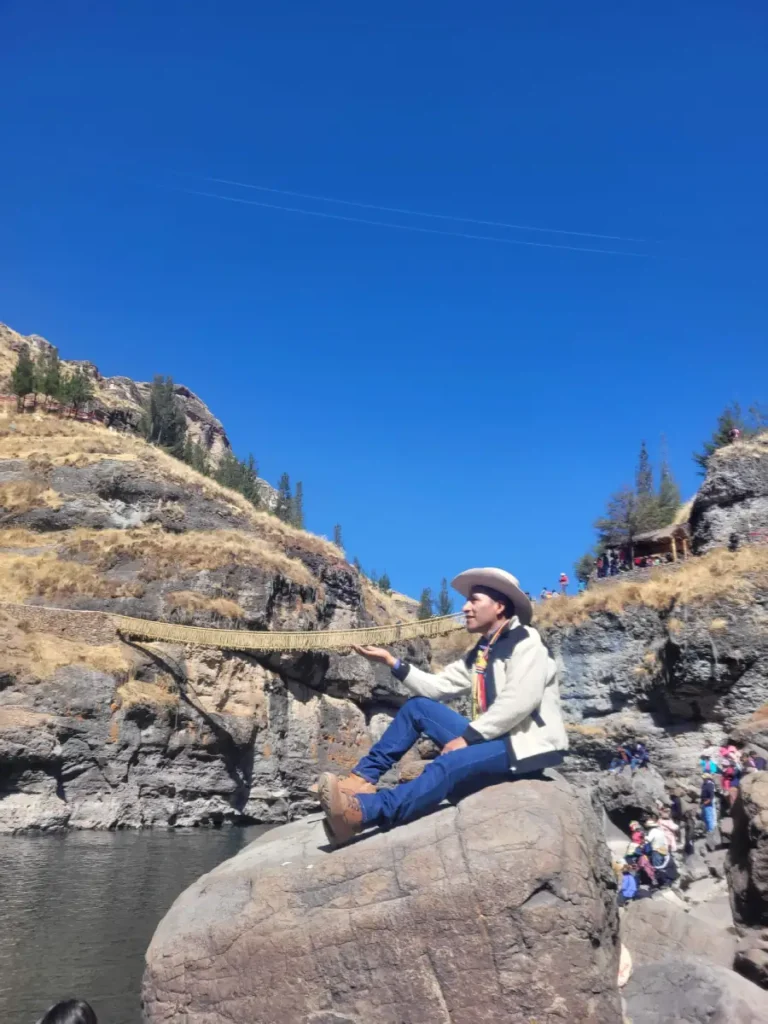
Nestled at 3,700 meters (12,139 feet) in Quehue District, Canas Province, Q’eswachaka spans the Apurimac “the oracle that speaks” in southern Cusco. GPS: 14°01′S 72°12′W. It’s 4 hours from Cusco by private van, past quinoa fields and alpaca herds, but the real journey is the 3-day rebuild in mid-June (dates vary; 2025 is June 11-13).
The site feels otherworldly: sheer canyon walls, turquoise river below, and the bridge like a spiderweb of q’oya (grass ropes). No altitude sickness like at Rainbow Mountain it’s milder here but the chill bites at dawn.
How Q’eswachaka is Built: The 3-Day Ritual, Step by Step
Every June, under the watchful eyes of the apus, four communities unite. No machines, no shortcuts just hands, ichu grass (Stipa ichu), and unbreakable tradition. The chakarauwaq master builders like Victoriano Arizapana, who learned at age 12 lead with songs and offerings of coca leaves, corn, and potatoes to Pachamama (Earth Mother).
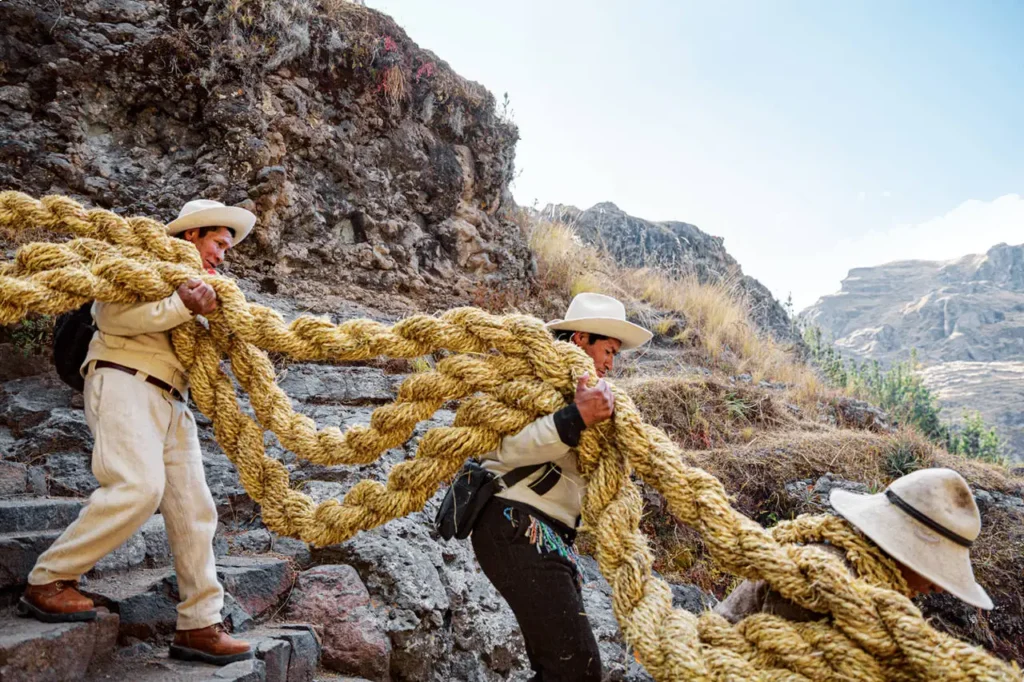
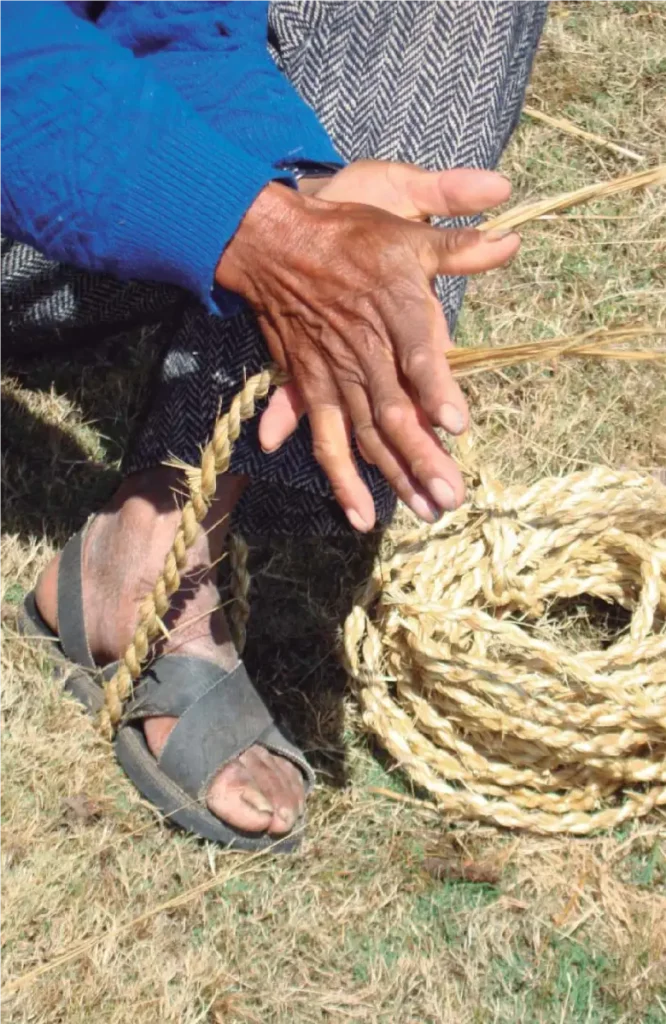
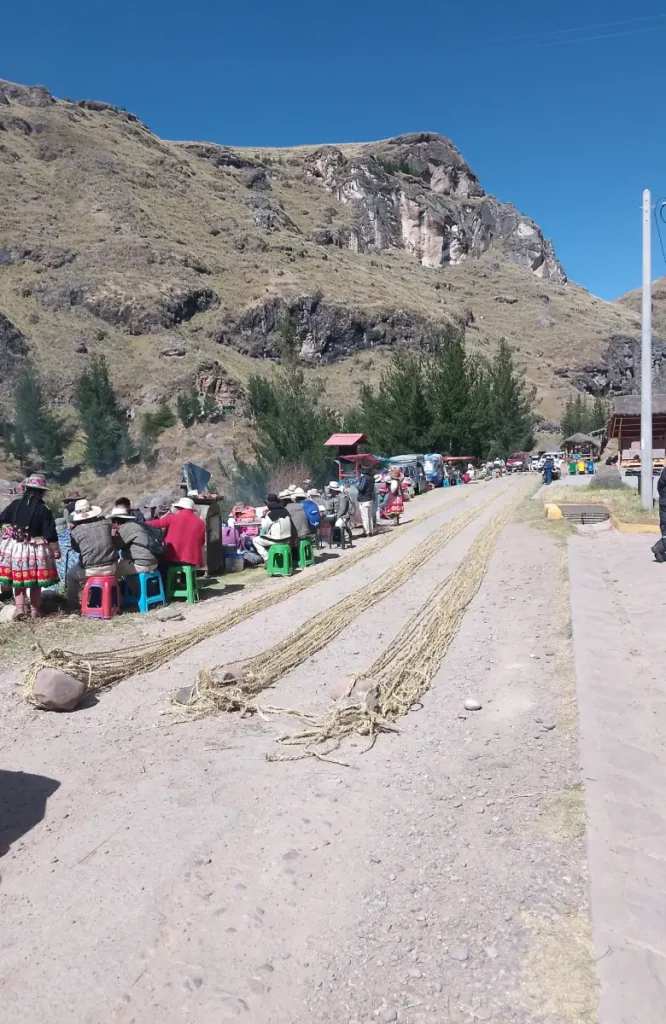
Day 1: Harvest and Prep – The Gathering Villagers trek high into the puna (high grasslands) to cut ichu grass, a tough fiber that grows only above 4,000 m. Women and girls braid it into q’oya ropes each family makes one 50-meter cord, twisted from 30 thinner strands for strength. Back in camp, they pound the bundles with stones to soften without breaking, then soak them in river water. Offerings start here: coca to the apus for safe hands.
By evening, 100+ ropes lie ready, smelling of earth and river. It’s communal therapy families who haven’t spoken in years braid side by side.
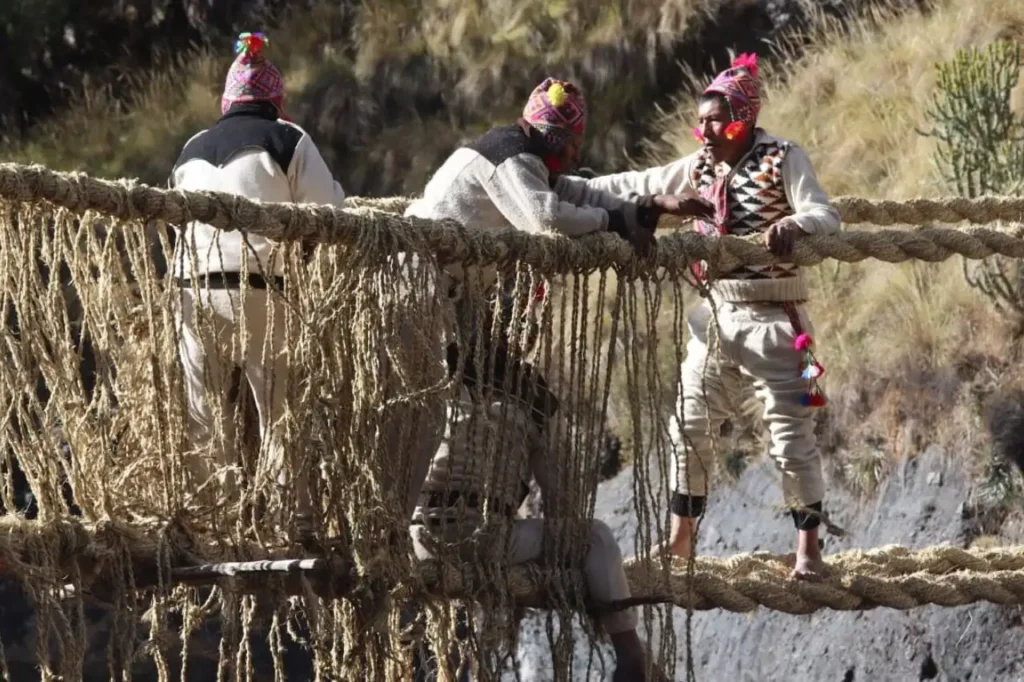
Day 2: The Weave – Tying Past to Future The old bridge is cut, plunging into the Apurimac with a splash that echoes like applause. A temporary line is strung across using the old cables, and the real work begins. Three main ropes per side are braided from the q’oya thick as your arm, strong enough for dozens. Chakarauwaq climb sheer cliffs, securing anchors in stone notches carved by Incas.
The deck weaves next: narrower ropes laced into mats, rolled like carpets and unrolled across. Side rails go up, and the bridge takes shape swaying, alive. Midday brings music: pinkuyllu flutes and dances to honor the labor. “It’s like birthing a child,” one builder said. “The bridge cries when it’s born.”
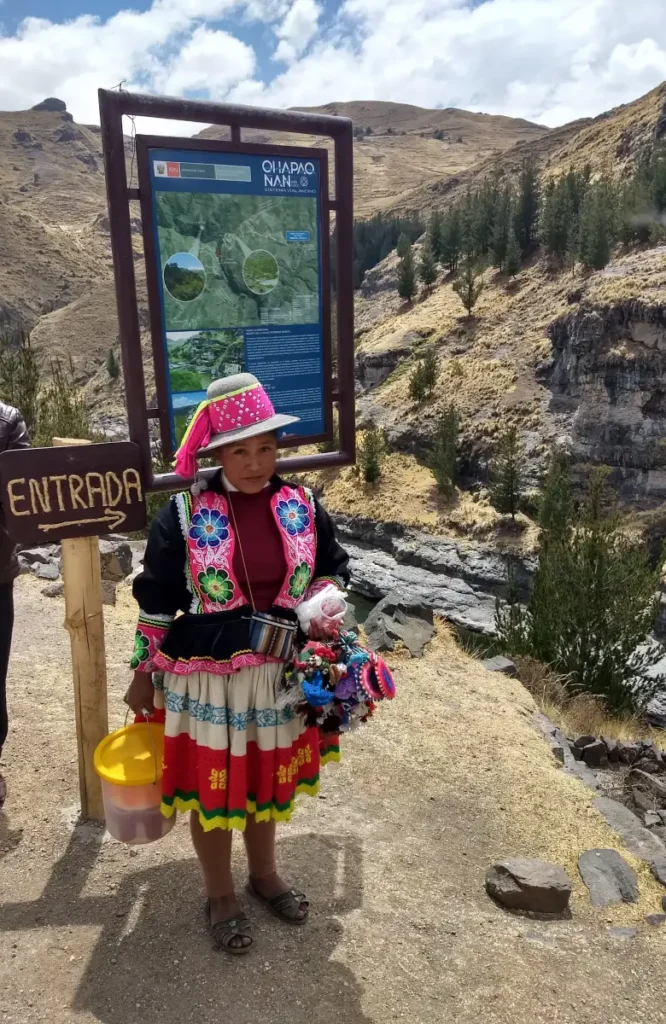
Day 3: The Crossing – Celebration and Thanks At dawn, the final knots tighten. The first to cross? The chakarauwaq, balancing with staffs, followed by elders carrying chuño and chicha. Once safe, the festival erupts: dances in embroidered skirts, corn beer flowing, and feasts of roasted guinea pig and potatoes. The bridge is inaugurated with a collective walk llamas first, as in Inca times and thanks to Apu Q’eswachaka, the mountain spirit.
It holds 28 meters long, 1.2 m wide, lasting a year until next June. No nails, no metal just grass and will.
Q’eswachaka’s Secrets: Engineering Marvels and Enduring Myths
The Incas built over 200 such bridges for the Qhapaq Ñan 40,000 km of roads but Q’eswachaka is the last. Its q’oya ropes, from ichu grass, resist tension like steel cable, thanks to natural resins. Engineers marvel: it sways with earthquakes, flexing where concrete would snap.
Legends swirl: Some say it’s a portal to the underworld, crossed by shamans in trance. Others whisper Pachamama demands the rebuild, or the river rises. Maria Reiche, who mapped the Nazca Lines nearby, believed Q’eswachaka aligned with solstices lines in the canyon point to stars.
In 2014, National Geographic filmed the rebuild, calling it “the world’s most perilous engineering feat.” Yet villagers cross daily with sheep and goods, treating it like family.
Why Witness Q’eswachaka? A Traveler’s Heart-Pounding Tale
I once joined as a volunteer, hands raw from braiding at midnight. Crossing the finished bridge felt like defying gravity the Apurimac roared 30 m below, ropes humming like harp strings. On the other side, a grandmother pressed chicha into my hands: “You helped our ancestors walk again.”
It’s raw, communal, profound not a show, but a privilege. Travelers say it’s the emotional highlight of Peru, more intimate than Machu Picchu.
Join the Q’eswachaka Rebuild with Top Inka Travel
Experience the ritual hands-on. Our tours immerse you safely:
- Q’eswachaka Festival 3-Day Immersion – Camp with communities, learn braiding, cross the new bridge.
- Cusco to Q’eswachaka Day Trip – Private van, guided hike, festival dances.
- Inca Roads Explorer – Q’eswachaka + Qhapaq Ñan sites, ending at Machu Picchu.
Office: Calle Nueva Alta n° 495, Cusco. WhatsApp for 2025 dates.
The bridge rebuilds every June will you help weave the next?