
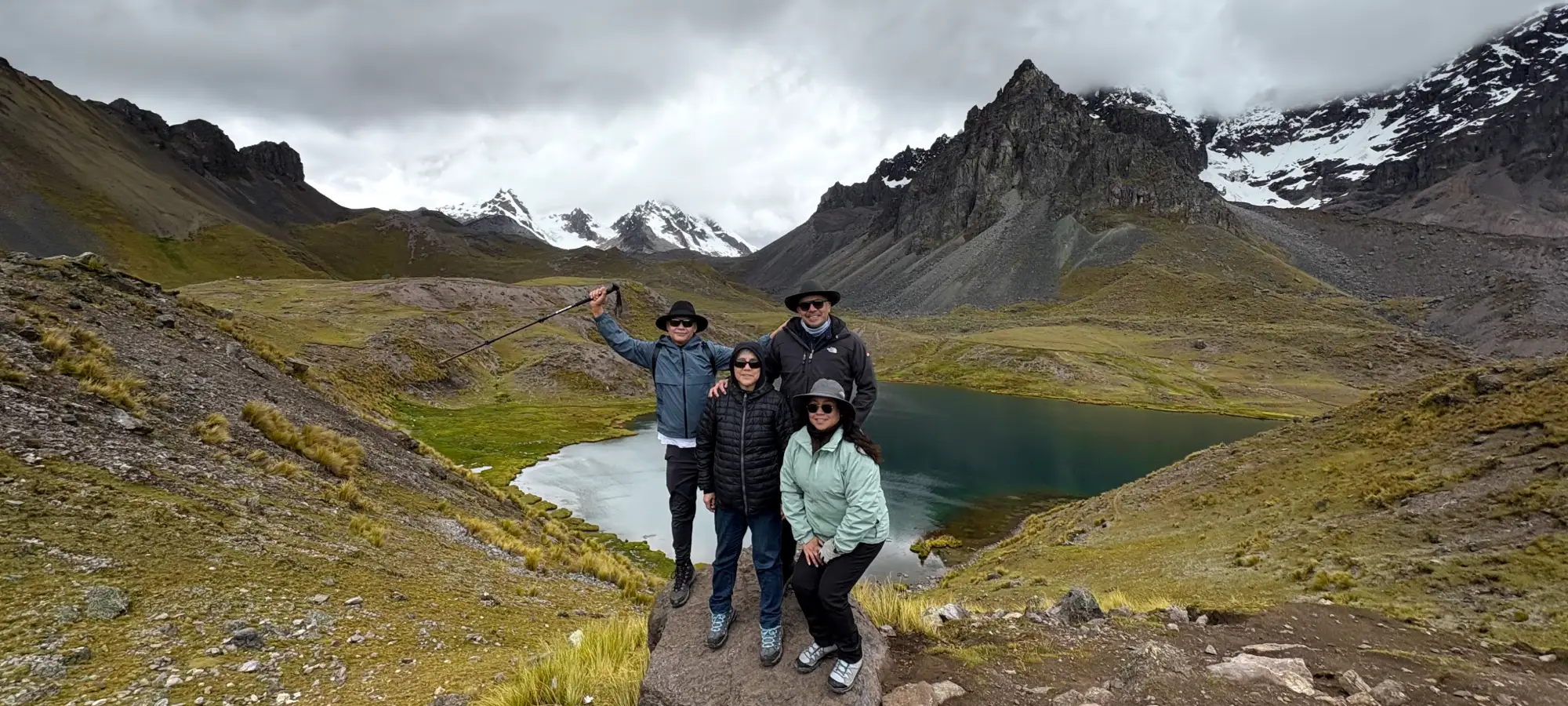
Not all mountains are the same. Some command respect with their height. Others, with their history. But very few, like Ausangate, manage to do both at once—and on top of that, they transform you. Standing over 6,300 meters of icy majesty, this Andean colossus doesn’t just dominate the southern horizon of Cusco; it also rules the soul of those brave enough to approach it. If you’re looking for an adventure that combines extreme nature, living culture, and a touch of ancestral spirituality, you’re in the right place.

What makes Ausangate so special?
Ausangate Mountain is not just a simple destination on a map. For the Quechua communities living at its feet, it is an Apu Ausangate: a protective spirit, a guardian of the valleys, rivers, and animals. Climbing onto its slopes isn’t just a physical challenge—it’s an act of humility, connection, and listening. Because here, amidst the silence of the glaciers and the constant wind, the mountain truly seems to speak.
Located about three hours from Cusco, this sacred peak is the highest in the region and one of the five most imposing in all of Peru. But its greatness isn’t measured in meters. It’s felt with every step on the trail, in every glance from the vicuñas, in every story the shepherds share at sunset.

The Ausangate Trek: Your body tired, your soul renewed
If you’re looking for a hike that will push you out of your comfort zone and take you to places you never imagined, the Ausangate Trek is your answer. This 5 to 7-day journey takes you along trails that wind between snow-capped peaks, impossibly colored lagoons, and small villages where time seems to have stood still.
It’s not easy. You’ll cross mountain passes over 5,000 meters high. You’ll sleep in tents with the sky as your roof and the cold as your companion. But every effort is repaid in spades: with the sunrise over Laguna Hatun Pukaqocha, with the flight of a condor by your side, with the smile of a shepherd offering you a mate de coca tea “so the mountain receives you well.”
At Top Inka Travel, we know this trek isn’t for everyone—but for those who do it, it’s unforgettable. That’s why we take care of every detail: local guides who know the soul of the path, professional camping equipment, and constant support so you can just focus on walking… and being amazed.

Ausangate Cusco: Your gateway to the extraordinary
When you search for “Ausangate Cusco,” you’re looking for more than a location. You’re looking for the start of a transformation. Most travelers arrive in Cusco a few days before the trek—and that’s essential. The altitude isn’t an enemy, but it is an ally that demands respect. Taking the time to acclimatize—walking the cobblestone streets, visiting markets, drinking coca leaf tea—can make the difference between an exhausting experience and an unforgettable adventure.
From Cusco, we depart for Tinki, the town that marks the start of the trail. There, where the air is already thinner and the horizon is tinged with eternal white, your true immersion in the Andes begins.

Rainbow Mountain Ausangate: Beyond Vinicunca
Many come seeking the famous Rainbow Mountain. And yes, Vinicunca is spectacular. But what few know is that the Ausangate circuit takes you past even more vibrant, less crowded, and more magical formations. Hills striped with ochre, violet, turquoise, and pink that look like they were painted by the hand of a cosmic artist. And always, always, with the imposing snow-capped peak of Ausangate watching over everything in the background.
The biodiversity here is astounding. You won’t just see colors in the earth, but life in motion: vicuñas leaping between the hills, condors circling overhead, foxes slipping between the rocks. It’s a living, fragile, and beautiful ecosystem that deserves to be admired with care and awareness.

The Lagoons You’ll Visit on the Ausangate Trek
One of the greatest treasures of the Ausangate circuit are its lagoons. They aren’t simple bodies of water. They are mirrors of the sky, reflections of the glacier, sanctuaries of silence. Each has its own color, its own energy, its own story. Here are the most notable ones you’ll visit during the trek:
Laguna Hatun Pukaqocha (Jatun Pucacocha)
Its name in Quechua means “Great Red Lagoon,” and it’s no exaggeration. Its waters take on reddish and coppery tones depending on the time of day, especially at sunrise and sunset. It’s one of the most photographed campsites on the circuit, with Ausangate reflected in its waters as if the mountain were looking at itself.
Laguna Ausangatecocha
Located right at the foot of the glacier, this lagoon is the spiritual heart of the trek. Its turquoise waters contrast with the perpetual snow, creating a postcard that seems ripped from a dream. Many travelers choose this spot for a meditation pause or simply to sit in silence and absorb the energy of the place.
Laguna Sibinacocha
One of the largest and least visited lagoons on the circuit. Surrounded by totora reeds and water birds, it’s ideal for those seeking tranquility and a deep connection with nature. On some extended itineraries, you can even navigate its waters on traditional rafts.
Laguna Surineqocha
Known for its intense emerald tone, this lagoon is found on the route to Vinicunca. It’s a perfect place for a rest before the final ascent to the Rainbow Mountain. Its name means “Lagoon of the Flowers,” and in spring, its shores are filled with small wildflowers that contrast with the blue sky.
Laguna Warmiwañusqa (Lagoon of the Dead Women)
Less known but just as striking, this lagoon gets its name from a local legend. Its dark waters and rocky surroundings give it a mystical air. It’s an excellent spot for observing condors, which often circle above its waters.
Each lagoon is a world apart. A moment of calm amidst the adventure. A reminder that nature, in its ultimate expression, always leaves you speechless.

When to Go? The Best Time for the Ausangate Trek
If you’re planning your trip, the question of the “best time for the Ausangate Trek” is key. The answer is clear: from May to September. These are the dry months, when the sky is clearer, the trails are firm, and the nights, though cold, are stable. Avoid January, February, and March: the rains can make the trail dangerous, and some routes even close.
At Top Inka Travel, we adjust our calendars based on the actual conditions each year. Because your safety and your experience always come first.

Ausangate History: Where the Sacred Never Left
The history of Ausangate goes back long before the Incas. Ancient peoples already worshipped this giant, seeing it as a source of life and balance. The Incas integrated it into their empire as a spiritual axis, and today, local communities still honor it with offerings, ceremonies, and reverent silence.
Getting to know the Apu Ausangate means understanding that in the Andes, the earth breathes, the mountains listen, and the wind carries messages. During the trek, your guide will tell you about the rituals, the meaning of the coca leaves, and why the shepherds ask for permission before crossing certain passes. It’s a lesson in humility. Connection. Belonging.

Prepare Well: The Ausangate Trek Preparation That Really Matters
Preparation for the Ausangate Trek isn’t optional. It’s mandatory. Here are some key points:
- Acclimatization: Two days minimum in Cusco. Ascend gradually. Listen to your body.
- Training: Walk with a backpack, climb stairs, strengthen your legs and lungs.
- Gear: Broken-in boots, a sleeping bag rated for -15°C, thermal clothing, rain gear, sunscreen (the sun here burns!).
- Hydration: Drink water constantly. Bring energy snacks.
At Top Inka Travel, we send you a detailed checklist before your trip. We also offer gear rental and a pre-trek briefing with your guide, so you leave 100% prepared.
The Ausangate Circuit: A Circular Journey Through the Soul of the Andes
The Ausangate Circuit covers between 70 and 100 kilometers, depending on the route. You’ll pass through Upis, with its hot springs; Palomani, the highest pass; Ausangatecocha, where the reflection of the glacier in the water will leave you speechless. And of course, past the Ausangate lagoons: those bodies of water that seem like doors to another world.
Every day is a different postcard. Every night, a campsite with breathtaking views. And every sunrise, a new reason to keep walking.
Want More? The Ausangate Trek to Machu Picchu
If you have the time and desire to experience the best of the southern Andes, the Ausangate Trek to Machu Picchu is the perfect combination. Imagine: days of silence and wind in the highlands of Ausangate… and then, the magic of walking through the ancient stones of Machu Picchu, with the sun gilding its terraces. A contrast. A culmination. A perfect finale.
At Top Inka Travel, we create personalized itineraries that include transfers, advance tickets, and accommodations ranging from campsites to charming hotels. Because your trip should be as unique as you are.
Ausangate Trek Tips: Walk with Respect, Return with Gratitude
The most important Ausangate Trek tips aren’t about gear or training. They’re about attitude:
- Leave nothing behind, except your footprints.
- Do not touch offerings or enter sacred places without permission.
- Ask before photographing people.
- Respect the animals. Observe them, don’t chase them.
- Listen to your guide. And to your body. The mountain does not forgive arrogance.
At Top Inka Travel, we believe in tourism that leaves a mark… but not damage. We work with local communities, pay fair wages, and promote sustainable practices. Because Ausangate doesn’t belong to us. It receives us. And we must honor it.
Ready for Your Adventure?
Ausangate is not a destination. It’s a calling. An invitation to step out of your comfort zone, to breathe pure air, to walk slowly, to look in awe. Whether you come for the Ausangate Trek, its biodiversity, its history, or the challenge of climbing Ausangate, this place will mark you.
And if you decide to do it with Top Inka Travel, you won’t just have an operator. You’ll have a trail companion. A team that cares about every detail, from the quality of your sleeping bag to your guide’s welcoming smile.
Because traveling isn’t just about arriving. It’s about living. Feeling. Transforming.
And Ausangate knows how to do it.