

What is All Saints’ Day in Cusco?
All Saints’ Day is celebrated every November 1st in Cusco, Peru. It’s a special day when families remember their loved ones who are no longer with them. This celebration blends Catholic traditions brought by the Spanish with ancestral Andean beliefs, creating a unique and colorful festival.
In the Andean worldview, death is not the end but a transition to another form of existence. That’s why All Saints’ Day is not a sad occasion but an opportunity to gather and honor those who have passed on.
How is All Saints’ Day celebrated in Cusco?
Preparing offerings
Cusco families prepare special offerings for their deceased loved ones. These include:
- T’anta wawa: bread shaped like babies or children decorated with sweet dough
- Suckling pig: a typical pork dish
- Seasonal fruits: apples, bananas, and other available fruits
- Favorite drinks of the deceased, such as chicha (corn beer) or sodas
- Flowers: especially daisies and carnations
Cemetery visits
On November 1st and 2nd, families visit cemeteries bringing:
- Colorful flowers to decorate the graves
- Food to share beside the tomb of their loved one
- Musicians who play traditional melodies
At Almudena Cemetery, one of the most important in Cusco, thousands of people can be seen arriving early to spend the entire day with their deceased.
The fusion of cultures on All Saints’ Day
This celebration is a clear example of religious syncretism in the Peruvian Andes. While the Catholic tradition celebrates all saints and faithful departed, the Andean worldview sees these days as an opportunity to reunite with those who have departed to the other world.
In Andean culture, the dead:
- Temporarily return to visit their families
- Need food and drink for their journey
- Continue participating in community life
T’anta Wawa: The special bread of All Saints’ Day


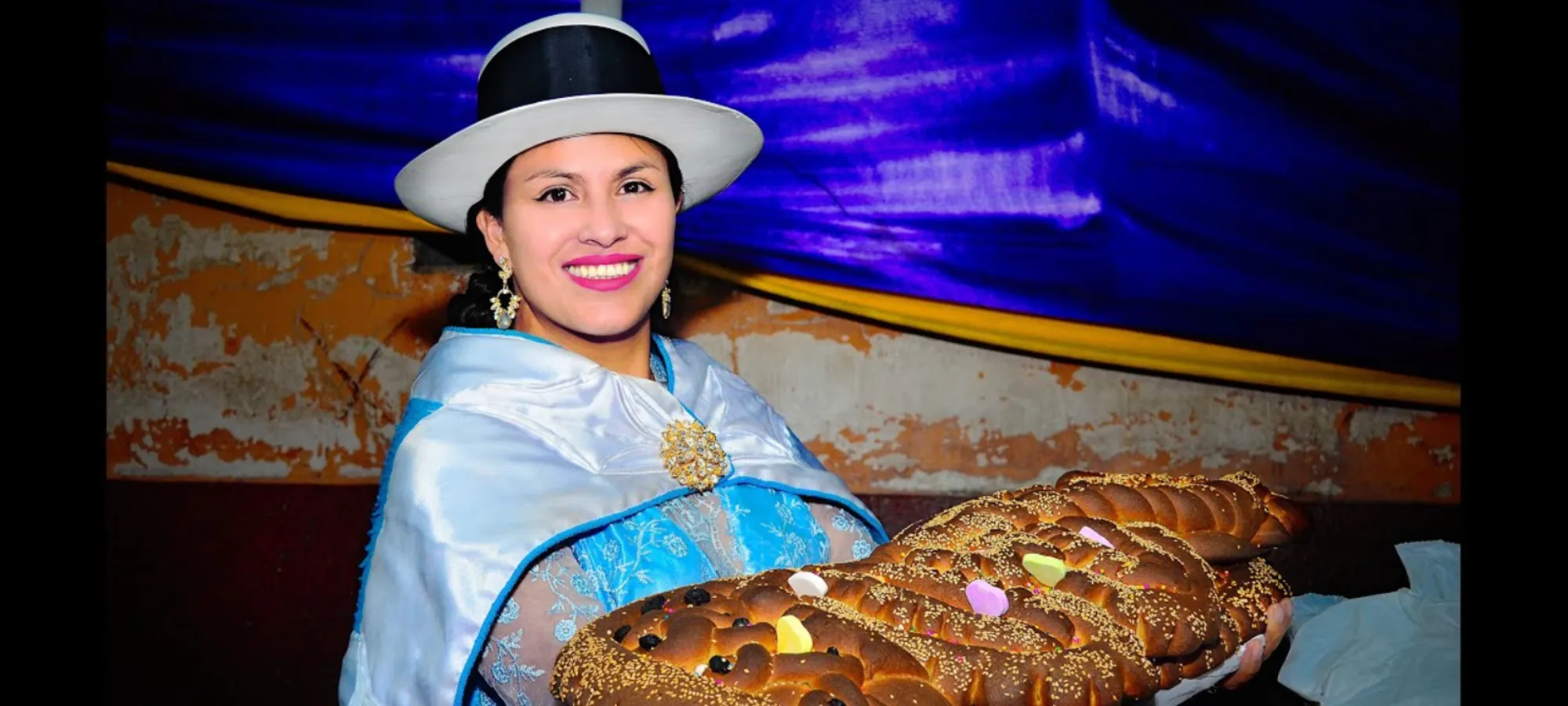
The T’anta Wawa (which means “bread baby” in Quechua) is one of the most representative elements of this festival. These bread figures:
- Represent deceased children and unbaptized babies
- Are made with sweet dough and decorated with faces made from the same dough
- Are adorned with bright colored ribbons
- Can measure from 4 inches to over 1.5 feet
Many families keep a T’anta Wawa all year as a symbol of protection and abundance.
Customs in different districts of Cusco
The celebration varies slightly depending on the district:
San Jerónimo
Families prepare a “table” with offerings that include special dishes like chiriuchu (a traditional Cusco dish).
San Sebastián
Residents bring tarwi (an Andean grain) and fruits as offerings.
Saylla
Famous for its chicharrones (fried pork), many families prepare this dish to share beside the tombs.
Tips for visitors during All Saints’ Day
If you plan to visit Cusco during All Saints’ Day:
- Respect local traditions and family spaces.
- Dress appropriately when visiting cemeteries.
- Try traditional bread sold in streets and markets.
- Visit Cusco’s General Cemetery or Almudena to observe the celebrations.
- Participate in the craft fairs held during these days.
Current significance of All Saints’ Day
Today, this festival:
- Strengthens family bonds across generations
- Keeps the memory of ancestors alive
- Preserves ancestral traditions in a modern world
- Reaffirms the cultural identity of Cusco residents
Conclusion
All Saints’ Day in Cusco is much more than a day to remember the dead. It’s a celebration of life and continuity, a bridge between the world of the living and that of the ancestors.
Through colorful bread, special offerings, and music, the people of Cusco keep alive a centuries-old tradition that reminds us of the importance of honoring our roots and preserving the memory of those who came before us.
If you have the opportunity to visit Cusco in early November, don’t hesitate to respectfully participate in this beautiful cultural expression that combines faith, tradition, and celebration.