
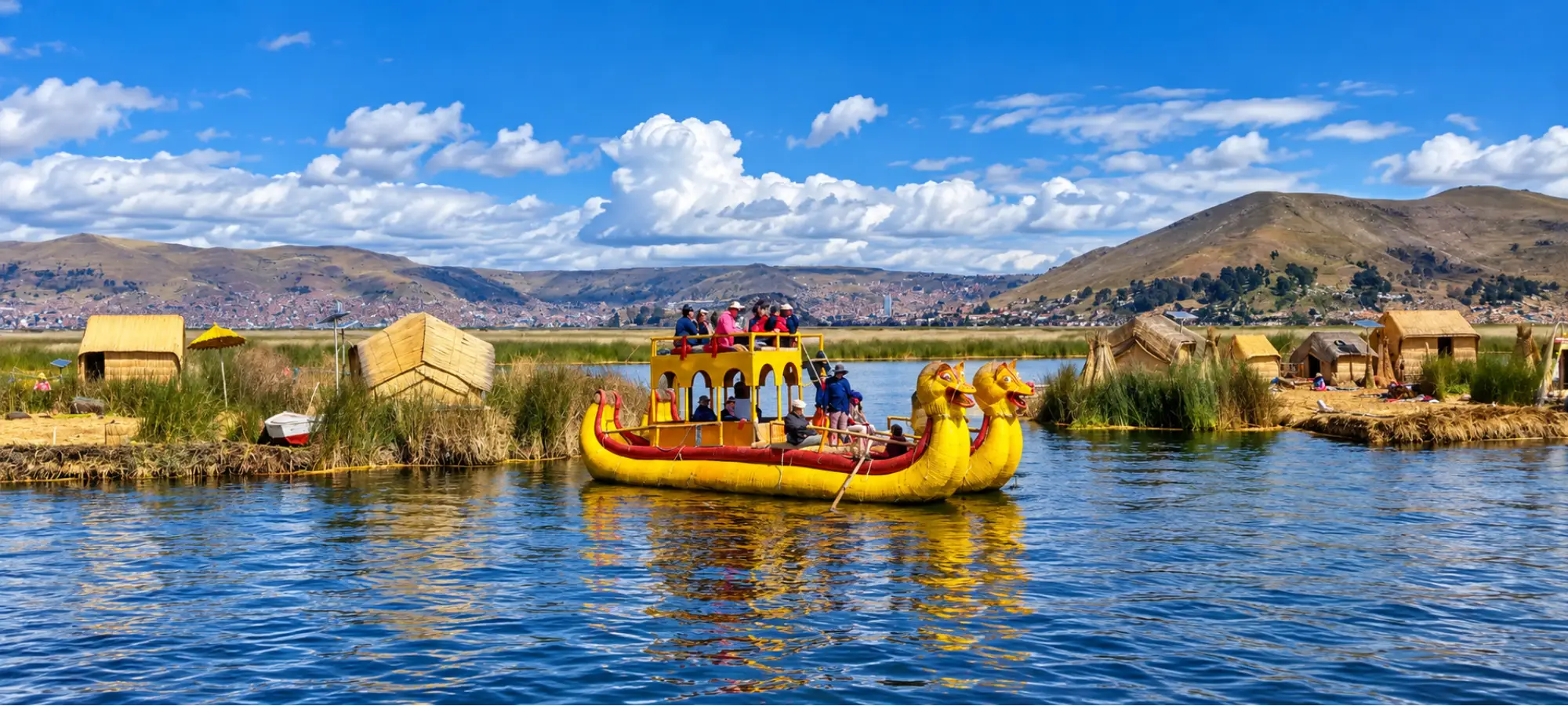
The Uros Islands are one of the most distinctive places to visit on Lake Titicaca and one of the best-known attractions near Puno. Unlike natural islands elsewhere on the lake, the Uros are famous for their floating platforms traditionally built with totora reeds, an aquatic plant that grows in the shallow waters of Lake Titicaca.
Their location near Puno makes them relatively easy to include in a Peru itinerary, even when you only have a few hours available. Boats travel from Puno toward the floating communities, where visitors can learn how the islands are constructed and maintained and discover the importance of totora in everyday life.
However, the Uros Floating Islands are more than an unusual sightseeing stop. Their story reflects generations of adaptation to the environment of Lake Titicaca, as well as communities that continue to evolve in response to modern life and tourism.
If you are planning to visit Puno, this guide explains what the Uros Islands are, where they are, how the floating islands are made and what to expect when visiting them.

What Are the Uros Islands?
The Uros Islands are a group of floating islands located on the Peruvian side of Lake Titicaca, near the city of Puno.
Their most recognizable feature is the material used to create them: totora reeds.
Totora grows naturally in parts of Lake Titicaca and has traditionally served several purposes for communities living around the lake. Beyond the islands themselves, the plant has been used to build boats, parts of homes and different everyday objects.
The floating platforms require continuous maintenance because the organic material closest to the water gradually decomposes. New layers of reeds must therefore be added to the surface periodically.
This process reflects the knowledge developed by local communities to live within the aquatic environment of the high-altitude lake.
Where Are the Uros Islands?
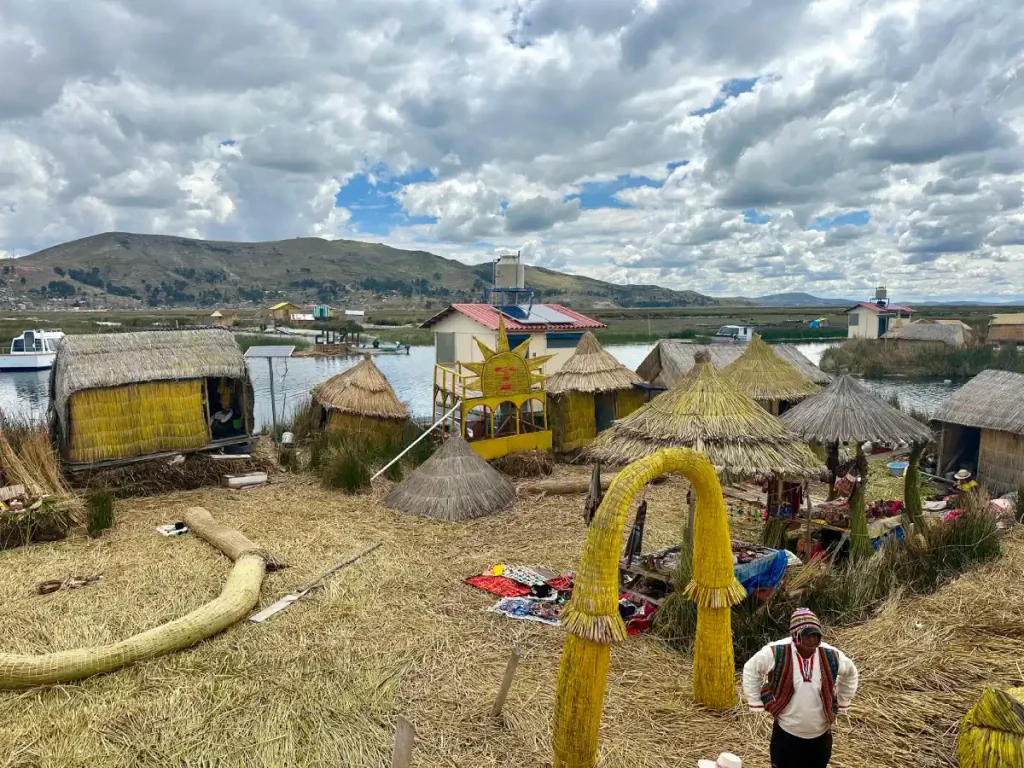
The Uros Islands are located on Lake Titicaca, close to Puno in southeastern Peru.
Their proximity to the city makes them one of the easiest Lake Titicaca destinations to visit.
Most travelers first arrive in Puno and then take a boat from the city’s port toward the floating islands. Because the journey is relatively short compared with trips to Taquile or Amantani, Uros can be visited without spending an entire day on the lake.
Travelers planning a broader trip around the region can also read our Lake Titicaca Peru guide to compare the main islands and experiences available from Puno.
History of the Uros People
The history of the Uros extends far beyond modern tourism.
Populations historically identified as Uros inhabited different parts of the Andean Altiplano and developed a close relationship with the aquatic environments of the region.
Over time, social, cultural and economic changes transformed these communities significantly. For that reason, the Uros of today should not be presented as living exactly as their ancestors did centuries ago.
Modern communities maintain knowledge associated with totora and the lake while also participating in tourism, trade and the contemporary economy of the Puno region.
Understanding this combination of cultural continuity and change provides a more realistic perspective on the islands.
How Are the Uros Floating Islands Made?
One of the most interesting aspects of visiting Uros is understanding how the floating islands are constructed.
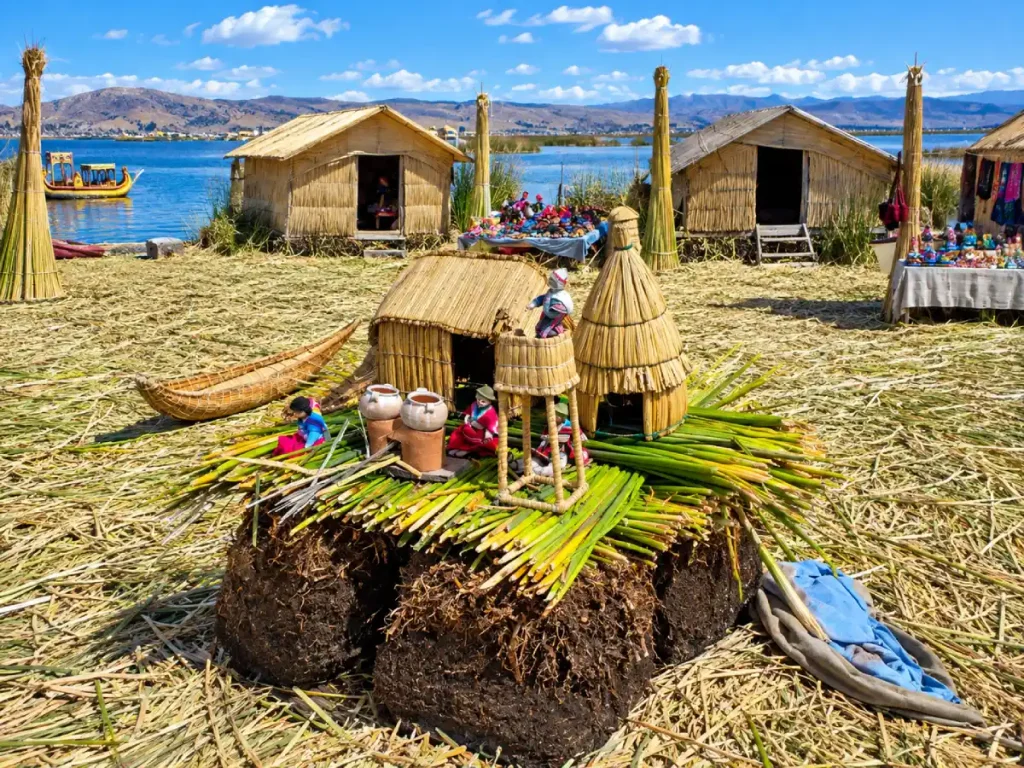
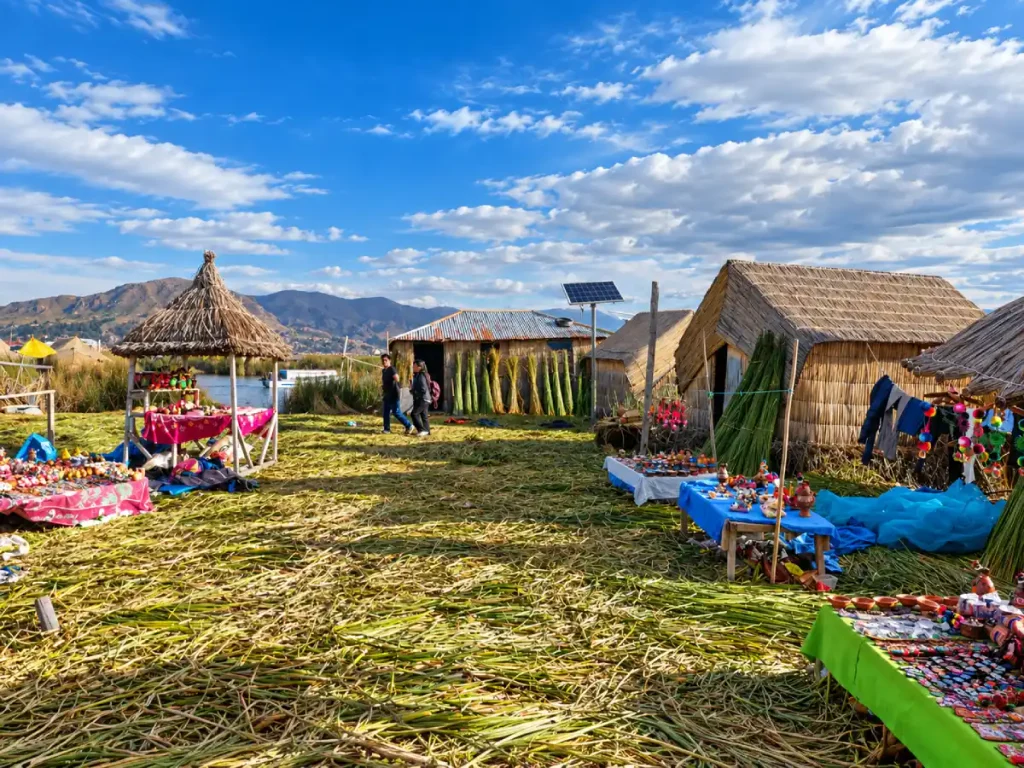
Their structure relies on natural materials from Lake Titicaca. Traditionally, buoyant blocks formed from reed roots and organic material create a floating foundation. Layers of dried totora are then placed over this base to create a surface suitable for walking and everyday activities.
Maintaining an island is an ongoing process.
The lower layers deteriorate through constant contact with the water, so additional totora must regularly be placed on top.
During some visits, community members explain this construction process using small models or demonstrations.
The result is a living structure that requires continuous care rather than a platform that is built once and left unchanged.

Why Is Totora Important to the Uros?
Totora reeds are fundamental to understanding the traditional relationship between Uros communities and Lake Titicaca.
The plant has multiple uses and remains one of the most visible elements of the islands.
Traditionally, totora has been used for:
- Building and maintaining floating platforms.
- Constructing reed boats.
- Elements of homes and other structures.
- Handicrafts and everyday objects.
- Certain traditional food uses.
Seeing these different applications helps visitors understand why totora is much more than simply the material beneath their feet.
It forms part of a broader relationship between the communities and the ecosystem of Lake Titicaca.
What to See and Do on the Uros Islands
A typical visit begins by arriving at one of the floating islands that receives visitors.
Community members may explain how the island is built, demonstrate the use of totora and introduce aspects of local life.
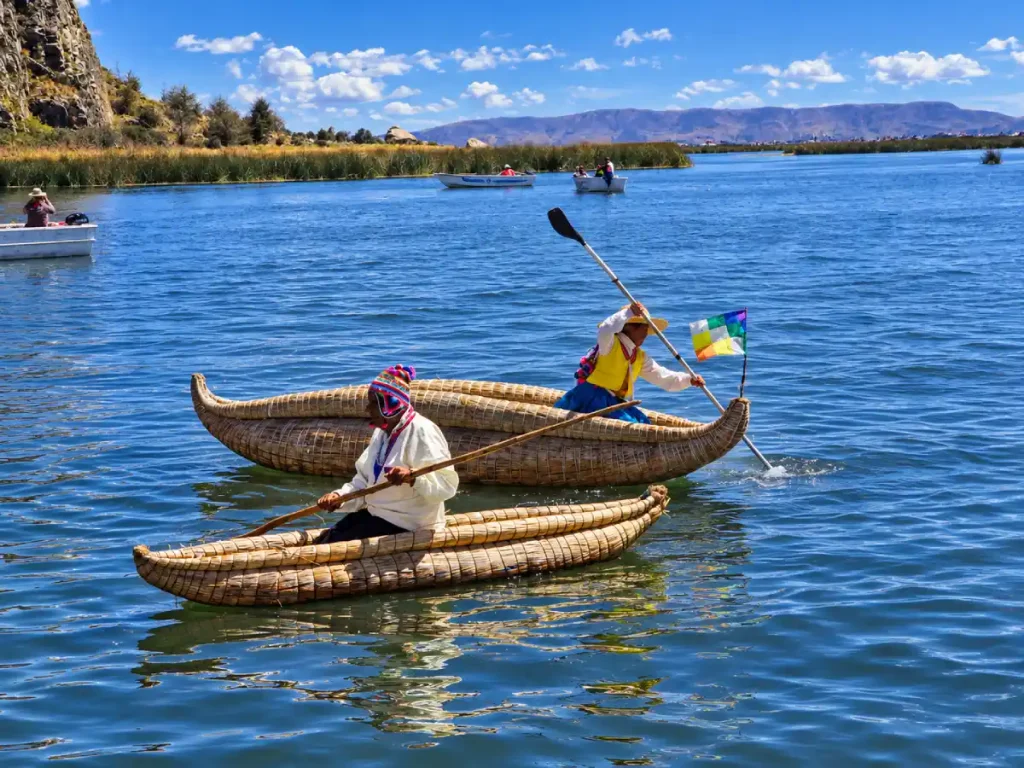
Visitors can walk across the floating surface and observe houses, reed structures and traditional boats. Depending on the island and itinerary, there may also be opportunities to see handicrafts or take an additional ride in a traditional reed boat.
Activities vary between communities and tours, so not every visit follows exactly the same program.
This is worth considering when comparing different Uros Islands tours from Puno.
How Long Does a Uros Islands Visit Take?
One advantage of visiting Uros is that you do not necessarily need to dedicate an entire day.
Many Uros Islands tours from Puno operate as half-day excursions. Exact travel times vary depending on the boat, community visited and itinerary.
Uros is also commonly included as the first stop on longer Lake Titicaca trips.
Travelers with a full day can combine Uros and Taquile, while those with two days may continue to Amantani before visiting Taquile.
This flexibility makes Uros suitable for both short stays in Puno and longer Lake Titicaca itineraries.
Uros or Uros and Taquile?
Choosing between visiting Uros alone and combining Uros and Taquile mainly depends on your schedule.
A Uros-only excursion is convenient if you have limited time in Puno or prefer a shorter experience on Lake Titicaca.
A full-day Uros and Taquile trip offers more variety. After experiencing the floating islands, the journey continues across the lake to Taquile, a natural island known for its agricultural terraces, walking paths, views and textile traditions.
Travelers with two days available can also add Amantani and spend a night on the lake.
Our Lake Titicaca Peru guide provides a broader comparison of these destinations for travelers still deciding how to organize their itinerary.
Uros Islands Altitude
The Uros Islands sit on Lake Titicaca at approximately 3,812 meters (12,507 feet) above sea level.
Although visiting Uros usually involves less strenuous walking than exploring Taquile or Amantani, the altitude can still affect travelers.
Some people may experience headaches, fatigue, shortness of breath or other altitude-related symptoms.
Walk at a comfortable pace, stay hydrated and give your body time to adjust after arriving in Puno.
Travelers coming directly from a much lower elevation should be particularly mindful of how they feel during their first day in the Altiplano.
Best Time to Visit the Uros Islands
The Uros Islands can be visited year-round, although weather conditions on Lake Titicaca vary throughout the year.
The period from roughly May to September generally brings drier conditions and more frequent clear skies. However, mornings and evenings can be particularly cold.
Rainfall becomes more frequent during the austral summer months, and conditions can change during the day.
Regardless of when you visit, bring sun protection and dress in layers. Strong sunlight, cool temperatures and wind can all occur during the same excursion.
What to Bring to the Uros Islands
A standard visit does not require specialized equipment, but preparing for the high-altitude climate will make the experience more comfortable.
Consider bringing:
- Warm layers.
- A windproof or waterproof jacket.
- Sunscreen.
- Sunglasses.
- A hat or cap.
- Comfortable shoes.
- Drinking water.
- Cash for personal expenses.
Weather on Lake Titicaca can change quickly, making layers particularly useful.
Tourism and Local Communities
Tourism is an important part of life in several Uros communities today.
Visitors may encounter cultural demonstrations, handicrafts, traditional boat rides and explanations about how the floating platforms are maintained.
At the same time, the Uros Islands are home to contemporary communities, not simply a tourist attraction frozen in the past.
Local life has changed over generations, and tourism now interacts with other aspects of the region’s economy and society.
Travelers can contribute to a more respectful experience by asking permission before taking close-up photographs of people, respecting local instructions and understanding that some optional activities or products may involve additional costs.
Are the Uros Islands Really Floating?
Yes. The islands are floating structures made from natural materials and layers of totora reeds.
However, this does not mean they are small rafts drifting freely across Lake Titicaca.
The platforms are maintained within particular areas of the lake and require regular work to remain usable. When walking across them, visitors may notice that the surface feels different from solid ground because of the layers of reeds underneath.
This construction method is one of the main features that distinguishes Uros from natural islands such as Taquile and Amantani.
Frequently Asked Questions About the Uros Islands
Where are the Uros Islands?
The Uros Islands are located on Lake Titicaca near Puno in southeastern Peru.
What are the Uros Islands made of?
The floating platforms are traditionally made using buoyant organic material and multiple layers of totora reeds from Lake Titicaca.
How long do you need to visit the Uros Islands?
A half-day excursion from Puno is enough for a typical visit. Uros can also be combined with Taquile or Amantani on longer trips.
Can you visit Uros without going to Taquile?
Yes. There are dedicated Uros Islands excursions for travelers who only have a few hours available.
How high are the Uros Islands?
They are located on Lake Titicaca at approximately 3,812 meters (12,507 feet) above sea level.
Can you visit the Uros Islands year-round?
Yes. Visits operate throughout the year, although weather and rainfall patterns vary by season.
Visit the Uros Islands from Puno
The Uros Islands in Peru offer one of the most unusual experiences on Lake Titicaca. Their floating construction, use of totora and relationship with the lake provide travelers with an introduction to a cultural landscape very different from other destinations in southern Peru.
You can visit Uros on a short excursion from Puno or combine the islands with Taquile and Amantani if you have more time.
If you are ready to plan your visit, explore our Uros Islands tour from Puno for itinerary details, included services and available options.