

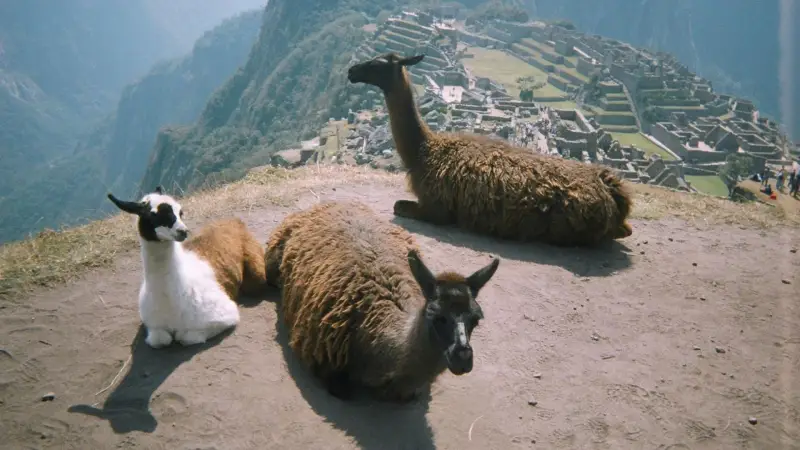
The llamas at Machu Picchu are one of the most iconic features of the Historic Sanctuary. Their presence among the agricultural terraces, temples, and mountains surrounding the Inca citadel sparks curiosity in thousands of travelers every year. Beyond the photos circulating on social media, these animals hold deep historical significance and are part of the Andean cultural identity. At Top Inka Travel, we always explain to our travelers the origin of these llamas, their connection to the Inca worldview, and the correct way to interact with them during the visit.

The Role of the Llama in Andean Culture
The llama has been a key animal in the Andes since pre-Inca times. It served as a means of transport, a source of wool, a ceremonial food source, and a spiritual symbol. For the Incas, this camelid represented prosperity, resilience, and a connection to the sacred mountains or Apus.
Various accounts and chronicles mention that llamas were considered protective animals, capable of accompanying travelers through difficult terrain and guarding ritual spaces. This symbolism explains why their image is found in textiles, pottery, and religious representations from the Inca period.


Why Are There Llamas at Machu Picchu?
While many visitors assume the llamas are direct descendants of animals that lived here during the time of Tahuantinsuyo, the truth is the current llamas were introduced several decades ago to maintain the sanctuary’s traditional image and preserve livestock practices associated with the Andean world.
Their presence also contributes to the natural control of vegetation on the terraces, as they graze in a regulated manner. At Top Inka Travel, we explain that while these animals are not part of the site’s original ecosystem, their presence aligns with cultural and landscape management criteria established by the park authorities.


Spiritual Significance Within the Archaeological Site
The relationship between llamas and Machu Picchu is not just aesthetic. In the Andean worldview, these animals are linked to the protective energy of the mountains and the connection between the physical and spiritual worlds.
Various archaeological interpretations maintain that the Incas used llamas in rituals associated with the agricultural calendar, thanksgiving celebrations, and ceremonies intended to ensure the fertility of the land. Although there is no direct evidence of exclusive enclosures for llamas within Machu Picchu, their symbolism is consistent with the site’s ceremonial function.


Other Animals Present at Machu Picchu
In addition to llamas, Machu Picchu is home to extraordinary biodiversity. Among the most representative animals are:
- Vicuñas, present in more open, higher-altitude zones, considered the finest camelids in the world.
- Andean birds, such as the cock-of-the-rock (Peru’s national bird), the giant hummingbird, and migratory species that find a natural corridor in the sanctuary.
- Viscachas, small rodents often seen near walls and rocky terraces.
- Spectacled bears, a vulnerable species that inhabits the forested mountains around the site, although sightings are rare.
For Top Inka Travel, it’s important that visitors understand that Machu Picchu is more than an archaeological site: it is a living ecosystem where fauna plays an essential role.


How to Interact Responsibly with the Llamas
Many travelers want to take photos with the llamas or approach them, but it is essential to do so responsibly. As tour operators, we always provide clear recommendations before starting the tour:
- Do not feed them. The llamas’ diet is controlled; giving them human food can cause digestive problems.
- Maintain a prudent distance. Although they seem docile, they can become frightened or defend themselves if they feel threatened.
- Avoid touching them. Not all llamas accept physical contact; respect is key to ensuring a safe environment.
- Do not chase them for photos. This stresses the animal and can alter its behavior.
- Follow the park ranger’s instructions. Sanctuary staff ensures the animals’ welfare and the site’s integrity.
Practical Tips for Photographing Llamas at Machu Picchu
For many travelers, capturing a good photo with a llama is a memorable experience. While encounters are not guaranteed, there are times and places with a higher probability of seeing them:
- Agricultural terraces, especially in the lower zone during the early morning hours.
- Open areas near the Guardhouse, where they often graze at dawn.
- Less crowded side trails, where the animals feel more at ease.
The best times are usually between 6:00 and 9:30 a.m., when there are fewer visitors and the light is ideal for photography.
Llamas as a Tourist Symbol of Machu Picchu
Over time, the figure of the llama has become a global tourist emblem. Many promotional campaigns, documentaries, and travel guides use its image to represent the Peruvian Andes. For Top Inka Travel, the presence of llamas at Machu Picchu serves a cultural and educational function: it helps visitors understand what life in the Andes was like and why camelids were essential to the period’s economy, spirituality, and transportation.
Final Reflection
The llamas of Machu Picchu are not merely photogenic animals; they represent a vital part of Andean culture that is still alive today. With their historical symbolism, their role in the sanctuary’s visual identity, and the respect they deserve as living beings, they have become an element that enriches every visitor’s experience.
At Top Inka Travel, we accompany our travelers so they understand the importance of these animals and enjoy a responsible, culturally informed visit, fully connected with the Andean landscape surrounding Machu Picchu.